The global artificial intelligence market is preparing for major shifts. According to unofficial reports, Google plans to radically increase the production of its own AI chips in the coming years, aiming to reach production levels comparable to the market leader, Nvidia.
Numbers Changing the Balance of Power
By 2028, Google expects to deploy between 12 and 15 million of the latest TPU v9 accelerators. If these forecasts prove true, the search giant will indeed reach the figures of its main competitor. Analysts estimate that in 2026 alone, Nvidia will ship 8.2 million GPUs for data centers, and by 2028, this volume could grow to 12.4 million. Thus, one cloud provider is preparing to produce AI accelerators in volumes equal to the leading supplier of commercial chips.
Technological Challenges and Manufacturing Capacity
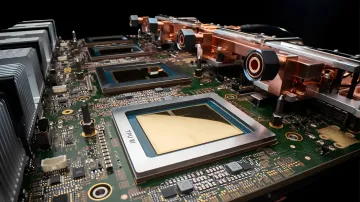
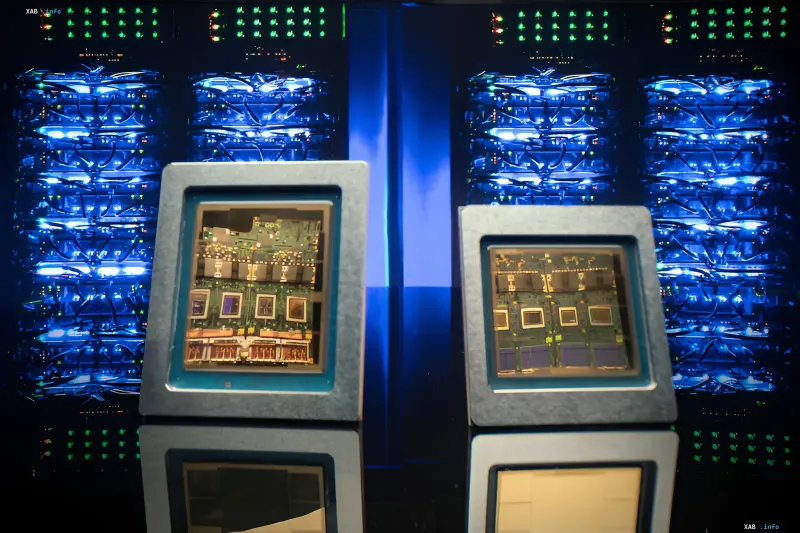
The core of Google's plan is the development of the ninth-generation TPU, with a debut scheduled for 2028. The architecture of the new chips will follow the industry-wide trend towards chiplet packaging: each accelerator will use four compute dies. The planned production volume is expected to more than double the requirements compared to 2027 levels.
However, the implementation of these plans is fraught with serious technical difficulties. Placing several large dies on a single chip requires advanced interconnect and packaging technologies. Mass production complicates the task, and manufacturing capacity becomes the primary limiting factor.
The key question is who will manufacture these chips. TSMC alone cannot handle such an order, so it may be necessary to involve Intel's manufacturing division. Here lies another complexity: packaging technologies differ between manufacturers. The EMIB or EMIB-T technologies used by Intel are not directly compatible with CoWoS-L, which will require additional engineering solutions.
Strategy of Independence
Google has been developing its own chips for about a decade. While initially this was a way to support workloads, it is now part of a broad cloud business strategy. If Google achieves its goal in 2028, it could become the largest user of AI accelerators in the world.
This does not mean that purchases from Nvidia will have to stop, but Google will have significantly more control over its own computing infrastructure and supply chain. There are no comparative tests of Google's ninth-generation TPU against Nvidia's future Rubin and Rubin Ultra chips yet, but the scale of the search giant's plans indicates that competition in the AI hardware market is increasingly dependent on deployment volumes, not just the performance of individual chips.