Google decided to disable the new image generation feature in Google Earth less than 24 hours after its launch. The tool, which allowed users to create realistic satellite images based on text descriptions, was temporarily removed due to the mass creation of content violating the platform's rules.
How the dangerous feature worked
The new feature allowed users to select any point on the map, click the "Generate Image" button, and enter a text prompt. Artificial intelligence then generated a photorealistic aerial view of the terrain. However, experiments showed that the system lacked sufficient restrictions on creating scenes mimicking real catastrophes or military actions.
Real examples of forgeries
Open-source intelligence (OSINT) specialists and journalists immediately began testing the service's capabilities. During experiments, images were generated that were visually indistinguishable from real facts:
- Snapshots of non-existent fires on the Iranian island of Hark.
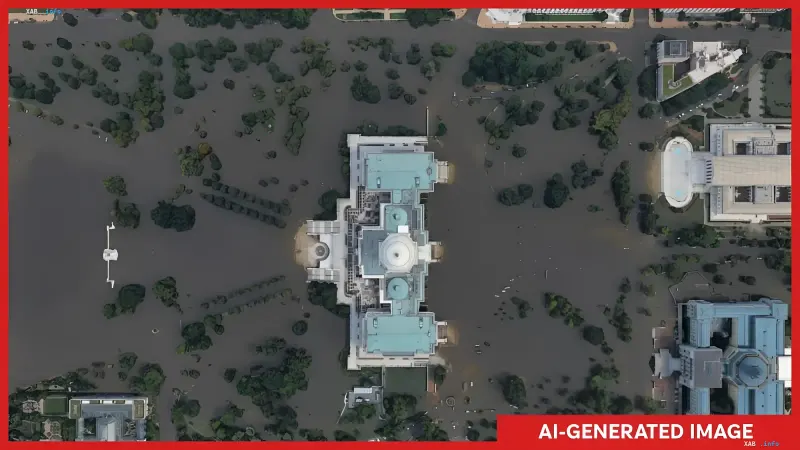
- A view of a flooded US Capitol complex.
- Images of bomb craters in peaceful areas.
Such footage could have been used to create fake news capable of confusing public opinion and disinforming the media.
Threat to trust in satellite data
Satellite imagery has historically been considered one of the most reliable tools for verifying information. Journalists and analysts use them to confirm events in conflict zones where reporter access is limited. Bellingcat* experts and other visual forensics specialists warned that the introduction of built-in forgery generation directly into Google Earth jeopardizes trust in all satellite data.
If fake images look as convincing as real ones, it will create grounds for total skepticism: any evidence presented based on space photography could be dismissed as the result of a neural network.
Google's position and expert reaction
Google stated that all generated images are marked with a digital watermark, SynthID, and the service blocks the creation of certain potentially dangerous content. However, these measures did not convince disinformation experts. The main risk lies in the fact that the tool for creating fakes was placed directly inside a service that has been used for years to verify the authenticity of information.
The decision to disable the feature was made before implementing additional protection mechanisms. Google has not yet announced the timeline for the feature's return, but it is clear that the current version of the algorithm poses too great a threat to information security.