

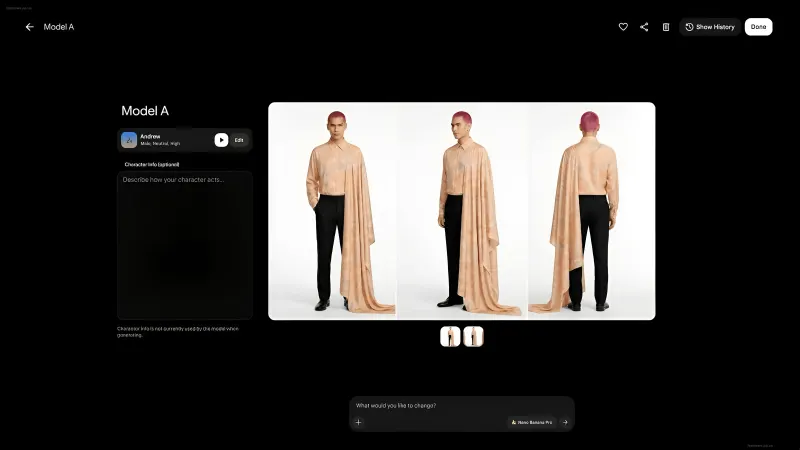
The era when creating high-quality video content required cameras, lighting, and weeks of editing is coming to an end. At the Google I/O conference, Elias Roman, Vice President of Products at Google Labs, presented a revolutionary update to the Flow service: the ability to create personal digital avatars. Now, any user can scan their face and insert a realistic copy into an AI-generated video.
The new feature addresses the main pain point for creators: the need to be constantly on camera. Instead of exhausting shoots, it is enough to upload a short video with head turns and spoken numbers. The system will create an accurate 3D model that will speak in your voice and preserve your facial expressions. Google emphasizes that you can only clone yourself, not other people — this is an ethical limitation that distinguishes the service from many analogues.
The technical basis of the update is the new Omni Flash model, which replaced the previous Veo neural network. It does not just generate frames but also maintains character stability throughout the video — a problem faced by all early versions of AI generators. Now the avatar does not “float” or distort when changing angles or backgrounds.
The Flow interface allows you to change the character's clothing, background, and even emotions via text commands. In the demonstration, Roman showed how his digital twin in a pink shirt and with purple hair scolded the team against the background of a trash can — all this was done in real-time via text input.
The service integrates with the Gemini and YouTube ecosystem, opening up possibilities for mass use. However, behind every frame lies an invisible SynthID watermark — a technology that allows identifying generated content. This is Google's attempt to maintain audience trust in an era when the line between reality and AI is blurring.
Competitors are already reacting: Meta has implemented an AI translator for Reels that synchronizes the speaker's lips with a new language. But Google is betting on creative freedom — Flow is positioned as the company's first product created exclusively for self-expression, not for programming or content consumption.
For creators, this means a radical simplification of production. For viewers — a new challenge: how to distinguish a living person from their digital copy? The answer may be simple: if the video is too perfect, it may be generated.


