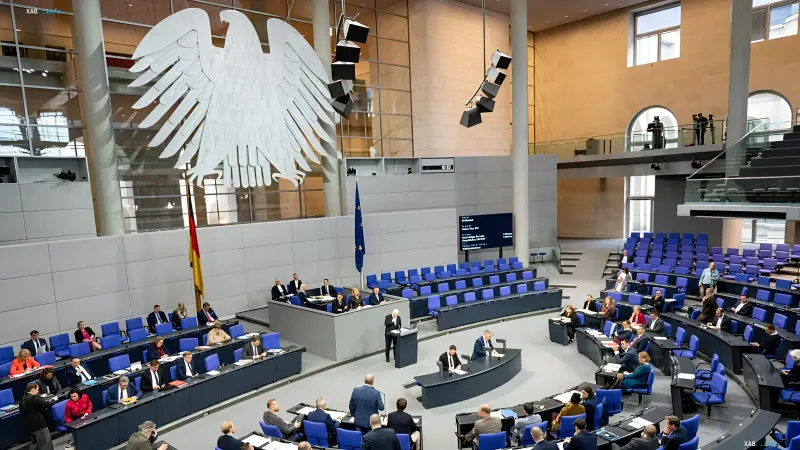
On November 13, 2026, the Alliance 90/The Greens parliamentary group in the Bundestag submitted an initiative to introduce a tax on ultra-large wealth in Germany. The proposal targets individuals whose net worth exceeds 500 million euros and provides for a three-tier taxation scale. The initiative was put forward amid acute discussions over the federal budget deficit and growing pressure on the social sector.
Three-Tier Scale: From 2% to 4% of Net Wealth
According to the text of the initiative, the tax-free allowance is set at 500 million euros. For fortunes exceeding this amount, a rate of 2% on net wealth is proposed. For fortunes over 1 billion euros, the rate rises to 3%, and for fortunes of 10 billion euros and above, it increases to 4%. The parliamentary group emphasizes that the tax would affect only a «few hundred» people in the country; however, according to their estimate, by closing existing tax loopholes, the state could generate an additional 20 billion euros per year.
«The Ultra-Rich Pay Less Than Social Workers»
Karoline Otte, representing the Greens on the Bundestag's Finance Committee, stated in an exclusive comment to Euronews: «The ultra-rich in Germany pay less in taxes than social workers. That is why we are demanding the introduction of a wealth tax starting at 500 million. The federal government is currently arguing through the nights, trying to patch together a budget that cuts precisely from those who are already forced to count every euro. In Germany, a majority has long favored a wealth tax — it is time for us to take this into account.» The group also points to «fairness gaps» and «market inefficiencies» in the tax system, citing as an example the possibility of inheriting over 200 apartments and a fortune exceeding 26 million euros virtually tax-free, whereas average inheritances are taxed in the standard manner.
A €109 Billion Budget Hole as the Trigger
The Greens explain their initiative by pointing to the strained situation with the federal budget. According to data published by the federal government in August 2026, the budget for 2028–2030 faces a total deficit of approximately 109 billion euros: about 22 billion in 2028, 39 billion in 2029, and 48 billion in 2030. Furthermore, the group argues that tax reliefs, in particular the reduction of corporate income tax, primarily benefit the top one percent of the population. According to them, the concentration of private capital and its further growth are precisely what deepens inequality.
Lobbyists and Taxpayers Oppose: Risk of Capital Flight and Lower GDP
The initiative immediately drew harsh criticism from business lobbies. Thorsten Alsleben, managing director of the New Social Market Economy initiative (INSM) — a lobby organization funded by employers' associations — told Euronews: «INSM rejects a wealth tax. It would additionally burden the German economy, weaken investment incentives, and promote the outflow of capital and affluent taxpayers.» According to him, instead of new taxes, policy should review government spending and support economic growth.
Ministry of Economy Estimate: Net Loss of €24–31 Billion Annually
Reiner Holznagel, president of the Taxpayers' Union, also spoke out against the initiative, citing a study by the Federal Ministry of Economy. According to him, introducing a wealth tax would lead to «employment, production, consumption, and consequently gross domestic product shrinking.» Despite additional revenues from the tax itself, taken together, this study indicates that tax revenues would drop by 24 to 31 billion euros per year. Holznagel urged officials to «strengthen economic growth and consistently utilize the potential for spending cuts in public budgets.»
Thus, the Greens' initiative faces a fundamental divergence regarding its fiscal consequences: the parliamentary group estimates potential revenues at 20 billion euros, while opponents, citing a departmental study, forecast a net loss for the treasury of 24 to 31 billion euros. The fate of the proposal now rests on further parliamentary debates and the stance of the coalition government, which, in the words of the Greens themselves, is «arguing through the nights» trying to balance the budget.