
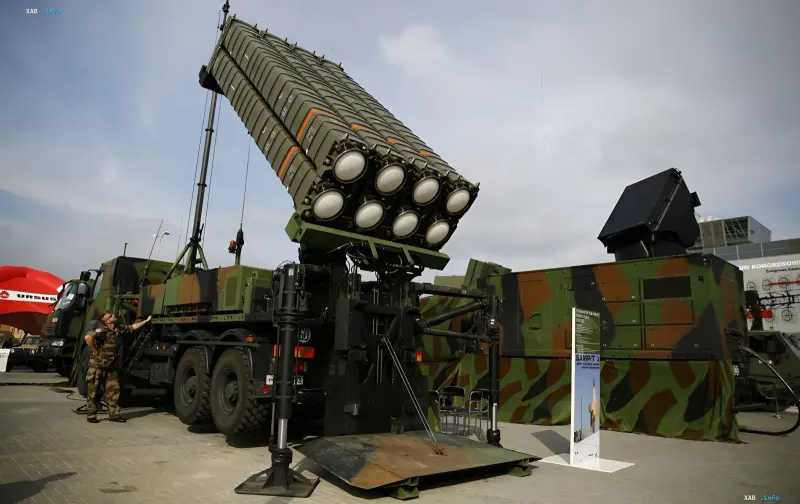
The Italian prosecution has uncovered a large-scale espionage operation organized by the Russian military intelligence agency, the GRU. A group operating on Italian territory systematically gathered data on air defense systems that Western countries are transferring to Ukraine to protect against Russian attacks. The investigation revealed not only the methods used by the agents but also the specific targets of Moscow's interest — ranging from underwater drones to rocket engine technologies.
The Main Suspect and His Handler
At the center of the investigation is 59-year-old Gavino Piras, a former officer of the Italian intelligence services. According to the prosecution, he acted on orders from the Russian military attaché in Rome, Mikhail Astakhov, whom Italian authorities consider a GRU officer. Their meetings were conducted secretly: Astakhov handed Piras lists of requests from his superiors, while Piras, in turn, left microSD cards with information in a pre-prepared hole in a wall.
For each data package, Piras received 4,000 euros in cash. "Everything I can give you, I will give you; pass it on to your boss," he allegedly told Astakhov, according to transcripts seized during the investigation.
What Interested Moscow?
The list of requested information was broad and covered key areas of military aid to Ukraine and dual-use technologies:
- Data on Western air defense systems supplied to Ukraine to protect against missile and drone strikes;
- Information on the Leonardo underwater drone being tested by the company in La Spezia;
- The effectiveness of strikes on Iranian nuclear facilities;
- Technical details regarding the operations of the Italian company Avio, which produces solid-fuel rocket engines that began being supplied to the US military in April 2025.
Piras also informed his handler that British, rather than Italian, intelligence was involved in Ukraine's long-range strikes on Russian oil facilities. Furthermore, he warned Astakhov that Italian experts were studying the Russian T-90 tank and attempting to understand the principle of autonomous operation of the machine gun installed on it. "If they manage to steal the secret, they will do it, so exercise caution," court documents quote him as saying.
Recruitment and Expansion of the Network
Using the money received from Astakhov, Piras recruited informants among active-duty Italian military personnel. Currently, the investigation is proceeding against five other probable informants. Piras's lawyer, following his client's arrest, stated that his client passed any secret information to Russia, though this does not alter the nature of the charges.
Italy's Reaction and International Context
The Italian government announced the expulsion of two Russian military attachés from the embassy in Rome, including Mikhail Astakhov. Foreign Minister Antonio Tajani described Moscow's actions as "serious and unacceptable interference in Italian institutions and national security." "Moscow continues to use hybrid warfare to attack the West and Italy," he emphasized.
Similar cases are being recorded in other European countries. For instance, in Berlin, the German prosecution detained a Kazakh citizen who was passing data on military aid to Ukraine to Russia. This indicates the systematic nature of Russian intelligence agencies' spy activity in Europe, aimed at obtaining information on Western military technologies and their application in the conflict in Ukraine.


