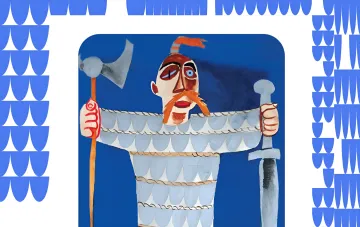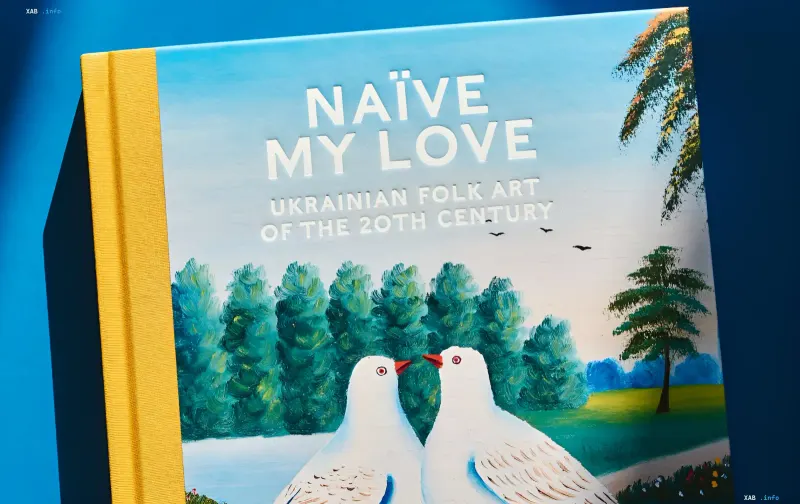
Ukrainian brand GUNIA Project, together with the iconic French publisher Assouline, has presented the book Naïve My Love, dedicated to the phenomenon of 20th-century Ukrainian naïve art. The volume, designed in the distinctive collector's style characteristic of Assouline, brings to an international audience an artistic movement that took shape in Ukraine at the turn of the 19th and 20th centuries and long remained in the shadow of the academic history of art. The book's cover, executed in the manner of naïve painting, is itself a demonstration of the very aesthetic discussed within its pages.
Self-Taught Artists and Their Language
At the heart of the volume is the work of masters who had no professional art education and stood apart from the academic art world. They mastered their craft through practice, learning from other artisans, and personal experience, and their works were marked by immediacy, emotional intensity, and freedom of imagination. It is precisely these qualities that made naïve art recognizable and in demand: some of the works are today held in the collections of museums in Kyiv and other cities around the world, while individual pieces were long believed lost and were only discovered after their authors' deaths.
From the Walls of a Rural Cottage to Contemporary Design
What makes Ukrainian naïve art distinctive is that some of its examples survived not on canvas but on the walls of rural houses, on furniture, and on everyday objects — that is, in the very environment in which they were created. The book presents not only the key figures of 20th-century naïve painting but also traces how this art influenced the avant-garde of the 1910s–1920s and continues to shape contemporary design, linking a local tradition with global artistic processes.
The Team and the International Publisher
The conceptual visionaries and creative directors of the publication are the founders of GUNIA Project, Mariia Havryliuk and Natalka Kamianska. The selection of artists and works, as well as the conceptual foundation of the book, was shaped by Liudmyla Lykhach, a Kyiv-based art publisher, curator, and researcher of Ukrainian naïve art. The texts were written by Ukrainian journalist and researcher Anna Lodygina, founder of the Back to the Roots project. The publishing partner is Paris-based Assouline, founded by Prosper and Martin Assouline in 1994 and, over the course of its work, having published more than two thousand volumes on art, fashion, design, architecture, and culture.
Support and Availability
The creation of the Ukrainian edition was supported by Nova Ukraine, the Bilokin Initiative, Sushko Philanthropy, the Jorge & Maria Romo Foundation, the Tokarev Foundation, the ALIPH Foundation, and xpate. The release in partnership with Assouline makes the book accessible to an international audience, in line with GUNIA Project's strategy of promoting Ukrainian culture abroad.
Conflicting Data
The provided materials show a minor discrepancy in the book's subtitle: the descriptive text of the edition uses the phrasing "Ukrainian Art of the 20th Century," whereas the cover and one of the press-release headlines use "Ukrainian Folk Art of the 20th Century." The difference is immaterial to the content, but when citing the exact title, it is recommended to rely on the edition's cover — "Ukrainian Folk Art of the 20th Century."