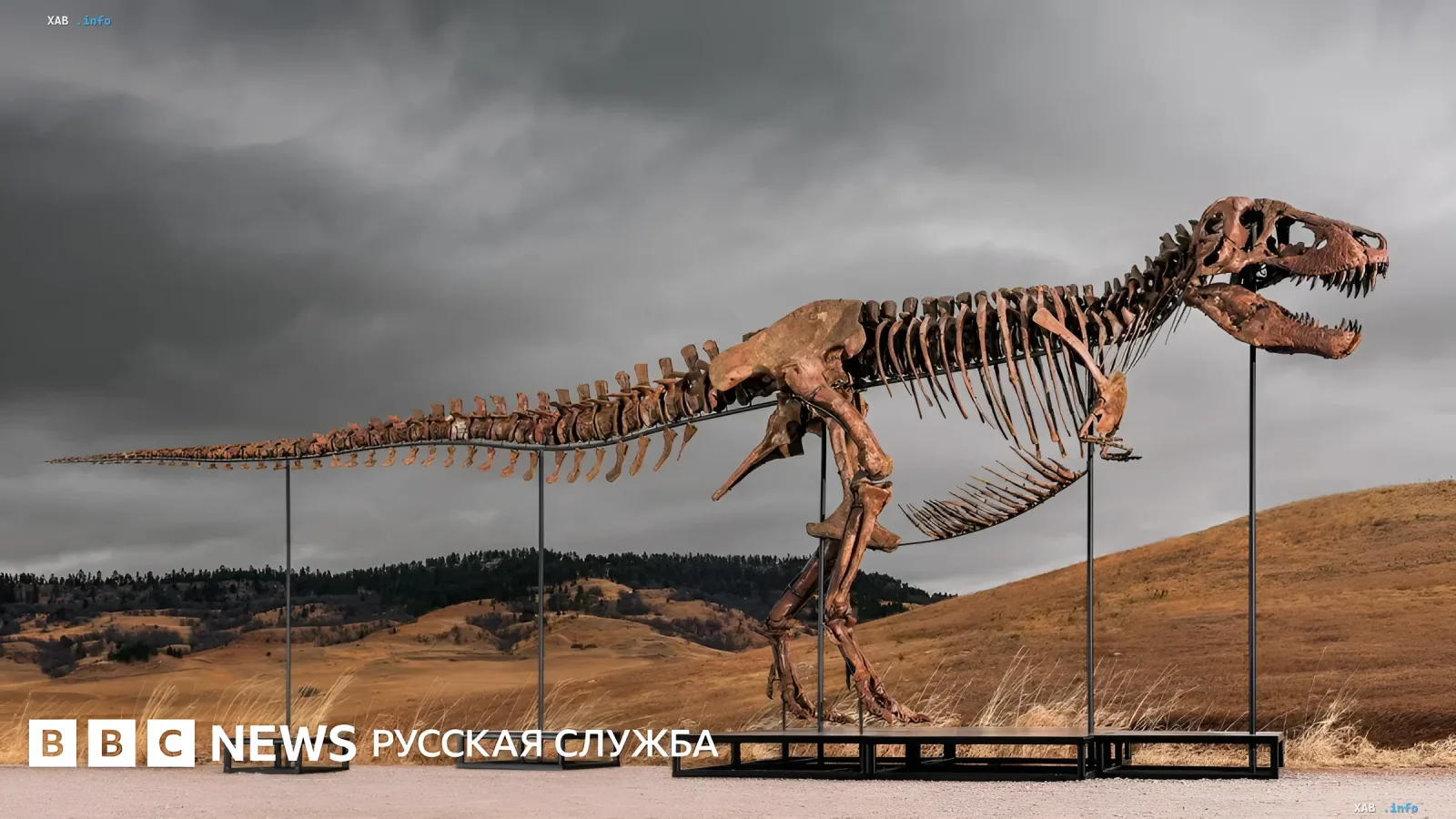
At Sotheby's auction in New York on Tuesday, a Tyrannosaurus rex skeleton nicknamed Gus was sold. The final price was $50.1 million. This deal set a new world record: dinosaur bones have never been so expensive before.
Seven bidders competed for the right to acquire this unique find. The battle for the skeleton lasted only ten minutes, after which the winner was announced. The buyer's name remains secret.
The history of the find and the name Gus
The skeleton was discovered in 2021 on a private ranch in South Dakota. The animal was named after the landowner, Gary Gus Liking, who was no longer alive at the time of the sale. The process of extracting the bones took three years, as work was conducted exclusively during the summer season when the ground was sufficiently thawed. Another three years were spent assembling the skeleton.
Research of the remains allowed scientists to learn details about the predator's life. Bite marks and healed rib fractures were found on the skull. Most likely, Gus received these injuries in fights with other dinosaurs but managed to survive.
Uniqueness of the specimen
Gus lived between 72 and 66 million years ago, when the climate was warm and sea levels were high. This is one of the largest and most complete Tyrannosaurus skeletons ever found. The total length of the exhibit is 11.6 meters. Out of all the bones, 183 have been preserved, giving a completeness rate of about 63%.
The record price of $50.1 million was 11 times higher than the initial estimate of $30 million. The previous record in the fossil market belonged to a Stegosaurus named Apex, which was bought by billionaire Ken Griffin in 2024 for $44.6 million.
Controversy over private collections
This auction sparked a heated debate in the scientific community. Many paleontologists express dissatisfaction that valuable specimens are ending up in the private collections of the ultra-wealthy and fear the start of a new era of fossil collecting.
However, representatives of the auction house point to the specifics of US legislation. Cassandra Hutton, head of the Natural History department at Sotheby's, noted that the United States is the only country where such finds are considered the private property of the landowner. According to her, the price paid reflects the colossal efforts spent on discovering and preparing the specimen.
"Gus is not just an exceptional find, but a specimen that was excavated, documented, prepared, and truly carefully stored," Hutton emphasized. She also reminded of the risks paleontologists face in the field: living in tents for months surrounded by snakes and predators, they risk their lives to search for such unique remains.