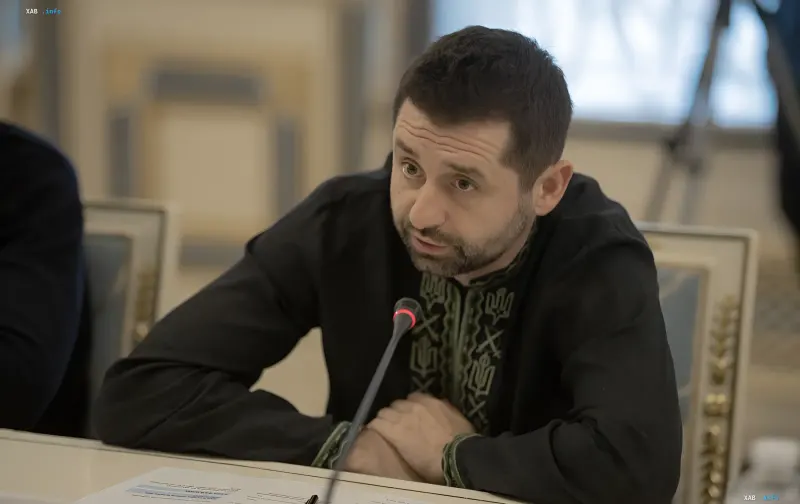
Markiyan Galabala, an investigative judge at the High Anti-Corruption Court (HACC), has granted a complaint by the Anti-Corruption Action Center (AntAC) regarding the inaction of Acting Prosecutor General Anton Kovalsky. According to RBC-Ukraine citing AntAC, the court ordered Kovalsky to enter information into the Unified Register of Pre-Trial Investigations (URPTI) regarding a possible crime committed by David Arakhamia, the head of the Servant of the People parliamentary faction. The case concerns the alleged distribution of cash-filled envelopes to members of parliament in exchange for voting on government-backed decisions in the Verkhovna Rada.
Decision of the Investigative Judge
According to AntAC, on October 19 the organization submitted a statement regarding the alleged distribution of cash envelopes by the head of the Servant of the People faction to MPs for their votes. Acting Prosecutor General Anton Kovalsky declined to initiate criminal proceedings and instead forwarded the statement to the National Anti-Corruption Bureau of Ukraine (NABU), explaining that the relevant circumstances were allegedly already being investigated by NABU. AntAC commented on this: 'Kovalsky just brushed it off, much like Kravchenko: claiming NABU is already investigating, and forwarded the statement there.' Following this, the organization appealed to the HACC with a complaint about inaction, which the court satisfied.
Legal Dispute Over Jurisdiction
The Anti-Corruption Action Center emphasized that only the Prosecutor General or the acting officeholder has the authority to initiate criminal proceedings against a Member of Parliament. Therefore, according to AntAC's position, Kovalsky was legally obligated to enter the information into the URPTI rather than redirect the statement. NABU, in turn, confirmed that without the appropriate entry in the URPTI, the Bureau has no legal basis to investigate Arakhamia's potential actions. Effectively, this means that until the case is officially registered in the registry, pre-trial proceedings regarding this episode cannot be launched by any agency.
Context: The Vote-Buying Case
The HACC ruling fits into a broader investigative context. In late December 2025, NABU and the Specialized Anti-Corruption Prosecutor's Office (SAPO) announced the exposure of an organized criminal group that included current Ukrainian MPs. According to the investigation, members of the group systematically received undue benefits for voting in favor of necessary decisions in the Verkhovna Rada. SAPO prosecutors served notices of suspicion to five MPs who, according to the investigation, ensured the receipt of bribes for relevant votes, with bribe amounts ranging from $2,000 to $20,000. Additionally, in late 2025, searches were conducted at the home of David Arakhamia's assistant as part of the envelope payout case. According to SAPO, prior to the full-scale invasion of Ukraine, there were periods when monthly bribe payments to MPs in 'envelopes' reached $20,000.
What This Means
The investigative judge's decision removes a procedural deadlock: the acting prosecutor general is now required to register the case, making a pre-trial investigation possible. It is important to emphasize that this concerns the registration of information about a potential crime rather than proven guilt—the mere act of making an entry in the URPTI does not constitute a legal accusation. At the same time, the case involves a key political figure of the ruling party's faction, giving it high public and political significance and highlighting the ongoing tension between AntAC, the Prosecutor General's Office, and NABU over who holds the authority to initiate the prosecution of parliamentarians.