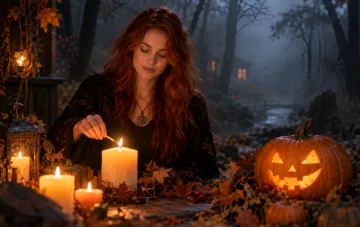
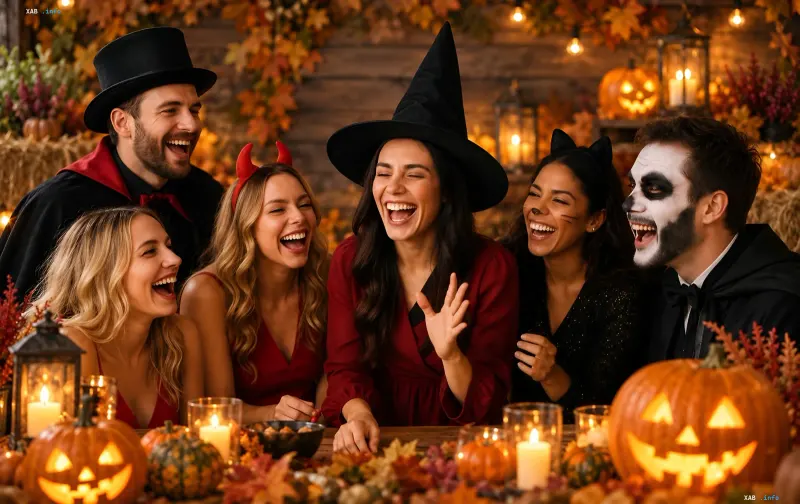
At the end of October, the streets of major cities are once again decorated with pumpkins, artificial spider webs, and ghost figures, while people try on the most unusual costumes. Halloween has long ceased to be a purely Western phenomenon: the holiday, rooted in Celtic beliefs, is celebrated on all continents today, with each country adding its own touches. In 2026, the main autumn carnival falls on Saturday, October 31, with celebrations traditionally beginning in the evening and continuing into the night of November 1.
Date and Calendar: Why October 31 Specifically
The choice of date is not accidental and has its roots in the ancient Celtic festival of Samhain, which symbolized the end of the harvest season and the onset of winter. As the National Museum of Ireland explains, Samhain was celebrated at the turn of October and November: according to folk beliefs, during this period the boundary between the world of the living and the world of the dead became thinner, and the souls of ancestors could supposedly return to their homes. Over time, these customs intertwined with the Christian All Saints' Day, which falls on November 1. Hence the name Halloween itself—a contraction of All Hallows' Eve.
Costumes and Pumpkin Lanterns: How Symbols Have Changed
Today, dressing up as witches, vampires, ghosts, and movie characters is the main entertainment of the holiday, but initially masks and unusual clothing served a different purpose: according to ancient beliefs, they helped people hide from spirits that were thought to appear among the living on Samhain night. The history of pumpkin lanterns is no less interesting. In Ireland, turnips were used to make them, with spooky faces carved into them and a candle placed inside. When Irish immigrants brought the tradition to North America, turnips were gradually replaced by pumpkins—they were larger, more accessible, and easier to carve. Thus, the jack-o'-lantern became one of the most recognizable symbols of Halloween.
How It Is Celebrated Around the World: From Trick-or-Treating to Scottish Guising
Although Halloween is most strongly associated with the USA, its traditions are widespread around the world. In America, the holiday has become an important part of autumn culture: houses are decorated with pumpkins, skeletons, and cobwebs, and children in costumes go from house to house following the familiar tradition of trick-or-treating to collect sweets. Adults throw costume parties and visit themed attractions. Ireland, considered the birthplace of many modern customs, features festivals, parades, and ancient rituals—including baking a fruit bread called barmbrack containing hidden small items to tell fortunes about the future, with a ring, for instance, promising marriage. In Scotland, the tradition of guising survives, where children in costumes go from door to door performing songs and jokes in exchange for treats, while in Canada, Great Britain, Germany, France, Japan, and Australia, the holiday is also celebrated with parties and themed events—though in Australia it is still spring at the end of October, so the atmosphere there is quite different from Europe.
Halloween in Ukraine: Parties, Cafes, and Homemade Lanterns
In Ukraine, Halloween is perceived primarily as an excuse to spend time unusually: transform into a favorite character, throw a themed party, or simply immerse oneself in the festive atmosphere. Most often, this is created by cafes, restaurants, and entertainment venues that decorate with pumpkins, artificial cobwebs, and decorative ghosts ahead of October 31. Some Ukrainians also decorate their homes, carve pumpkin lanterns, cook unusual dishes, and organize costume gatherings with friends. Thus, in a single night, the holiday unites ancient Celtic beliefs, Christian tradition, and modern entertainment culture—from American sweets to Irish fortune-telling bread.