In the case of a myocardial infarction, every minute counts, and this is not a metaphor. While a person waits for the pain to pass on its own, a part of the heart muscle dies irreversibly. Georgy Mankovsky, General Director of the Center for Cardiology and Cardiac Surgery of the Ministry of Health of Ukraine, interventional cardiologist, and Doctor of Medical Sciences, explains in his column for RBC-Ukraine the mechanics of an acute coronary event, common patient mistakes, and why the first and most important link in the chain of survival is the person themselves, not the doctors.
Heart attack mechanics: what happens in the artery
The mechanism of an acute myocardial infarction is extremely simple. A blood clot blocks the lumen of a coronary artery, and the part of the heart muscle it feeds is left without oxygen. In the first few minutes, cells are still alive, but their destruction accelerates with every passing minute. Cardiologists say: lost time means lost myocardium — and that is almost literal. According to one well-known clinical analysis, every half hour of delay in seeking help increased the risk of death over the following year by about 7.5% compared to patients who received help earlier.
Why pain doesn't always look like it does in the movies
Almost no one thinks, "I'm having a heart attack." People assume they are overworked, have a pinched back, or that it is stomach issues or nerves. The classic scene—clutching the chest—is not always the case. There may be pressure or burning behind the sternum, shortness of breath, sudden weakness, cold sweat, or nausea. The pain can radiate to the left arm, back, neck, or lower jaw. For people with diabetes, elderly patients, and many women, the symptoms are even less obvious: sometimes the only manifestation is weakness and shortness of breath. This is why Mankovsky emphasizes: if you have a new, severe discomfort in the chest that does not pass after a few minutes, especially when combined with shortness of breath, weakness, or sweating, do not try to diagnose yourself.
What to do and what not to do
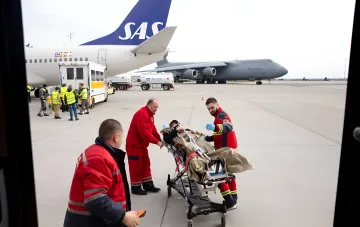
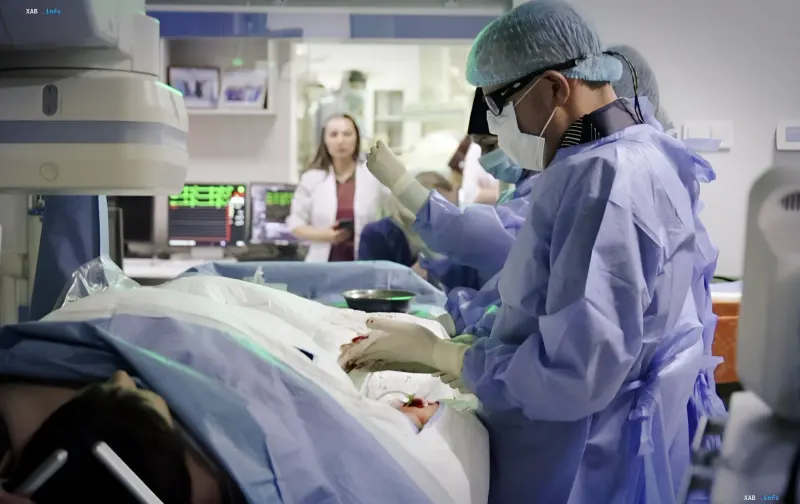
The cardiologist's advice is straightforward: call 103. While waiting for the ambulance, sit or semi-lie down, do not perform any physical activity, and listen to the dispatcher. Driving yourself by car is tempting, but it is a mistake. The ambulance crew performs an ECG while still in your apartment and, upon seeing signs of a heart attack, takes the patient to a clinic where stenting is performed around the clock. If a person arrives at the nearest hospital without such capabilities, they will still have to be transferred, and a dangerous arrhythmia could occur on the road with no defibrillator nearby. The procedure itself for the patient usually looks mundane: a puncture on the wrist, a catheter to the heart, and a few minutes to find the blockage and install a stent. Sometimes, the intervention lasts less time than the person spent at home waiting for it to "pass on its own."
War and air raids: why stenting is not delayed
War has been added to the civilian factors of delay. Mankovsky regularly hears from patients: "There was an air raid, I decided to wait for the 'all-clear'." According to the rules adopted by the government of Ukraine in September 2026, assistance that is dangerous to interrupt is not stopped during an air raid. 103 dispatchers take calls, crews go out, and hospitals admit patients with emergency conditions regardless of the threat level. At the Center for Cardiology and Cardiac Surgery, urgent stenting is not delayed by air raids or power outages: if the lights go out during the intervention, the X-ray operating room switches to backup power, and the team continues working. For the specialists, this is already a routine part of practice in wartime.
The chain of survival starts with the person
When everything ends well, it is common to say that the doctors saved the person. In reality, it is the merit of several links: the patient who did not wait; the dispatcher who took the call; the crew who performed the ECG and delivered the patient to the right clinic; and the surgical team. The first link is always the person themselves. Mankovsky asks not to be afraid to call an ambulance "for nothing": if it turns out it is not the heart, no one will consider it a mistake. But no one can restore already dead muscle—not in Ukraine, nor in the best clinics in the world. Specialists mostly succeed in opening the artery, but the time spent on the couch waiting for it to "pass on its own" is not counted in any statistics, although it is precisely this time that most often determines the outcome.