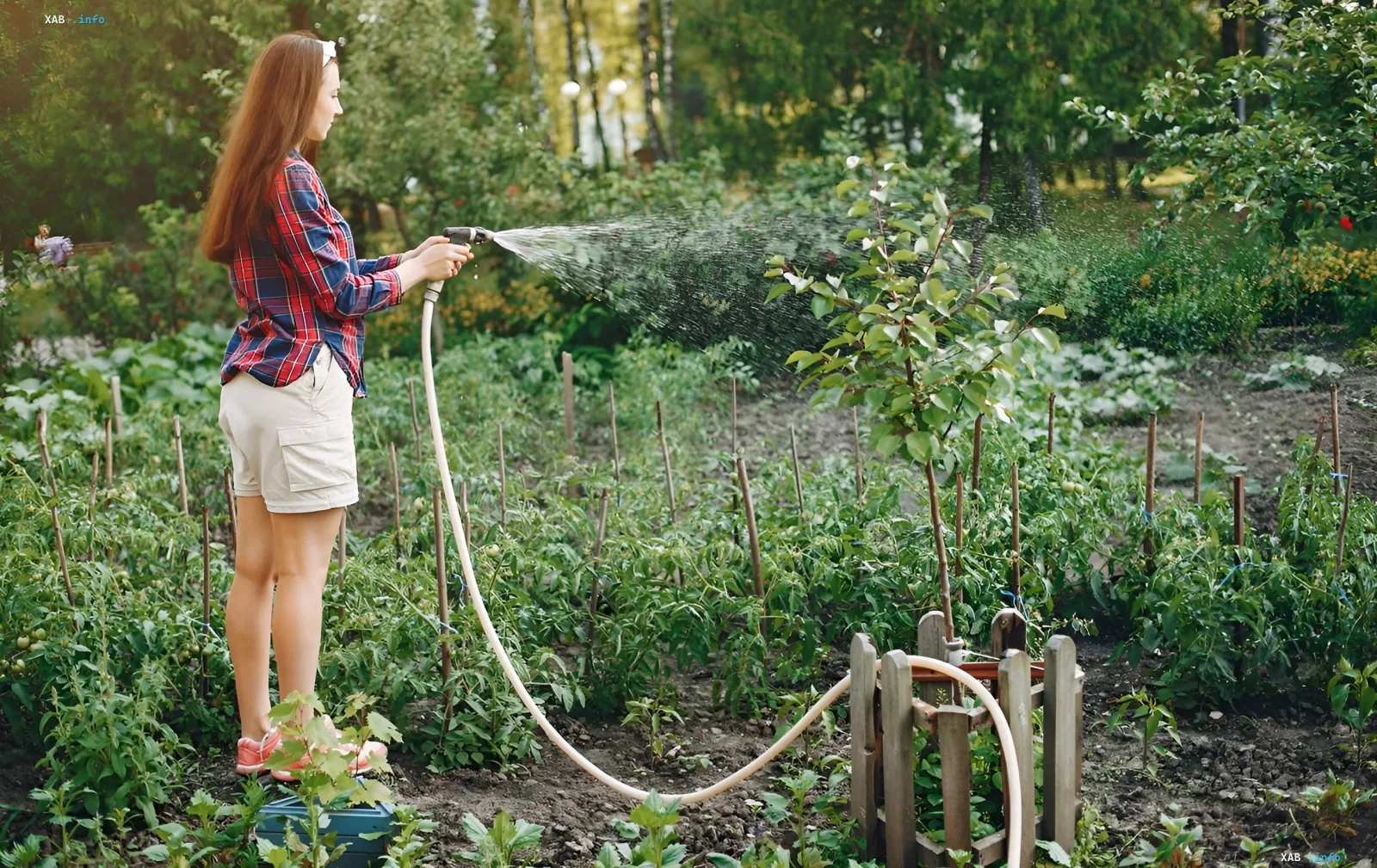
Prolonged summer heat and the scorching sun become a real test for gardeners. When the air temperature exceeds +30 degrees, most crops experience severe stress. How to avoid losing the entire harvest and protect vegetables — we tell you in this article.
Artificial shade as a savior
The most effective way to protect plants from direct ultraviolet rays is to create artificial shade for them. This allows reducing the temperature on the leaf surface by 5–8 degrees, which is critical for preventing heat shock.
Special netting with a shading degree of 45–60% is the best solution for tomatoes, peppers, and eggplants. It scatters aggressive sunlight but leaves enough light for photosynthesis. Lightweight material (with a density of 17–30 g/m²) can be stretched over arches or simply thrown over tall plants. It reflects sunlight well and does not overload the plants.
If special materials are not available, use old tulle curtains, sheets, or branches of trees with dense foliage. The main thing is to ensure diffused light and lower the temperature.
Mulching: a thermos for the soil
In the open sun, the top layer of soil can heat up to +50 degrees, causing plant roots to literally "boil," and moisture evaporates within a few hours. Covering the ground with mulch solves this problem.
Cover the interrows and the ground around the bushes with a layer of 5–10 centimeters. The following are excellent for this:
- Straw
- Dry grass
- Sawdust
- Bark
- Leaf humus
Mulch works like a thermos: it prevents the soil from overheating during the day, retains moisture after watering, and suppresses weed growth.
Watering rules in the heat
On hot days, watering mistakes can completely destroy plants. The soil should be moistened exclusively at dawn (before 7:00–8:00 AM) or late in the evening, when the sun has already set. Evening watering is better, as the plants have time to fully saturate with moisture overnight.
Water plants strictly at the root. Water droplets on leaves under direct sunlight act like small lenses, causing severe burns.
It is better to water less frequently but abundantly (to a depth of 20–30 cm) than to moisten only the surface layer every day. This stimulates the development of a deep root system and increases the plants' resistance to drought.
Contradictory data
Some sources recommend morning watering so that plants can use moisture throughout the day, while others recommend evening watering to avoid evaporation. Both points of view have a right to exist, but in conditions of extreme heat, evening watering is preferable, as it minimizes moisture loss and reduces the risk of burns.
What to do if the heat has already started?
If plants have already suffered from the heat, there is no need to panic. Here is what can be done:
- Remove damaged leaves and fruits so that the plant does not waste energy on them.
- Increase the frequency of watering, but do not overwet the soil.
- Use growth stimulants and anti-stress preparations.
- Create temporary shading from improvised materials.
Compliance with these recommendations will help preserve the harvest even on the hottest days. Remember that prevention is always better than treatment, so start preparing for the heat in advance.


