
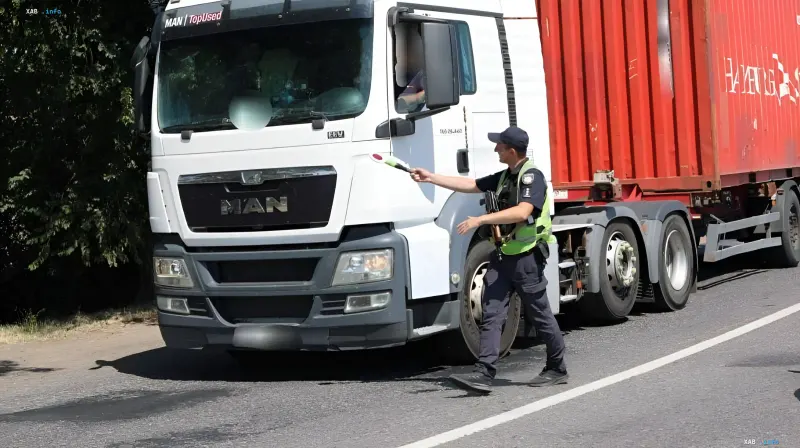
A special regime for the operation of motorways has come into force in the Odesa region, directly dependent on weather conditions. The regional infrastructure restoration and development service, together with relevant authorities, has introduced temporary restrictions on the movement of heavy transport. This measure is a response to the physicochemical properties of the road surface, which loses its load-bearing capacity under the influence of high temperatures during the summer period.
Physics of deformation: why asphalt cannot withstand the load
The decision to introduce restrictions was dictated by the need to prevent irreversible deformation of the road surface. Asphalt concrete coating transitions into a plastic state when heated. Under such conditions, even standard loads for heavy transport lead to the formation of deep ruts and the destruction of the road structure. To preserve the integrity of highways of state importance, a "heat mode" was introduced.
The activation of restrictions occurs automatically when the air temperature rises above the +28°C mark. This threshold is critical for maintaining the operational characteristics of the region's roads. The Ukrainian Hydrometeorological Center monitors the temperature background, and its data serves as the basis for introducing the ban.
Restriction parameters and traffic schedule
The regime applies to trucks and truck convoys whose characteristics exceed established norms. The ban applies to vehicles with an actual mass of more than 24 tons, as well as those where the load on a single axle exceeds 7 tons.
The time frames of the restrictions are tied to the period of greatest solar activity and heating of the road surface:
- Driving ban: from 10:00 to 22:00.
- Permitted time: from 22:00 to 10:00 (night and morning hours).
At night, when the asphalt temperature drops, the movement of heavy transport is allowed in the standard order, which allows logistics companies to plan delivery schedules taking into account daily cycles.
Logistics of layovers: where to stop
To avoid chaos on the roads and the accumulation of trucks on the shoulders, regional authorities have prepared infrastructure for temporary layovers in advance. Specialized sites have been identified on key highways of international importance, in particular on the M-05 "Kyiv — Odesa" and M-15 "Odesa — Reni" routes.
For drivers forced to stop due to the temperature regime, roadside TIR parking lots are also used. This allows minimizing downtime and ensuring the safety of both the drivers themselves and other road users.
Exceptions for critically important cargo
Despite strict restrictions, a system of exceptions has been introduced to ensure the uninterrupted functioning of the economy and national security. By joint decision of the relevant ministries, a list of transport categories that may move during banned hours has been approved:
- Transport carrying perishable goods and live animals.
- Vehicles carrying dangerous goods.
- Transport delivering humanitarian aid.
- Cargo necessary for defense needs and ensuring the security of the state.
- Equipment involved in the liquidation of emergency consequences.
Control and liability
Monitoring compliance with the rules is the responsibility of inspectors of the State Service of Ukraine for Transport Safety ("Ukrtransbezpeka") and the patrol police. To record violations, both stationary weighing complexes and mobile systems, as well as modern technologies for automatic weighing in motion (WiM systems), are used.
Violation of traffic rules during the heat mode entails administrative liability. The amount of fines depends on the degree of exceeding established weight standards, which creates an economic incentive to comply with the regime and preserve the road fund.


