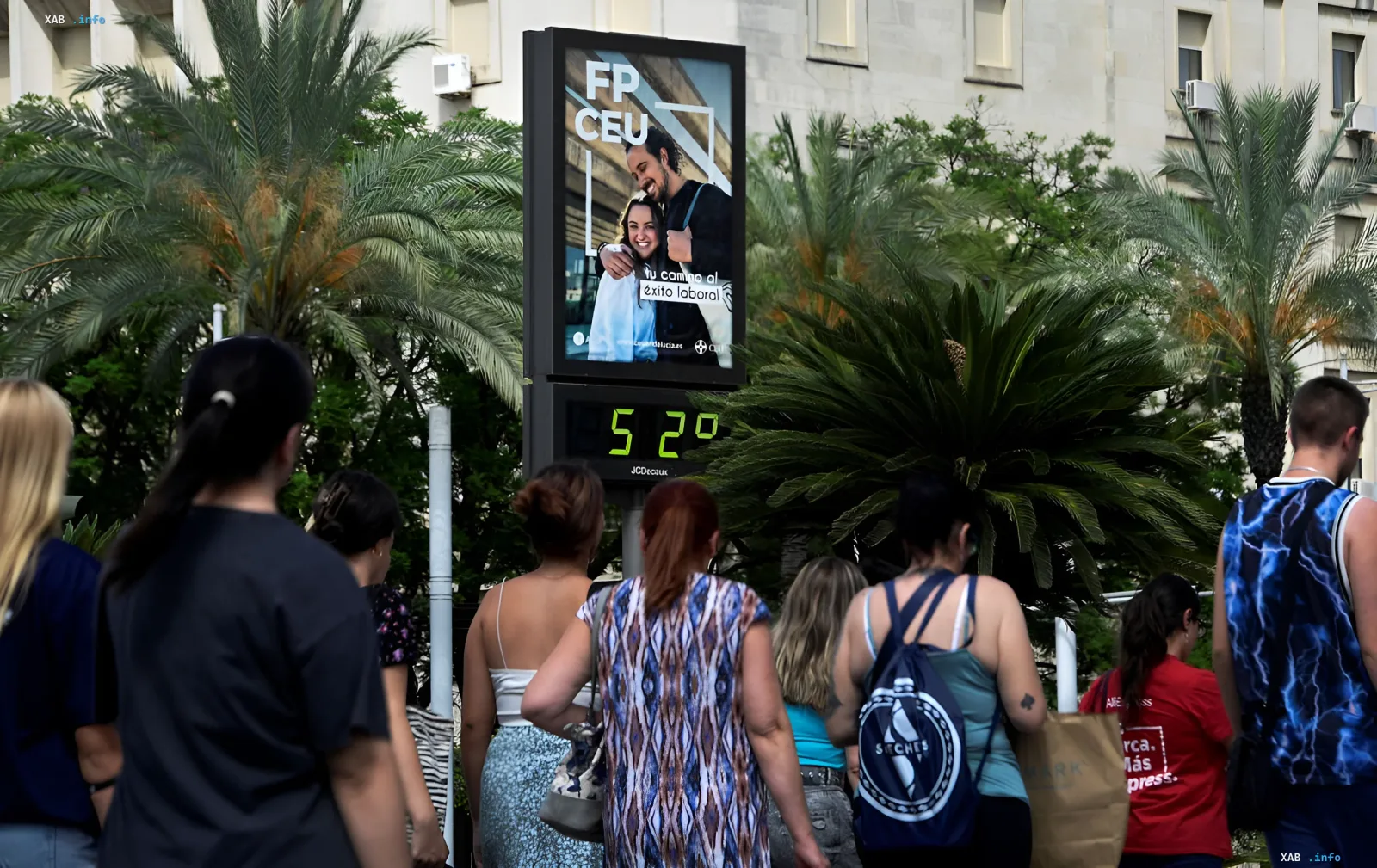
Europe is facing an unprecedented heatwave that has forced countries to introduce emergency measures. Meteorologists are not holding back their emotions, comparing the current situation with one of the most tragic weather events in modern history — the catastrophic heatwave of 2003.
France: Historical record and tragedy
The situation is particularly acute in France. On Tuesday, the country recorded its hottest day in nearly 80 years of observations. In the town of Pissos in the southwest, thermometers reached +44.3°C. The heat led to widespread power outages: thousands of households in the Brittany region were left without electricity.
The tragedy also claimed human lives. According to authorities, at least 48 people died trying to escape the unbearable heat in the water. Additionally, two young children died from overheating after being left in a closed car.
Catastrophic consequences in Italy and the UK
In Italy, the Ministry of Health declared the highest level of heat warning for 16 major cities, including Rome, Milan, Turin, Verona, and Florence.
In the United Kingdom, the Met Office issued only the second extreme heat warning in the country's history. Meteorologists are predicting the hottest day in June in recorded history. Schools are closing en masse or shortening the school day to protect children.
In Spain, two elderly people became victims of heatstroke, and temperatures in certain regions exceeded +40°C for several consecutive days.
Reason for the anomaly: Atmospheric phenomenon "Omega"
Meteorologists explain the extreme heat with a rare atmospheric phenomenon known as "Omega". It occurs when a powerful area of high pressure remains over a territory for a long time, blocking the inflow of cool air. According to Reuters Climate Monitor, due to this, temperatures in certain areas of Europe exceed the climate norm by almost 18°C.
Comparison with 2003 and impact on the economy
Experts from the French meteorological service Meteo-France are directly comparing the current situation with August 2003. Then, the heat lasted 16 days and, according to experts, led to about 80,000 additional deaths across Europe.
The consequences of the anomaly are already being felt in all areas of life:
- In Paris, Fashion Week organizers had to change show schedules, while the Eiffel Tower and the Louvre ended their work early.
- In Switzerland, authorities opened theaters with air conditioning for free daytime movie screenings.
- Construction companies across Europe are adjusting schedules so that workers avoid peak hours.
- French farmers have switched to night shifts for harvesting to reduce the risk of fires and protect personnel.
- In the UK, the grid operator asked to increase supply volumes due to an explosive growth in consumption.
- Railway operators recommended making only the most necessary trips due to speed restrictions on overheated tracks.
Future forecasts
Scientists are increasingly linking temperature records to the possible return of El Niño. The probability of this phenomenon occurring in the winter of 2026-2027 is estimated at 96%, and the chance of its particularly powerful phase reaching 35%. At the same time, the summer of 2026 in Europe may be accompanied not only by heat but also by heavy rains and a shortage of water resources, which will intensify weather contrasts.


