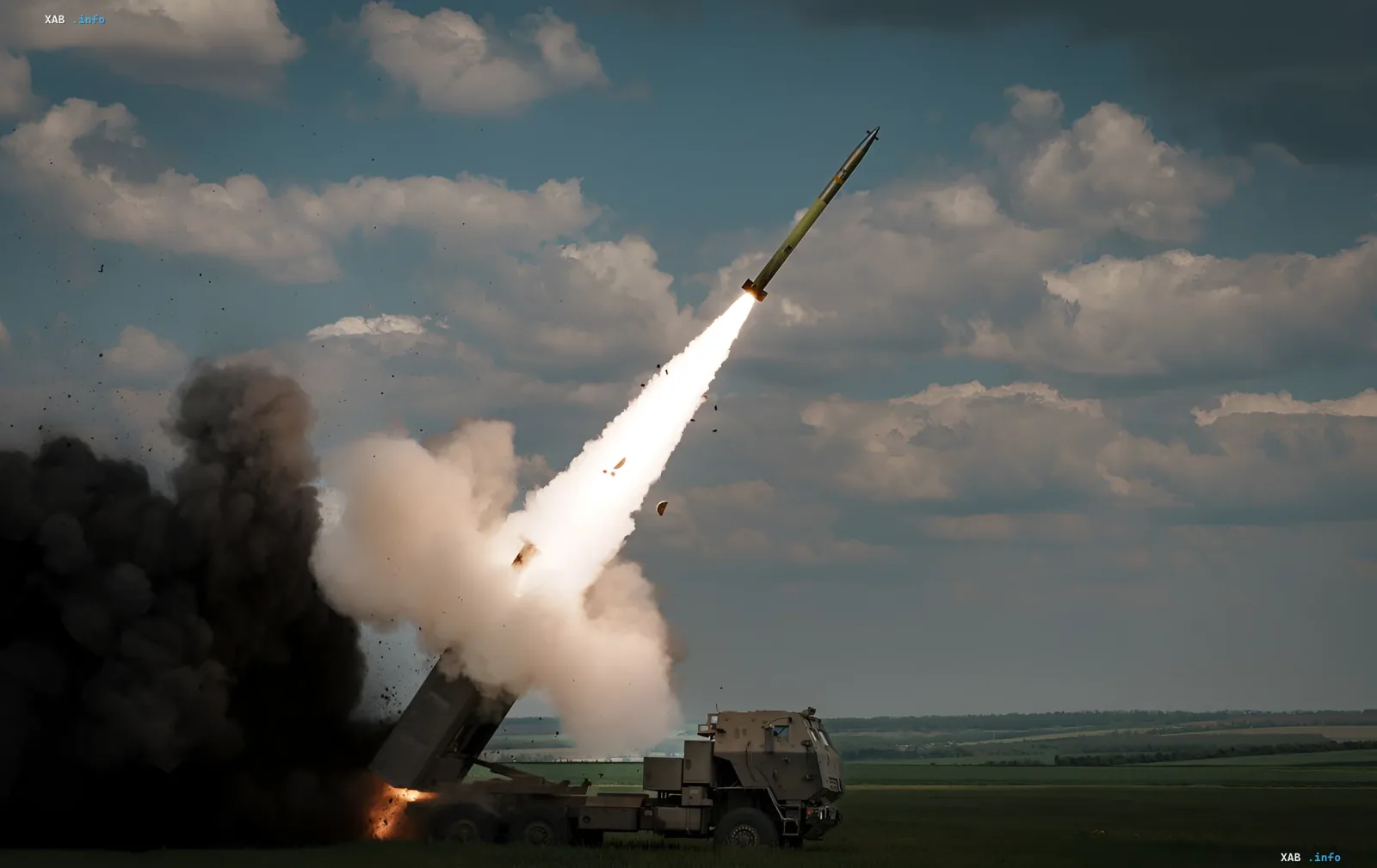
American defense giant Lockheed Martin has unveiled a revolutionary upgrade for one of the most famous rocket systems of modern times. The modernized version of HIMARS, designated FLEX, has gained dual firepower and a fundamentally new function — intercepting aerial targets. This was reported by RBK-Ukraine citing the company's press service.
Double strike: from ground targets to the sky
The key difference of the new version lies in the change of the combat compartment configuration. While the classic installation on the M1140 chassis carries one container of ammunition, the HIMARS FLEX is capable of carrying two simultaneously. This technical solution allows loading up to 12 GMLRS guided missiles. In terms of firepower per volley, the new wheeled system is now effectively equivalent to the heavier and bulkier tracked M270 platform.
However, the main innovation goes beyond simply increasing the number of shells. Engineers have integrated the ability to launch completely new types of weapons. The system can now employ high-precision anti-aircraft and anti-missile munitions, specifically PAC-3 missiles, which are traditionally used in Patriot surface-to-air missile systems.
Deterring 'Iskanders' and 'Kinjals'
The ability of HIMARS FLEX to intercept aerial targets changes its tactical purpose. The system transforms from a purely offensive tool into a full-fledged air defense complex. According to the developers, the upgraded installation is capable of shooting down ballistic missiles of the 'Iskander' type and aeroballistic 'Kinjal' missiles.
Developers offer two main combat loadout options depending on the current task:
- 12 GMLRS missiles for striking ground targets and enemy manpower.
- 8 anti-aircraft missiles for destroying aerial threats and intercepting ballistic targets.
"The ability of HIMARS FLEX to fire and move quickly, combined with an increased ammunition load, rapid reloading, and the ability to operate autonomously, ensures distributed, sustained fire in a contested environment," noted Lockheed Martin. The company emphasizes that such mobility makes it difficult for the enemy to aim and enhances the deterrent effect.
Autonomy and network integration
An important aspect of the modernization was data handling. HIMARS FLEX can connect to unified fire control networks. Thanks to the special IBCS (Integrated Battle Command System), the vehicle receives data for missile guidance from any other radars or stations. This is a critical advantage: to operate in air defense mode, the installation no longer requires attachment to a base Patriot radar station, which increases its survivability and flexibility on the battlefield.
Geopolitical context and new contracts
The presentation of the new system coincided with a series of important events in the sphere of international military aid. German Defense Minister Boris Pistorius announced the allocation of an additional $400 million to Ukraine. These funds will be directed towards strengthening air defense systems, as well as purchasing ammunition and missiles for Patriot systems.
At the same time, Washington is discussing issues of weapon production localization. US President Donald Trump intends to appeal to American defense manufacturers with a proposal to set up licensed production of equipment directly on the territory of EU countries and Ukraine. This could be the next step in scaling up supplies and creating a sustainable logistics chain for systems such as HIMARS FLEX.


