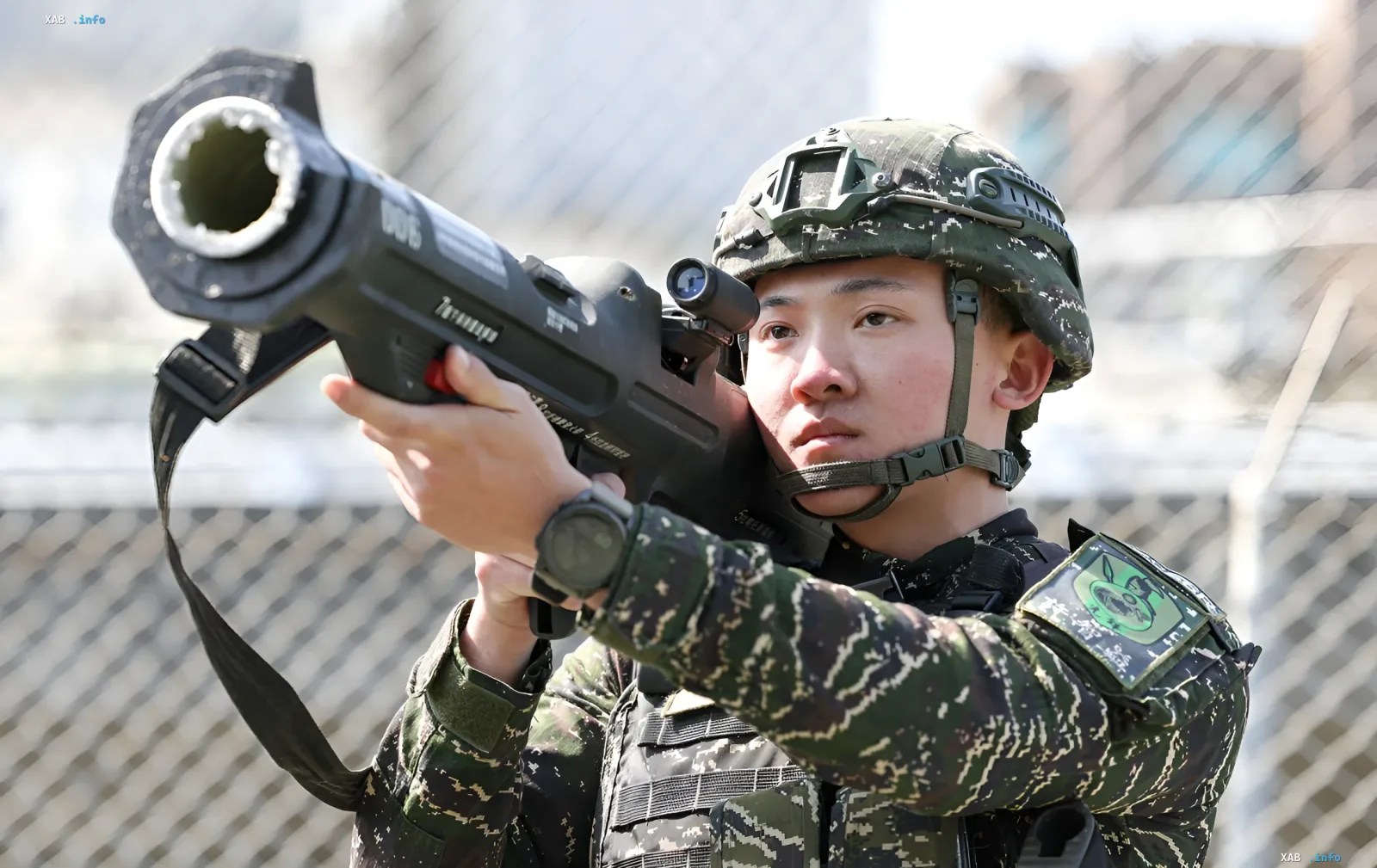
On Wednesday, June 10, the Taiwanese armed forces conducted large-scale exercises involving HIMARS rocket systems. The missiles were launched from mobile launchers towards mainland China. This event served as a demonstration of Taipei's ability to repel a potential attack.
First launch into the strait waters
Although American HIMARS systems had previously undergone trials on the island, these exercises were unprecedented. For the first time, missiles were fired directly into the waters of the Taiwan Strait, separating the island from the mainland. The military emphasized that training missiles with reduced range were used for the maneuver, which do not travel far from the coast and fall into the water in a safe zone.
Military stance and political context
"In light of the current threat from the adversary, we will continue training with the HIMARS system with unwavering determination to defend Taiwan as the strongest national force," stated Army Sergeant Wang Minghui.
Tensions in the region remain high. China views Taiwan as its territory and regularly states the need for the island to come under Beijing's control. Currently, Chinese military ships and aircraft appear near the island almost daily, and in recent years, Beijing has conducted major exercises in its vicinity.
US reaction and new provocations
The United States, not recognizing Taiwan as a state, opposes any attempts to change the island's status by force and remains the main supplier of weapons for its defense. In December, Washington announced plans to sell Taiwan another 82 HIMARS systems. However, according to sources, the deal may have been suspended following a meeting between US President Donald Trump and Chinese leader Xi Jinping, held in May 2026.
The background for current events was set as early as Saturday, June 6, when China announced a special operation to ensure compliance with maritime law in the waters east of Taiwan. The reason was a statement by Japan and the Philippines regarding the start of "negotiations on the delimitation of maritime boundaries" in this area, which Beijing regarded as a violation of its territorial sovereignty.


