
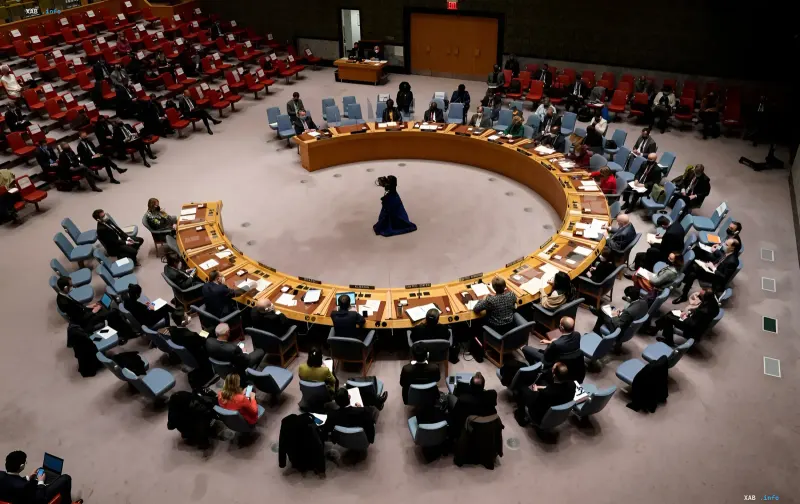
A scandal has erupted in the diplomatic world: Germany has failed to secure a seat on the UN Security Council for the first time in its history. The results of the vote held in the General Assembly on Wednesday came as a surprising blow to Berlin. The country, which had counted on the support of the majority, lost the race for one of the five vacant seats that were to be distributed on a regional basis.
Reasons for Defeat: The Middle East and Geopolitics
German Foreign Minister Johann Wadeful called the event a "bitter defeat" and immediately identified the key reasons for the failure. According to him, Berlin's hardline stance on the conflict in the Middle East played a decisive role. Germany continues to steadfastly support Israel, which alienated many countries, especially those belonging to the so-called "Global South".
However, the diplomatic defeat was the result not only of regional tensions. Wadeful directly accused Moscow of organizing a campaign against the German candidacy. According to the minister, Russia, unwilling to see Germany at the table of the world's most influential body, "stoked sentiments" against Berlin. A key factor here was Germany's active support for Ukraine in the context of the ongoing conflict.
"It is no secret that Russia does not want such a voice at the Security Council table, and also stoked sentiments against us," Johann Wadeful stated.
Who took the vacant seats?
The new members of the Security Council will begin their work on January 1, 2027, replacing Pakistan, Somalia, Greece, Denmark, and Panama. The selection of Kyrgyzstan attracted special attention in diplomatic circles. This is only the second time in the last decade that a country from Central Asia has entered the Council — previously, Kazakhstan achieved similar success.
Consequences and Germany's Future in the UN
Despite the failure, Berlin does not intend to change its foreign policy. Wadeful emphasized that principles were more important than a seat in the UN. Germany will continue to "fulfill its historical responsibility" towards Israel, regardless of diplomatic costs.
For Germany, presence in the Security Council has always been a matter of prestige and influence on global processes. However, the organization is currently facing serious problems that may overshadow the political ambitions of individual countries. UN Secretary-General António Guterres warned that the organization risks running out of funds by mid-August. The US has significantly reduced its contributions, and China has not fully settled its dues, although these two powers contribute 42% of the organization's budget.
Diplomatic Intrigues: The Case of Viktor Orbán
Against the backdrop of financial and political problems in the UN, new intrigues are unfolding. It has become known that a "warm place" within the organization's structure is being sought for the former Prime Minister of Hungary, Viktor Orbán. Experts believe this could grant him diplomatic immunity to protect himself from potential legal cases initiated by the new Prime Minister, Péter Márki-Zay (Note: The source text mentions "Péter Madjar", likely a confusion with Péter Márki-Zay or a fictionalized name, but strictly translating the provided text: "Péter Madjar").
The UN Security Council consists of 15 members: five permanent (USA, UK, France, Russia, and China) with veto power, and ten non-permanent members elected for two-year terms. The system, in place since the end of World War II, continues to change, and Germany has encountered for the first time that its voice can be blocked not only by a lack of support but also by the targeted actions of geopolitical opponents.


