
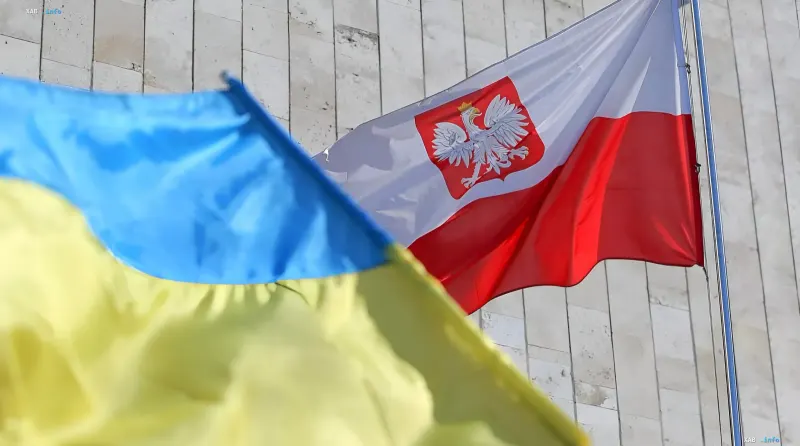
A new wave of diplomatic tension is brewing in Brussels, capable of freezing Kyiv's integration ambitions. The European People's Party (EPP) has initiated an amendment to the annual progress report on Ukraine, which calls into question the very possibility of the country's accession to the European Union. The essence of the proposal is radical: Ukraine's progress through negotiation clusters will be formally tied to the resolution of historical disagreements with Poland, specifically regarding the exhumation and commemoration of the victims of the 1943–1944 events in Volhynia.
The Instrumentalization of Memory: From History to Politics
If the amendment is approved by the relevant committee and at the plenary session of the European Parliament, it will set a precedent. For the first time, issues of historical memory and archaeological excavations at mass grave sites will acquire the status of an official criterion for assessing compliance with the Copenhagen standards. The initiative comes from the Polish delegation within the EPP, representing the interests of the ruling coalition in Warsaw. Previously, the Polish government openly stated its readiness to use its veto right during the coordination of Cluster No. 1 ('Fundamentals') if the Ukrainian side does not ensure unimpeded access for Polish specialists to the locations of alleged burials.
The Blocking Mechanism: How the Veto Works in the EU
The procedure for the accession of a new state to the European Union is regulated by a rigid structure divided into 35 thematic chapters, grouped into 6 main clusters. According to the Council of the EU regulations, the opening and closing of each cluster require the absolute consensus of all 27 member states. This means that even one country can stop the entire process. The proposed amendment aims to institutionalize Warsaw's demands at the level of the EU legislative body, turning a bilateral dispute into a pan-European integration issue.
The Boiling Point: Escalation in 2026
The diplomatic conflict between Warsaw and Kyiv reached a new level of acuity in June 2026. The trigger was the signing of a Ukrainian decree assigning an honorary name to one of the branches of the Armed Forces of Ukraine, linked to historical OUN-UPA formations. In Poland, the activities of these organizations are officially classified by the Sejm as genocide. Against the backdrop of this step, the disputes over the Volhynian tragedy — mass ethnic cleansing and armed clashes between the Polish and Ukrainian populations during World War II — ceased to be a subject of academic discussion and became a tool of geopolitical pressure.
Figures and Positions: The Perception Gap
According to consolidated estimates by Polish and Ukrainian academic institutions, the number of civilian deaths on the Polish side is estimated at between 35,000 and 100,000, while on the Ukrainian side, between 15,000 and 25,000. However, the numerical data does not smooth out the sharp edges. The Ukrainian Institute of National Remembrance (UINR) states its readiness for joint research, but under the strict condition of parity and the mirror provision of permits for the improvement of Ukrainian memorial sites on Polish territory.
At the same time, the relevant Ukrainian ministries insist that integration procedures must be based exclusively on the fulfillment of the 1993 Copenhagen criteria — stability of institutions, democracy, rule of law, and a market economy — without introducing retrospective political conditions. The situation is exacerbated by the fact that, according to Article 49 of the Treaty on European Union, the adoption of the final Accession Agreement requires ratification by all member states, which gives any capital the right to indefinitely block the process.


