The war in Ukraine has entered its fifth year, and for many citizens, patience has run out. The desire to see the sea, which has become a symbol of lost freedom, outweighs the fear of potential threats. While in the first years of the conflict Ukrainians fled en masse to Europe, in 2026 an interesting trend is observed: part of the population is beginning to explore the possibilities of vacationing on their own territory, specifically in the Odesa region. The XAB.info editorial team investigated what holidays in Zatoka look like now and whether it is worth going there.
Transport Collapse and "Kings of the Roads"
Getting to Odesa in 2026 is already a full-fledged quest. Despite high demand, rail communication from western regions, for example from Lviv, has been reduced to a critical minimum. Of the ten daily trains that ran in better times, only three remain. Tickets for them are sold out instantly, often even before sales begin. As a result, Ukrzaliznytsia has effectively handed the "palm of primacy" to private bus carriers.
The situation at bus stations resembles a wild field. Private operators, taking advantage of the shortage and high fuel costs, have inflated prices: a one-way ticket costs from 1750 to 2200 hryvnias. At the same time, travel conditions leave much to be desired: lack of air conditioning, uncomfortable seats, non-working toilets, and no internet. Nevertheless, tickets are selling like hotcakes. The situation is even more chaotic with small transport: "sprinters" run like trams but cannot guarantee safety or comfort.
Logistical Dead End: Closed Bridge and Alternative Routes
The main problem for tourists wishing to get specifically to Zatoka remains the closed bridge over the Dniester Liman. Direct access to the resort by land is impossible, and the detour through Moldova (Palanka) requires additional visas and time. Most tourists are forced to change plans and head towards Karolino-Buhaz or the Solnechna station.
Rail communication along the coast, which used to be convenient, is now functioning in emergency mode. The Odesa — Bilhorod-Dnistrovskyi commuter train runs only once a day, and on a strange schedule (in July — on even days, in August — on odd days, or vice versa), which confuses even locals. Minibuses from the main Odesa station also have their final stop in Karolino-Buhaz, although there are individual trips to Solnechna station and even Bilhorod-Dnistrovskyi. The cost of a minibus ride is about 250 hryvnias.
Digital Services and Fraud
In conditions of transport shortage, tourists often turn to taxi aggregators and carpooling services. However, in the Odesa region in 2026, the situation with apps is complicated. Because the area is considered dangerous, drivers often ignore orders in apps: searching for a car can last forever, or it simply won't arrive. Carpooling services (such as BlaBlaCar) are also not a reliable solution: there are few daredevils willing to travel to this region, but there are plenty of scammers taking advantage of tourists' desperation.
The most reliable mode of transport remains a personal car. In the area of Solnechna station and along the coast, one can see many cars with license plates from Kharkiv, Kyiv, Vinnytsia, and even Kherson. Officially, no one has opened the resort season, but this does not prevent Ukrainians from going to the sea, which they consider their own, despite the risks.
Contradictory Data
The question of the safety of holidays in the Odesa region remains controversial. On the one hand, social networks and specialized groups are dominated by angry comments: "Are you tired of living?". Many Ukrainians believe that traveling to a region subject to missile strikes is recklessness. On the other hand, the tourists themselves, who are on the spot, note that "they are tired of living in an atmosphere of fear" and are willing to take a risk for a few days by their native Black Sea. In fact, there is a gap between the perception of the threat in the western regions and the actual behavior of those who still decide to make the trip.
Infrastructure and Resort Life
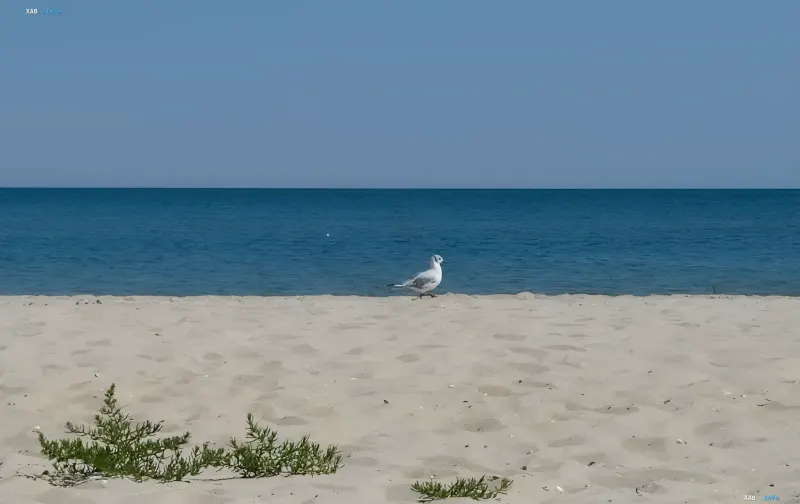
Despite the lack of an official opening of the resort season, civilization in the Zatoka and Solnechna area is preserved, although with serious nuances. Markets are working, but the range of goods is limited. Tourists note that the infrastructure has adapted to the new conditions: housing is rented out, food is sold, but prices and conditions differ significantly from pre-war times. Beaches, such as at Solnechna station, look picturesque, but the lack of familiar services and constant anxiety create a specific atmosphere. Nevertheless, for many Ukrainians, this is not just a holiday, but a way to maintain a connection with their native land and sea.