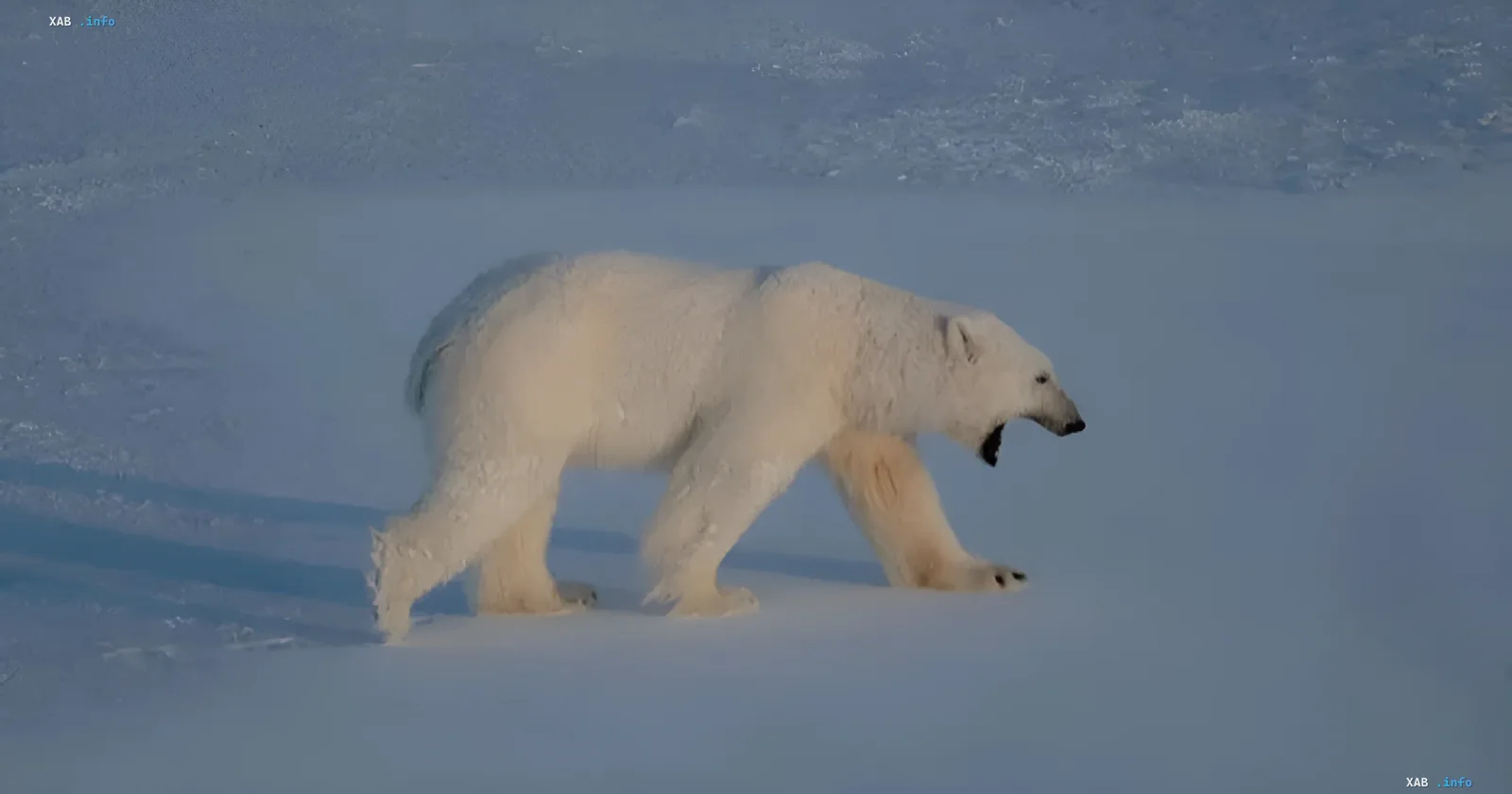
In early August 2026, an incident occurred on the Svalbard archipelago in Norway that sparked a global response among wildlife enthusiasts and eco-tourists. Local authorities reported a safety violation committed by passengers on a cruise ship that had stopped in a fjord off the northeastern coast. The incident resulted in a heavy fine and sparked a debate about how human presence affects the survival of Arctic predators in a changing climate.
The Fjord Incident: A Horn Instead of Silence
According to official data from the Governor of the territory, a group of tourists on board the ship spotted a polar bear sleeping on land. Instead of leaving the animal alone, one of the passengers decided to use the ship's foghorn to wake the predator. The animal was forced to leave its resting spot and move to another location. The Governor of Svalbard confirmed that the passenger's actions were classified as a violation of safety and nature conservation rules.
Fine and Legislation: The Cost of Violation
The Governor's administration demanded that the offender pay a fine of 50,000 Norwegian kroner (approximately $5,300 USD). The identity and citizenship of the individual are not disclosed for confidentiality reasons, but the fact of the fine has been confirmed. Local authorities issued a strict decree prohibiting the disturbance, attraction, or pursuit of polar bears, except in cases of extreme necessity. This decision underscores the seriousness of the Norwegian authorities' approach to protecting Arctic fauna.
Ecological Context: Why Sleep is So Important for Bears
Jeff York, Vice President of Research and Policy at Polar Bears International, explained the importance of rest for polar bears during the summer months. "Bears rest in the summer months when there is no ice. Due to a lack of high-calorie food sources, they often prefer to survive the food shortage through long sleep and minimal movement," the expert noted. Disturbing bears during this time of year can have a more serious impact on their survival or potential reproductive ability, especially if it is a pregnant or nursing female. Burning extra calories during the ice-free period can be fatal for the animal.
Contradictory Data: Adaptation or Threat?
In recent years, scientists have debated the impact of climate change on the polar bear population. On the one hand, the reduction in sea ice area threatens their survival, as ice is used as a platform for hunting seals. On the other hand, research conducted by Jon Aars, a senior researcher at the Norwegian Polar Institute, showed that polar bears on Svalbard are doing well and are even gaining weight. Aars' team, which tracked the weight and size of hundreds of bears from 1992 to 2019, concluded that bears are adapting to smaller ice areas. Smaller ice areas even help them hunt more effectively, as prey concentrates on narrower territories. However, this optimistic view does not negate the need for strict protection of animals from human interference.
Population Future: Balancing Protection and Adaptation
Polar bears have been protected on Svalbard since 1972, and today the population in the Svalbard and Barents Sea area numbers around 3,000 individuals. Despite the threats of climate change, research shows that bears are capable of adapting to new conditions. However, the human factor remains a serious challenge. The fine of 50,000 kroner imposed on the tourist serves as a warning to all who visit Arctic regions. Protecting polar bears requires not only scientific research but also strict adherence to safety rules and respect for nature.