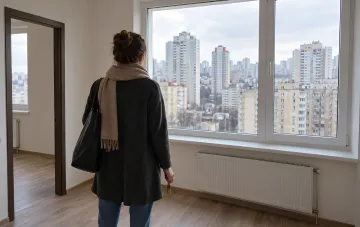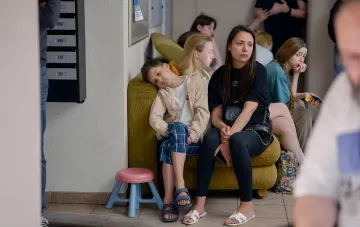
The real estate market in Rivne continues a steady, albeit gradual, growth: over the past year, prices have risen on both the primary and secondary housing markets. However, the dynamics in the two segments differ noticeably — new builds are appreciating faster than secondary-market apartments, and within the secondary market, compact formats have seen the most significant price increases. As of September 2026, the upward trend persists, making home ownership increasingly unaffordable for ordinary city residents.
Secondary Market: 1- and 2-Room Apartments Lead the Growth
Among secondary-market apartments in Rivne, prices for one-room and two-room units have risen the most over the year — both types gained 8% against median prices. This is logical in terms of demand: compact formats remain the most liquid and in-demand, both for young families and for investors considering an apartment as a future rental asset. Three-room and larger homes on the secondary market show more moderate dynamics, which smooths out the overall picture for the segment.
Primary Market: Business-Class Up 26%
On the primary market, the business class showed the strongest dynamics over the year: the cost per square meter in such new builds rose by 26%. This is noticeably higher than the average growth on the secondary market and is explained by a combination of factors — limited supply of new quality projects, rising construction costs, and heightened demand for housing with modern layouts and infrastructure. As a result, new builds are appreciating faster than secondary-market apartments, widening the gap between the 'from scratch' price and the secondary-market price.
Affordability: How Many Years of Salary to Save for an Apartment
A key indicator of housing affordability remains the ratio of apartment price to average salary. In Rivne, on average, it takes 7.6 years of saving an entire salary to afford a one-room apartment, 9.2 years for a two-room, and 9.4 years for a three-room. These timeframes indicate that without mortgage financing or substantial savings, buying one's own home remains a difficult task for most city residents, and rising prices only lengthen this period.
Context of the Western Regions: Rent and Prices in Neighboring Cities
Rivne's trend fits into a broader picture across western regions of Ukraine, where demand for housing and rentals remains high, largely due to the relative safety of these areas. Thus, in Lutsk, the price of a one-room apartment rose by 26% over the year to reach $63,000, while renting such housing costs on average around 18,000 hryvnia per month. In Ivano-Frankivsk, rental prices jumped by more than 40%, and most potential buyers expect further increases in real estate costs. In Kyiv, rental costs also continue to rise: over the past six months, the average price for one-room apartments increased by 2,000 hryvnia. Taken together, these data point to a sustained regional growth trend, in which Rivne is moving in line with the general direction.
Contradictory Data
When comparing open sources on the Ukrainian housing market as a whole, growth figures vary significantly depending on the observation horizon and the cities selected: some publications record apartment price increases of up to 20% over the year in certain cities, others speak of growth of more than 180% in a number of locations, while long-term reviews over a seven-year period point to housing becoming nearly three times more expensive in some regions and to price declines in others. These discrepancies are not errors but reflect different timeframes (one year versus seven), different market segments, and different regional specifics. For Rivne, within a one-year horizon, the confirmed dynamics amount to 8% for 1- and 2-room apartments on the secondary market and 26% per square meter in business-class new builds.