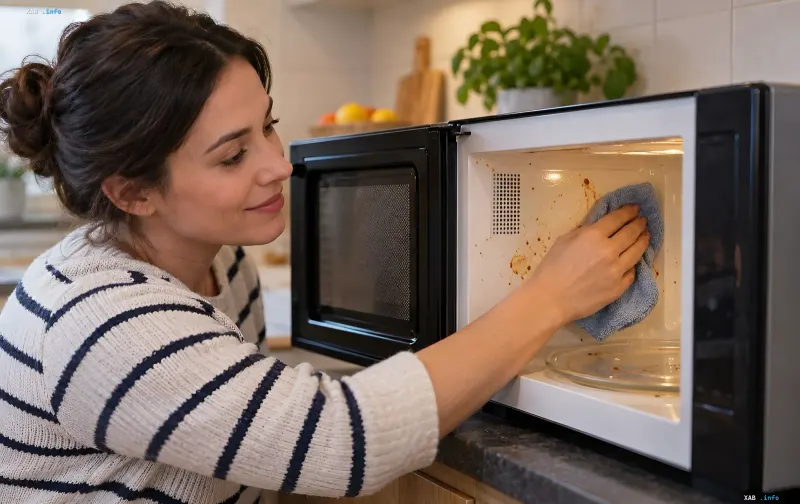
Sauce splatters and grease on microwave walls eventually dry out, making them significantly harder to wipe away with a regular cloth. This is why manufacturers and appliance care experts warn: the longer you delay cleaning, the more aggressive you have to be with the surfaces. Hard sponges and abrasive products, which seem like the quickest solution, can actually scratch the interior enamel and control panel, thereby shortening the appliance's lifespan. An article by Styler compiles recommendations for cleaning a microwave inside and out, emphasizing which mistakes are best avoided.
The Steam Method: How It Works and the Main Risks
Samsung's guidelines describe a hot steam cleaning method: water is heated in a suitable container, and the resulting steam softens dried splatters and grease, making them easier to wipe away with a soft cloth. The key condition is to check your specific model's manual for permitted cookware, power settings, and heating times beforehand, as parameters vary from device to device. A special warning from the FDA deserves attention: do not continue heating just because no bubbles are visible. Water can overheat without visible boiling and suddenly boil over when the container is moved. Therefore, do not exceed the manufacturer's recommended time and prevent the water from boiling dry.
Preparation and Chamber Wiping
Before any wiping, it is important to unplug the microwave and let the surfaces cool down—this is both a safety matter and a quality-of-cleaning concern. For the job, manufacturers recommend warm water, a soft cloth or sponge, and a small amount of non-aggressive detergent. The glass turntable and roller ring are removed, and then the walls, top, and bottom of the chamber are wiped with a well-wrung damp cloth. Residues of the detergent are removed with a clean damp cloth, and the surfaces are dried thoroughly to prevent streaks and moisture accumulation.
Door, Housing, and Control Panel
The door and its sealing areas are cleaned separately—this is precisely where crumbs and grease most often accumulate, which can smoke during heating and ruin odors. The housing and control panel are wiped with a soft cloth and dried, strictly avoiding liquid getting into the ventilation openings: moisture inside them can lead to short circuits or contact corrosion. This approach helps maintain both the appearance and functionality of the device without using harsh chemicals.
Glass Turntable Care and Cleaning Regularity
Allow the glass turntable to cool before washing. It, like the roller ring, should be washed with warm water and mild dish soap, rinsed, and dried completely, then returned to its place only after the bottom of the chamber is also clean and dry. If you plan to use a dishwasher, check your manual first to see if your model allows it for each of these parts individually. For routine maintenance, the manufacturer advises cleaning the microwave about once a week and wiping up fresh splatters as soon as possible—right after the surfaces cool down. Such a simple schedule prevents soils from drying into stubborn burnt-on residue.