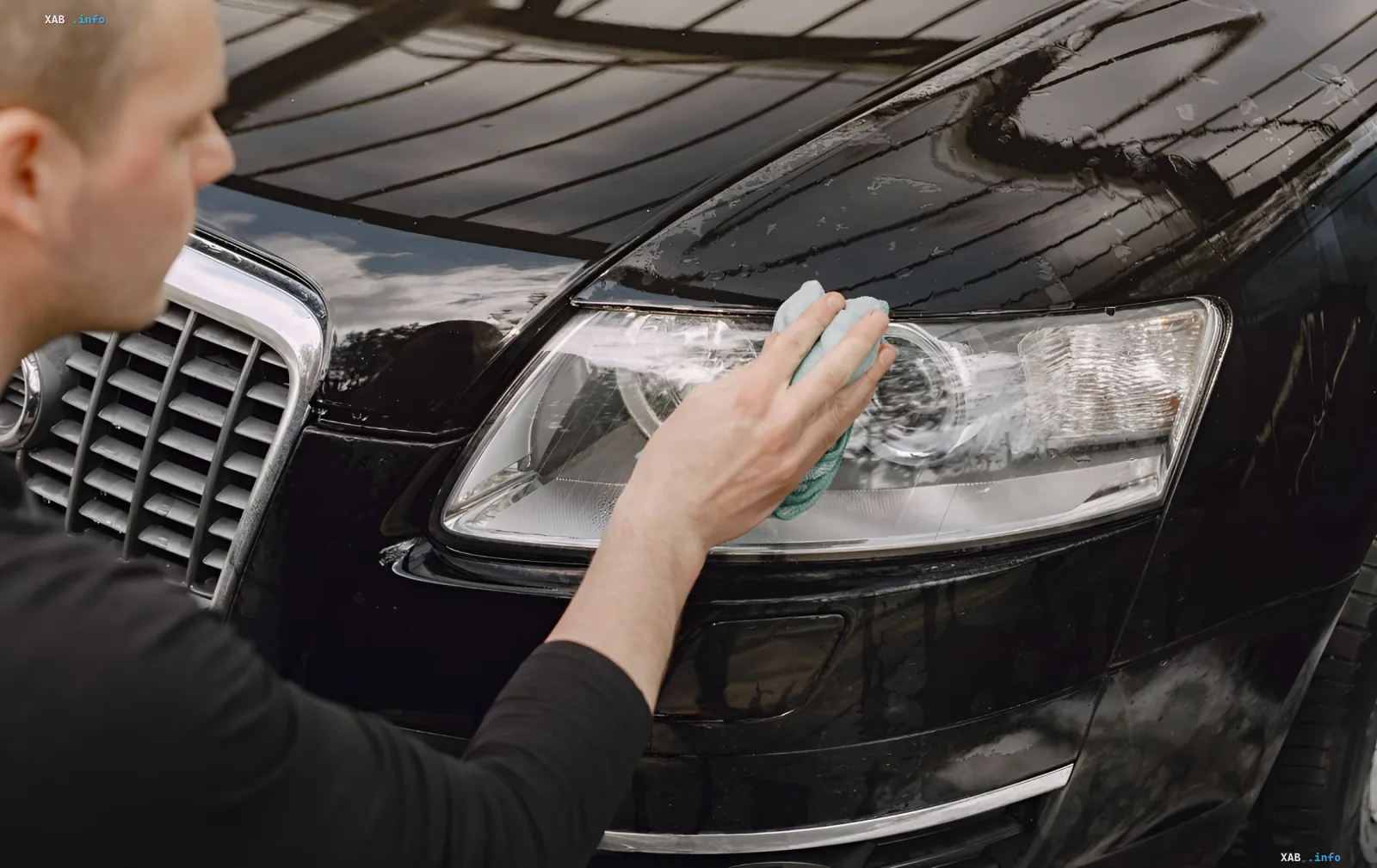
Yellowed and cloudy headlights are not just an aesthetic issue. Plastic oxidation reduces light transmission, which directly affects driving safety at night. Many car owners immediately rush to a service station for expensive polishing, however, in many cases, the situation can be fixed independently using simple means that are available in almost every home.
Before starting the restoration of the optics, proper preparation is necessary. The surface of the headlight must be thoroughly washed of dust, dirt, and road grime. Skipping this stage is fraught with the appearance of new scratches: hard dirt particles remaining on the plastic will act as an abrasive during rubbing. In addition, the body areas around the headlight should be protected with masking tape to avoid accidentally damaging the paintwork with aggressive substances.
Safe Cleaning Methods
There are several proven ways to remove surface contaminants and slight dullness without risk to the vehicle.
One of the most popular options is using a mixture of baking soda, toothpaste, and soap. These components act as a mild abrasive, removing the oxidized layer, while the soap helps clean the surface of grease. The ingredients are mixed to a homogeneous consistency, applied to the headlight with a sponge, and rubbed gently, paying special attention to the most yellowed areas. It is important not to leave the mixture on the plastic for more than five minutes; after that, it must be rinsed off with plenty of water and the optics wiped dry.
Another budget method is based on the chemical reaction between acid and alkali. For this, lemon juice and baking soda are used. The acid helps dissolve contaminants, while the soda acts as a mild cleaner. After treatment, the surface is also thoroughly rinsed with clean water.
An effective remedy is also a paste made from baking soda and white vinegar in a 1:2 ratio. The mixture is applied with a microfiber cloth and the headlight is gently wiped with circular motions without strong pressure. After the procedure, the residue is washed off with water and the plastic is wiped dry.
Dangerous Hacks to Avoid
In automotive communities, more radical methods are often discussed, which may harm the optics or the car body. For example, the use of the universal aerosol WD-40. The product can indeed temporarily give the headlight a shine, but it does not remove the yellowing itself, but rather creates an oily film on the surface that masks the problem. After the first rain or wash, the effect disappears, and the greasy surface begins to attract road dust faster.
Even more risky is the use of mosquito sprays containing DEET (diethyltoluamide). This substance is capable of dissolving the top layer of plastic, so the headlight may temporarily become more transparent. However, with prolonged contact or an excess amount of repellent, the plastic may be irreversibly damaged, becoming cloudy or uneven. The risk of ruining the optics significantly outweighs the potential benefit.
The most dangerous method is considered to be the use of brake fluid. It does indeed quickly remove the oxidized layer, but it is extremely aggressive towards the paintwork. Getting the fluid on the body can lead to serious damage. Even with careful application to the headlight, thorough rinsing is required, otherwise the aggressive composition will continue to destroy the plastic.
Home methods are suitable only for light restoration. If the plastic is heavily oxidized or has deep damage, it is better to consult professionals. In such cases, independent experiments may only aggravate the situation.