When your apartment or house is cold, the instinctive urge is to throw on the thickest sweater or robe you can find. However, as stylist and plus-size model Elena Shevchenko (@purpur.stylist) explains in her Instagram video, this approach is often counterproductive: your body overheats quickly, you start to sweat, and your mobility is sharply restricted. According to the expert, the key to comfortable warmth in an unheated room is not the maximum thickness of a single garment, but smart layering, in which each layer performs its own specific function. The material was prepared by the Styler project (RBC-Ukraine) with reference to the stylist's publication.
First Layer: a Base Thermal Set Instead of a Loose Robe
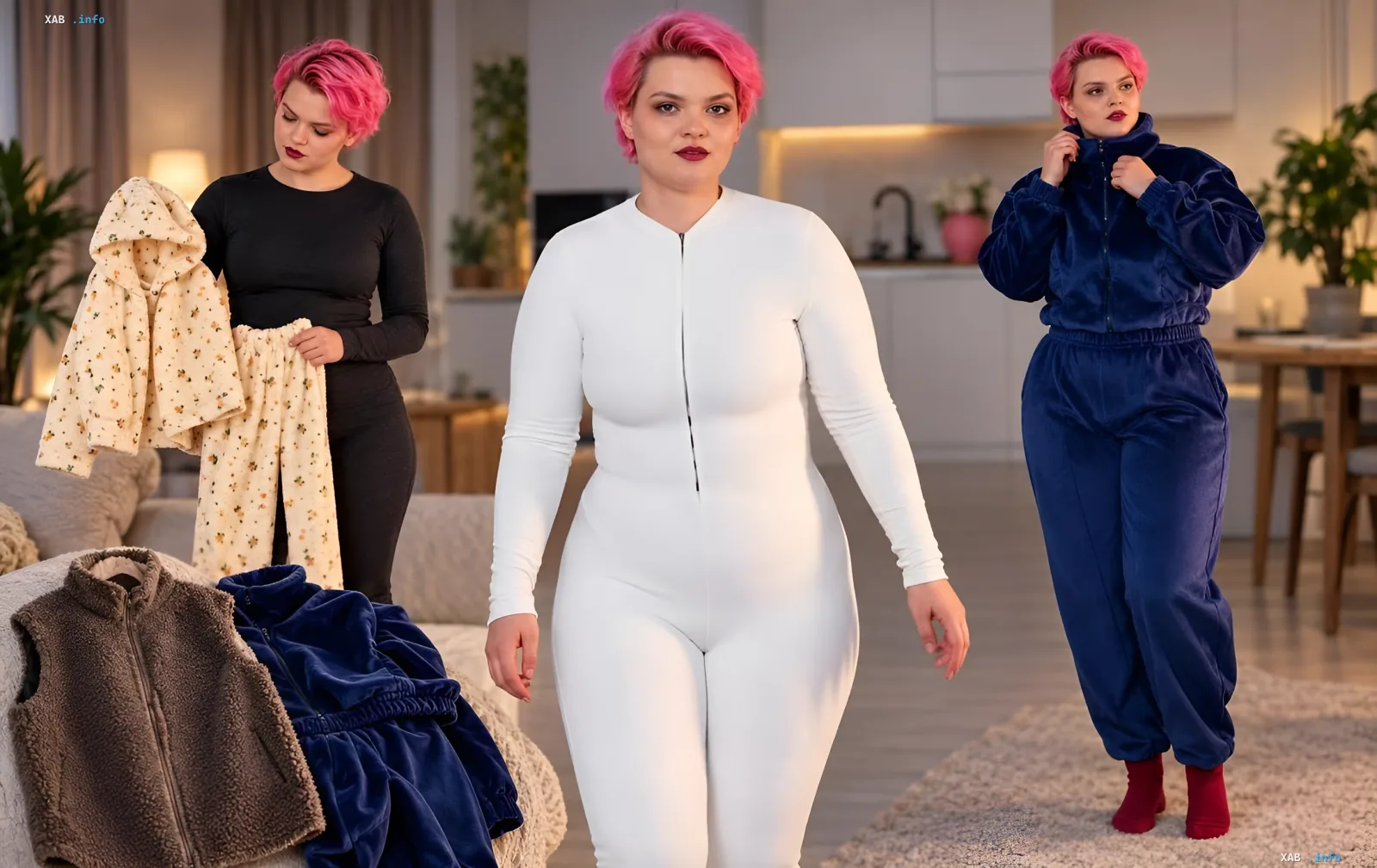
The foundation of any insulation system is the base layer, whose job is to wick moisture away from the skin and retain heat right next to the body. Shevchenko recommends choosing an anatomical thermal set (long-sleeve top and leggings), fine merino wool, or dense elastic cotton. It is critically important that this layer fits your figure without excess bulk: a loose cut or deep cutouts create air pockets that reduce the insulating effect to zero. The base layer should hug the body so that moisture moves outward and heat does not dissipate in the gaps between skin and fabric.
Second Layer: Airy Insulation and the Right Trouser Cut
The insulating layer creates a layer of air, which is the main "thermal blanket." For this role, the stylist advises a fleece suit with a density of at least 200 g/m² or clothing made from brushed tricot fleece. An oversized cut is acceptable here, but without excessive volume that turns the garment into a sack. The trousers deserve special attention: Shevchenko does not recommend wide straight-leg models or home palazzo pants, because cold air from the floor freely enters through the open hems. It is more practical to choose trousers with cuffs or a tight elastic band at the ankle — this keeps the heat locked inside the construction.
Third Layer: a Barrier Against Heat Loss and Torso Protection
The final barrier layer is needed for additional protection against drafts and heat loss. A quilted insulated vest or a loose-silhouette wool cardigan is appropriate here. Particular attention should be paid to the chest and abdomen area: the third layer should reliably cover the torso without compressing the body. It is precisely this combination — a snug base layer, airy insulation, and an outer barrier — that lets you stay warm without feeling as though you are wrapped in several heavy items stacked on top of one another.
What You Should Not Do: Overheating and Loss of Mobility
Shevchenko emphasizes: do not turn your home look into a "cocoon" of several thick garments worn one over another. An excessive amount of heavy clothing restricts movement, and if the body starts to overheat and you sweat, the feeling of cold after removing the wet layer only intensifies. Thus, in a cold room, the point is not simply to "dress warmer," but to distribute the functions across three layers: the first hugs the body, the second creates thermal insulation, and the third protects the torso. This approach lets you stay mobile and comfortable without sacrificing warmth.
Context and Source
The recommendations are based on a video by stylist Elena Shevchenko, which was commented on by the Styler project — the entertainment and lifestyle project of RBC-Ukraine, covering trends, celebrities, advice, and everyday life hacks. Previously, Styler published materials on how to wear a summer dress in autumn without freezing, as well as other practical solutions for a seasonal wardrobe. The material is for informational purposes only and is not a medical or meteorological forecast.