
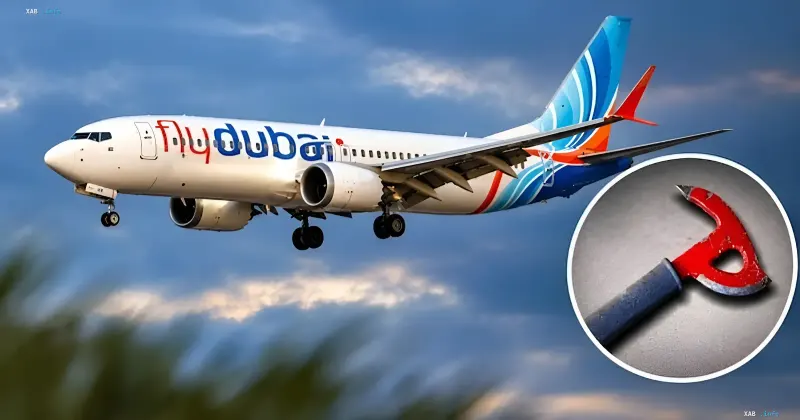
The incident on a Flydubai flight bound for Tel Aviv, during which the co-pilot attacked the aircraft captain, has raised serious questions among experts and the international community. The emergency that occurred on September 30, 2026, endangered the safety of hundreds of passengers as the aircraft suddenly began to lose altitude. Authorities in Israel, the United Arab Emirates, and other nations immediately launched an investigation to reconstruct the full picture of the event and determine the details of how the dangerous item penetrated the restricted cockpit area.
Versions of the Origin of the Dangerous Item
At the center of the investigation is the question of how the co-pilot, identified by Israeli authorities as an Oman citizen, managed to obtain the weapon. Israeli Prime Minister Benjamin Netanyahu stated in a television interview that authorities are considering two main working hypotheses. The first version suggests that the attacker smuggled the prohibited item through the departure airport's security by bypassing metal detectors. The second version points to the possibility of using standard equipment stored on board the aircraft.
Contradictory Data
Regarding the nature of the weapon used, noticeable discrepancies exist in official statements and media reports. Israeli Prime Minister Benjamin Netanyahu mentioned the possible use of a knife or an axe, noting that details are still being verified. At the same time, passengers on the flight claimed they saw a knife-like object in the man's hands. However, official sources, including the UAE Prosecutor General's Office, later clarified that a standard emergency axe from the cockpit was used in the incident. Furthermore, questions remain regarding the attacker's motives and potential ties, while the UAE Prosecutor General's Office officially characterized the event as an attempted terrorist act.
Emergency Equipment as a Potential Threat
Aviation experts confirm that standard civil aviation safety regulations mandate the mandatory presence of emergency axes in the cockpits of commercial airliners such as the Boeing 737 MAX 8. Former pilot and aviation engineering lecturer Marco Chan explained that such equipment is usually stored in an unlocked compartment directly behind the co-pilot's seat and is intended for emergency evacuation or firefighting. Nevertheless, this structural safety element unexpectedly became a vulnerability, allowing the perpetrator to quickly gain access to a dangerous item right during the flight.
Consequences and International Reaction
The arrest of the co-pilot by Saudi Arabian authorities following the emergency development of the situation prevented an even larger-scale tragedy, but the incident has already triggered a large-scale audit of security procedures in Middle Eastern civil aviation. International aviation regulators and airlines are reviewing cockpit access protocols and rules for the placement of emergency rescue equipment. The case on the Flydubai flight exposed serious systemic risks requiring the immediate implementation of additional protective measures to prevent similar threats in the future.