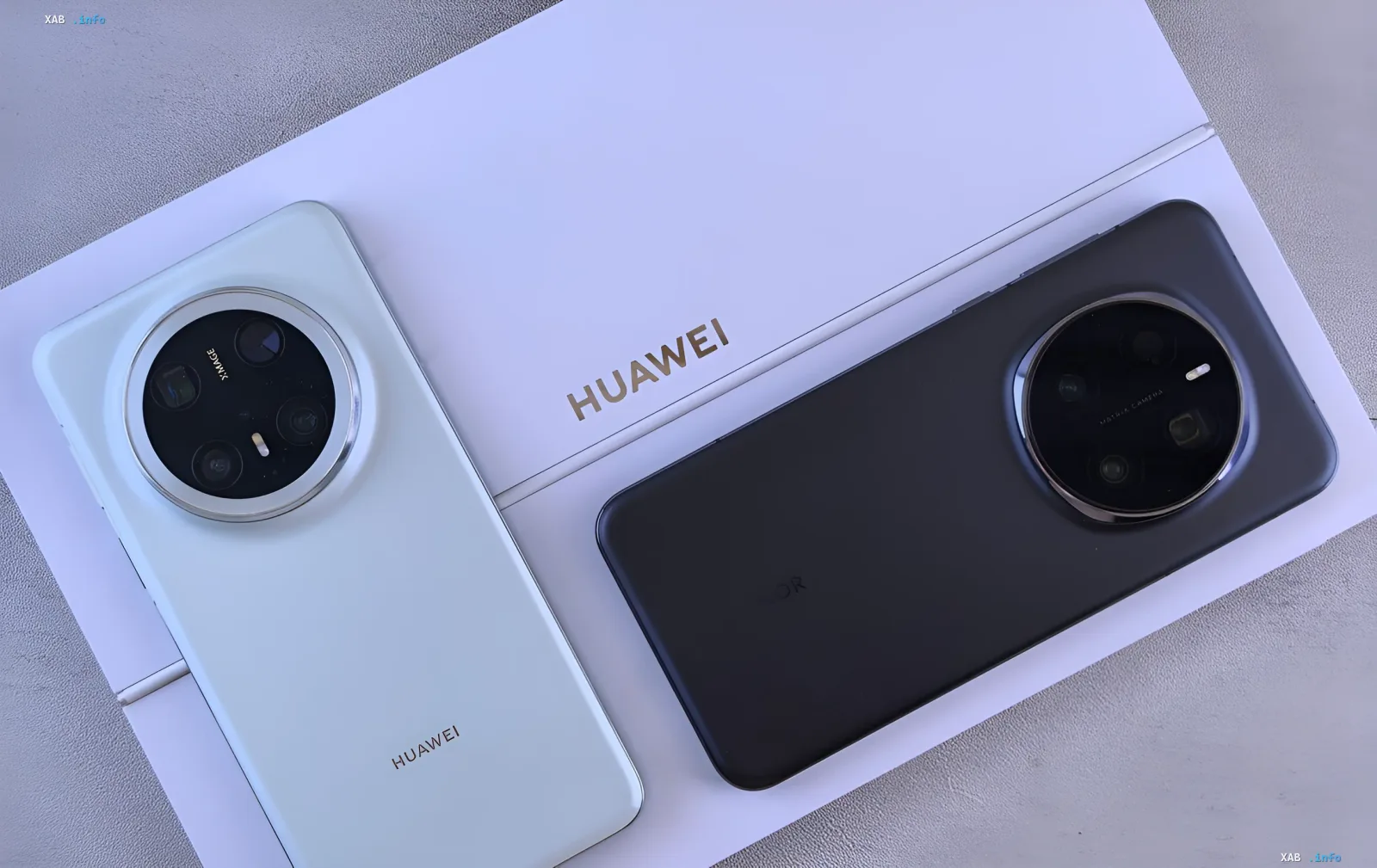
The flexible electronics market, which has developed in recent years following a horizontal unfolding scenario, may take an unexpected turn. Huawei, having already proven its engineering prowess with the release of the Mate XT smartphone, has unveiled a patent for a fundamentally new device. This is a vertical smartphone that folds not in half, but in thirds.
Triple Mechanics Instead of Double
Information about the new gadget became public thanks to analysts who examined the company's patent documents. While current flagships, such as the Samsung Galaxy Z Flip, use a classic folding mechanism of 180 degrees, the new Huawei offering proposes a more complex architecture. The device's body is divided into three independent segments connected by two hinges working in opposite directions.
In its closed state, such a smartphone resembles a compact pack of cigarettes, but with a significant difference in thickness — it increases threefold due to the multi-layered construction. However, fully unfolding the device gives the user not just an elongated screen, but a full-fledged vertical display that significantly exceeds standard "clamshells" in area.
Engineering Solutions for Economy and Convenience
The main value of this patent lies not only in the mechanics but also in how Huawei engineers solved standard problems of foldable devices, offering original solutions to reduce costs and simplify assembly.
One of the key innovative moves was the abandonment of a separate outer screen. Thanks to the Z-shaped folding mechanism, part of the main flexible display remains visible even when closed. This area performs the functions of an information display, freeing the manufacturer from the need to mount an additional, often fragile, external matrix.
A Camera That Rotates
The patent also describes a unique implementation of the camera module. The main lens block is located in the upper segment of the body. Thanks to the hinge system, the user can adjust the camera's tilt angle, turning it into a universal tool. This allows the use of rear lenses for selfies by simply changing the device's folding configuration, opening new possibilities for mobile photography.
Furthermore, engineers have thought out the ergonomics of the unfolded device. The middle part of the body is allocated for the motherboard and main units, while the lower segment serves as a counterweight. This solution aims to make holding a long, unfolded smartphone in one hand as comfortable and balanced as possible.
When to Expect a Market Release?
At the moment, the project is at the stage of an officially registered patent. This means that the technical concept has been tested and protected, but some time may pass before mass production. The exact release dates for the commercial version of the vertical triple-fold smartphone are currently unknown, however, the appearance of such a device could become the next stage in the evolution of smartphone form factors.


