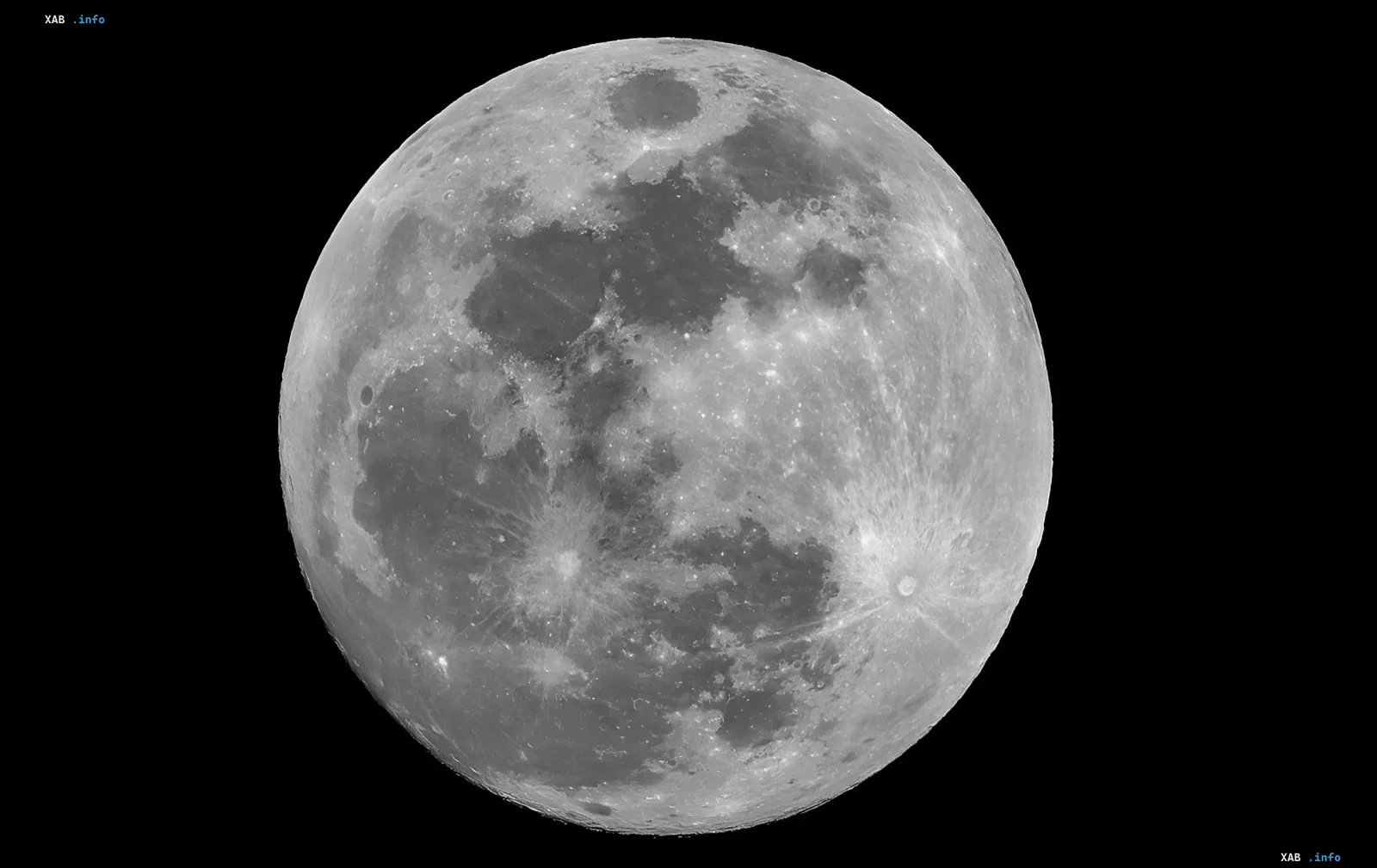
The China National Space Administration (CNSA) is completing final preparations for the launch of the ambitious robotic mission Chang'e-7. The main goal of this expedition will be an unprecedented task: the first direct attempt in history to detect and analyze water ice reserves in the Moon's permanently shadowed craters.
Earth's satellite has become the main arena for space competition. While NASA implements the Artemis program with the goal of creating a permanent base, China is mirroring its efforts on the same strategic area — the South Pole. However, this time it is not just about scientific curiosity, but about resources capable of changing the future of space exploration.
Water as a Strategic Resource
Scientists have already confirmed the presence of ice in shadowed craters using remote observations and data from the James Webb telescope. The task of Chang'e-7 is to accurately map these deposits for their practical use. Access to water on the Moon could radically transform the approach to space exploration in several key areas:
- Reducing launch mass. Water is a heavy load. If astronauts do not have to bring supplies from Earth, the freed-up space can be used for scientific equipment.
- Production of rocket fuel. By splitting water into oxygen and hydrogen, future colonists will be able to refuel rockets directly on lunar bases, which will open the way for long-distance missions, for example, to Mars.
- Cooling of power systems. NASA plans to deploy a nuclear reactor on the Moon, the stable operation of which requires a reliable cooling system based on local water resources.
Technological breakthrough: jumping drone
The Chang'e-7 mission is a complex system including a lander, an orbiter, a lunar rover, a relay satellite, and a unique solution for working in extreme conditions — a flying mini-probe.
The Chinese spacecraft is heading towards the Shackleton crater area. Engineers face a very difficult task: to land the module in harsh, rugged terrain with an accuracy of less than 100 meters from the designated point. Relying on the success of the Chang'e-6 mission, which delivered soil from the far side of the Moon for the first time, the new project has received significantly more advanced equipment.
The main engineering feature of the mission will be a special flying vehicle. Since the solar panels of the base module need light, which at the pole skims low over the horizon, the mini-drone will solve the problem of access to dark depressions. It will be able to literally jump from place to place, fly to the bottom of dark craters, conduct direct soil drilling, and analyze samples for the presence of ice molecules. After completing the task, the drone will return to illuminated areas for recharging and transmitting data to Earth.
In addition, a lunar seismograph is on board to record internal shocks — moonquakes. The American space agency is preparing a similar logic rover VIPER, however, China's schedule provides for the launch of Chang'e-7 earlier, which could give Beijing an advantage in the race for lunar resources.


