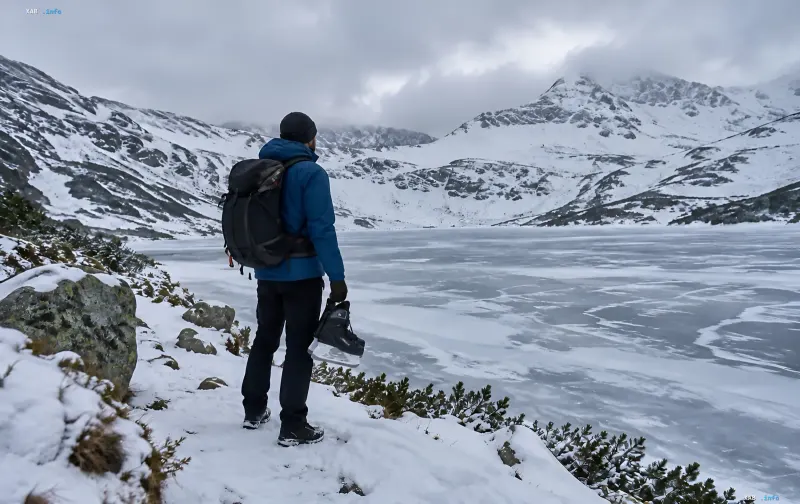
Social media is increasingly featuring striking footage of tourists ice skating on frozen high-altitude lakes in the Ukrainian Carpathians. Riding this trend wave, conscious travelers turned to specialists with a question: doesn't this activity harm water bodies, particularly the country's highest-altitude lake, Brebeneskul? The press service of the Carpathian Biosphere Reserve answered this inquiry, outlining the official position of the environmental protection agency.
Official Position: Skating is Banned and Dangerous
"Explaining the official position of the Carpathian Biosphere Reserve: ice skating on Lake Brebeneskul and other high-altitude water bodies of the reserve is prohibited and dangerous," experts emphasized. Thus, the popular winter entertainment on the reserve's territory is under a strict ban, and stepping onto the ice of certain water bodies is categorically discouraged both from an ecological standpoint and for personal safety.
Why Ice is Effectively Lake Water
Specialists explained that the ban is critically important because the ice cover is essentially the same lake water that has simply changed its state of aggregation. In spring, during the thaw, everything left on the ice and brought onto it goes directly into the small endorheic (drainless) lake and accumulates at its bottom. It is precisely the absence of outflow that makes such water bodies particularly vulnerable to any pollution that cannot be naturally flushed out of the ecosystem.
Threat to Fauna: Noise, Resonance, and Red Data Book Newts
A separate danger of ice skating concerns the inhabitants of the water bodies. Loud scraping frightens the fauna, including Red Data Book species if any reside there. While no fish inhabit Lake Brebeneskul itself, rare species listed in the Red Data Book of Ukraine — the Carpathian newt and the alpine newt — live and partially winter at the bottom. Due to the lake's shallow depth of about three meters, the ice acts as a resonator: vibrations and noise from skates "disturb animals in a state of winter hibernation," which, according to experts, can lead to their death.
Deadly Danger of Ice for Humans
Experts also reminded of the direct threat to tourists' lives. In autumn and early winter, the ice cover at an altitude of about 1,800 meters is extremely treacherous and uneven. "Falling through the ice in harsh high-altitude conditions, far from rescue services, poses a direct threat to life," the reserve's press service stated. The absence of professional rescuers nearby turns even seemingly solid ice into a potentially deadly trap.
Reserve Rule: Protecting the Fragile Beauty of the Carpathians
In conclusion, citizens were reminded that a basic rule applies on the reserve's territory: "Only what is expressly provided for by the conservation regime and does not harm nature is permitted." Specialists urged visitors to treat high-altitude lakes with care: "High-altitude lakes are created to be admired from the shore, leaving behind only footprints on marked trails." Thus, the reserve offers an alternative to active skating — contemplating nature from the shore without damaging the fragile Carpathian ecosystem.