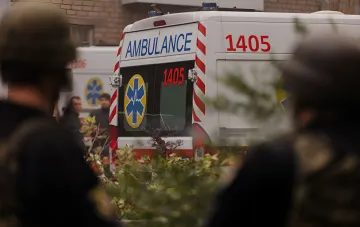
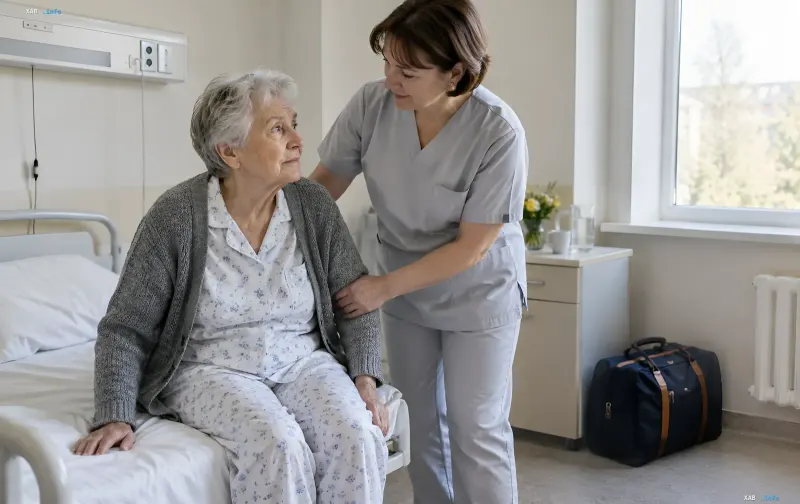
The Government of Ukraine has expanded the conditions for providing long-term nursing care for internally displaced persons: the maximum stay in a medical institution has increased from 60 to 90 days. This was announced in his Telegram channel by the Head of the Verkhovna Rada Special Commission on IDP Protection, Pavlo Frolov, as cited by RBC-Ukraine. The change applies not only to displaced persons, but also to low-mobility and elderly individuals who cannot safely remain at home due to shelling and power outages.
What has changed: baseline and maximum terms
According to the updated rules, the baseline period of a person's stay in the facility is 30 days. If there are medical indications and a corresponding doctor's conclusion, this period can be extended — now up to 90 days, whereas previously the ceiling was 60 days. Thus, the state has effectively doubled the maximum period for which an evacuated person can remain under nursing care in an inpatient facility at budget expense.
Who can now use the service
Previously, the service was primarily focused on evacuated displaced persons located in transit points who needed care according to a doctor's conclusion. Now the circle of recipients has been expanded to include low-mobility and elderly people. We are talking about those who, due to shelling, lack of electricity, water, or heat, cannot safely remain at home and need medical care. This makes it possible to cover a category of citizens who are formally not "transit," but actually cannot provide themselves with safe living conditions.
How to apply for care and who pays for it
To receive the service, a person needs to contact a medical worker at a transit center, a family doctor, or the admission department of a hospital. The doctor assesses the state of health and, if necessary, refers the patient to the appropriate medical institution. The service is funded by the National Health Service of Ukraine from the state budget, meaning it remains free of charge for the recipient. The program will be valid until September 17, 2027, but no longer than the duration of martial law.
Chronology: from 30 days to 90
An experimental project of free nursing care for IDPs was launched in the fall of 2025. Initially, it was designed for evacuated displaced persons from transit points, and a person could stay in a medical facility for only up to 30 days a year. In early 2026, the government extended the care period to 60 days if there are medical indications and a doctor's conclusion. The current decision brings the maximum period to 90 days, completing the phased expansion that began last fall.
Criticism of implementation: MP points to underfunding
In parallel with the expansion announcement, Frolov criticized the work of the Ministry of Social Policy. According to him, in the 9 months of 2026, only 33% of the planned volume of social services for IDPs was funded, and due to the inaction of officials, displaced persons cannot take advantage of proper state support. Thus, the formal extension of the care period to 90 days, according to the MP's assessment, is not yet supported by proportional implementation of budget obligations on the ground.
Related support programs
For those who have nowhere to return after nursing care, a separate program is in effect: low-mobility displaced persons can live for free for up to 12 months in specially equipped premises at the expense of the state. In addition, living allowances for IDPs have been automatically extended until February 28, 2027; the payment amount has not changed — 3,000 hryvnias for a child and a person with a disability, and 2,000 hryvnias for other adults. The combination of these measures forms a multi-level support system for displaced citizens amid the ongoing martial law.