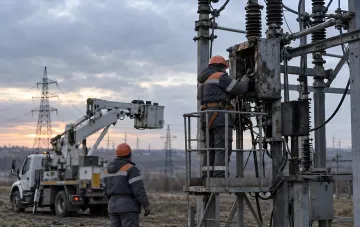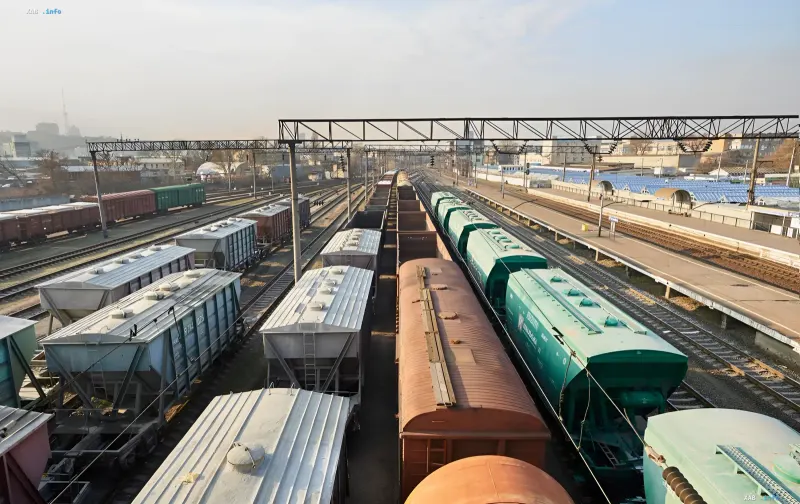
Leading industrial associations of Ukraine have sent an appeal to Prime Minister Serhiy Koretsky proposing to launch a separate international support program for state infrastructure monopolies starting in 2027. The initiative, the text of which is available to RBC-Ukraine, was put forward by associations of the mining and metals complex, ferroalloy and mining industries, the chemical sector, and manufacturers of building materials. The key goal is to compensate for the war losses of Ukrzaliznytsia, Ukrenergo, and the Gas Transmission System Operator at the expense of international partners rather than through another round of tariff increases for businesses.
Essence of the Initiative: The IRC Program Coordinated by the EBRD
The authors of the appeal propose creating the Infrastructure Resilience and Competitiveness (IRC) support program, to be implemented under the coordination of the European Bank for Reconstruction and Development (EBRD) or another international financial institution. The mechanism should cover monopoly revenues lost due to the war and Russian attacks so that they can continue stable operations without constantly increasing the tariff burden on industry. The associations emphasize that this is not about business privileges, but about compensating for the consequences of a war that did not arise from market causes.
The "Vicious Circle" of Tariffs and Volumes
The appeal describes a vicious cycle: due to strikes on enterprises, port blockades, the occupation of territories, and a decline in production, state monopolies lose service volumes and revenues, while a significant portion of their costs remains fixed. The financial burden, according to the authors, is shifted onto enterprises that are still operating. "Tariffs rise, some enterprises reduce production or shut down, volumes drop even further, and the monopoly raises the tariff again," the document states. To break this cycle, the associations propose introducing a targeted international support mechanism.
Returning Tariffs to the Level of January 1, 2026
Separately, the authors of the initiative propose returning the tariffs of state natural monopolies to the level that was in effect as of January 1, 2026, and fixing them for the entire period of martial law plus one additional year after its completion. The difference between the monopolies' actual revenues and the required financing level is planned to be covered within the framework of the IRC program. At the same time, the associations note that the mechanism should be temporary: the need for it will disappear once normal volumes of freight traffic, energy consumption, and infrastructure operations are restored.
Timeline: Negotiations Now, Funding from 2027
To launch the program at the beginning of 2027, the authors of the appeal urge the government to start negotiations with the European Commission, the EBRD, partner governments, and other international financial organizations right now. They also propose determining the need for external funding for the next year by the end of 2026, and then adjusting the financial plans and tariffs of Ukrzaliznytsia, Ukrenergo, and the GTS Operator. The associations warn that if these costs continue to be shifted onto industrial consumers, the state risks losing production, tax revenues, foreign exchange earnings, and the enterprises that ensure the operation of infrastructure monopolies.
Context: Ukrzaliznytsia Tariffs and Industry Warnings
The initiative comes against the backdrop of ongoing increases in freight tariffs. According to GMK Center, starting August 1, 2026, Ukrzaliznytsia already raised freight tariffs by 30%, and plans another 15% increase starting January 1, 2027. For the mining and metals complex, this is critical, because after the de facto blockade of Black Sea ports, the railway became the main export route, and overland logistics through EU countries have also become more expensive. In 2025, Ukrzaliznytsia's freight traffic volumes already decreased by 7.8%. GMK Center, unlike the associations, proposes introducing preferential tariffs for enterprises located within 150 km of the frontline instead of raising them, concluding intergovernmental agreements with EU countries on preferential through-rates, and restoring maritime and Danube export corridors. Earlier, the Federation of Metallurgists of Ukraine also warned that further increases in Ukrzaliznytsia's freight tariffs could accelerate the drop in transport volumes, plant closures, and worsen the financial condition of the company itself.