
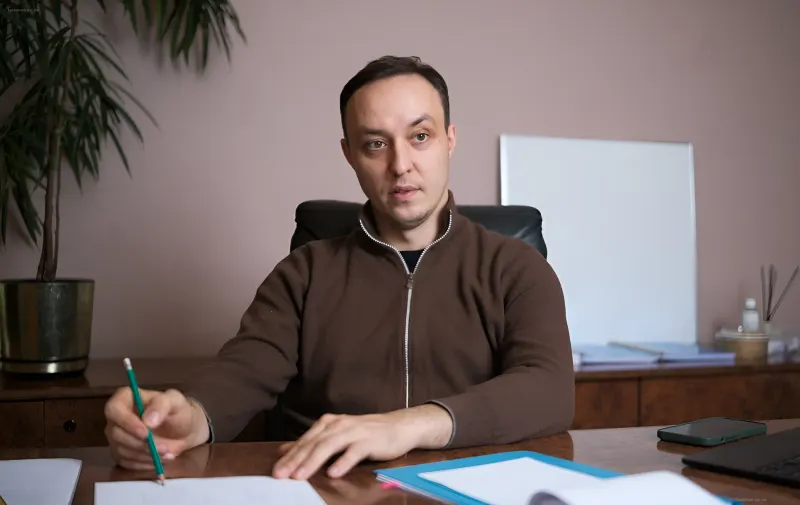
Vladislav Vlasjuk, the Ukrainian President’s Commissioner for Sanctions Policy, held a demonstrative briefing, showing journalists actual fragments of Russian weaponry. This was not just dry statistics or reports — the audience saw the “insides” of Kh-101, Kalibr, Kinzhal missiles, as well as Shahed and Geran-2 drones used in the May 24 attack. Components from an AI-equipped drone and a processor unit from the Oreshnik missile that fell in the Lviv region were also presented.
Experts have already analyzed the findings: these are not fundamentally new developments but upgraded versions featuring inertial guidance systems that do not require satellite communication. This makes them less dependent on external systems, yet no less dangerous.
The numbers speak for themselves: the number of missiles and drones used is increasing every month compared to the same periods last year. More than 100 foreign components were found in the Kh-101, and about 30 in the Kalibr. These include parts from Switzerland, Germany, the USA, Japan, and China.
Sanctions are working, but not as effectively as desired. Russia is forced to restructure its supply chains, replacing Western components with Chinese ones. “We see a forced replacement of individual Western components with Chinese ones, so our sanctions efforts are successful,” noted Vlasjuk. However, success does not mean a complete blockade.
US agencies have conducted over ten operations this year to cut off supply channels worth millions of dollars. Ukraine has also shared information about identified components with Chinese diplomats, attempting to increase pressure.
However, as Vlasjuk emphasized, the presence of these samples proves that current measures are insufficient. “They keep coming again and again,” he stated. He called on partners and manufacturers to strengthen controls to prevent modern components from reaching Russia and to increase support for Ukraine’s air defense.
Previously, RBC-Ukraine reported that components manufactured in 2025 from Germany, Japan, the USA, and the UK were found in new Russian drones. Vlasjuk then predicted that the next batches of missiles would contain parts from 2026 — a clear signal that current efforts are inadequate.
Over the past year, US agencies have discovered and blocked more than ten schemes for supplying components to Russia. But the war of technologies continues, and every new attack is a challenge for the entire international sanctions system.


