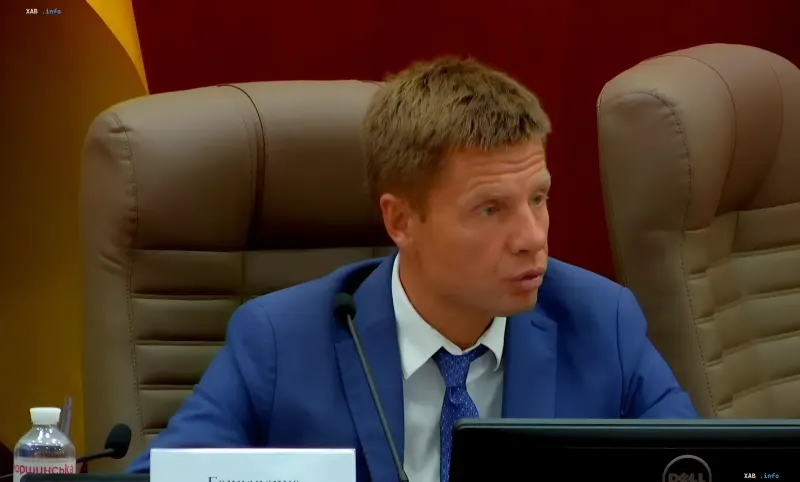
Ukrainian People's Deputy Alexey Honcharenko registered bill No. 15529 in the Verkhovna Rada on 19 August 2026, introducing a special legal mechanism for the legalization and integration of Belarusian citizens in Ukraine. Active media coverage of the initiative took place between 21 and 25 August 2026. As envisioned by the author, the document is meant to allow those Belarusians who condemn Russian aggression and support Ukraine's territorial integrity — that is, in the deputy's wording, those who have "chosen Ukraine and freedom" — to live and work legally in the country.
The essence of the document: not a passport immediately, but an "integration residence permit"
The key instrument of bill No. 15529 is the so-called "integration residence permit" (інтеграційна посвідка) — a biometric document for temporary residence valid for three years, renewable. Its fundamental difference from a standard residence permit is that applicants do not need to prove traditional grounds such as marriage, employment, study, or investment. The holder of such a document gains the right to work officially without a special permit, to register as an individual entrepreneur (FOP) and to run a business, to open accounts in Ukrainian banks without restrictions, and to access healthcare and education on equal terms.
The path to citizenship and a declaration instead of a certificate
Ukrainian citizenship under the bill is provided for as the final stage of integration, not as an immediate outcome. After three years of continuous legal residence under the integration permit and passing mandatory exams on knowledge of the Ukrainian language, history, and the Foundations of the State (the Constitution), a person acquires the right to citizenship through a simplified procedure. A crucial technical provision concerns the document confirming the renunciation of Belarusian citizenship: instead of a certificate, which the regime in Minsk in fact does not issue, the applicant is only required to submit a declaration of renunciation of the citizenship of the Republic of Belarus. This directly removes one of the main bureaucratic obstacles that the Belarusian diaspora has faced for years.
Screening, security, and protective guarantees
Despite the "simplified" nature of the procedure, the bill retains a strict security framework. A mandatory special check by competent authorities is required — the State Migration Service jointly with the SBU and the National Police. The document explicitly prohibits granting the status to security service personnel, participants in political repression, members of the Armed Forces of Belarus who served after 24 February 2022, as well as to persons subject to sanctions. At the same time, the text includes protective guarantees: a legislative ban on extradition, deportation, or forced return to the Republic of Belarus. It is precisely this block that is meant to address the diaspora's main fear — the threat of expulsion given Belarus's status as an ally of the Russian Federation.
Contradictory data
The public debate around the initiative features notable discrepancies in emphasis. In the initial announcements, the bill was presented above all as a "simplified procedure for obtaining Ukrainian citizenship" for Belarusians, whereas in the detailed text of No. 15529 citizenship is only the final stage after three years of residence under the integration residence permit, with the main instrument being a temporary three-year document. A second inconsistency concerns the male audience: the text of the document does not clarify the mechanism for leaving Ukraine for men who have obtained a passport under martial law, nor does it lift the automatic mobilization restrictions on men aged 18–60 who fall under domestic legislation. For some relocations who had considered Ukraine as a transit point or temporary shelter, this turns the "free" passport into a potential legal trap. Finally, the regional context looks contrasting: in neighboring EU countries, rules are being tightened — for example, the Lithuanian Seimas approved a bill prohibiting citizens of the Russian Federation and Belarus from applying for Lithuanian citizenship, which underscores the exceptional nature of the Ukrainian initiative against a general trend of closing borders.
Diaspora reaction and political context
Belarusian activists in Ukraine have repeatedly stated that their basic request is not so much a passport as a humanitarian status, the unblocking of bank cards, and the simplification of obtaining a residence permit for legal work and tax payments. Honcharenko's bill formally addresses part of these needs through the package of rights attached to the "integration residence permit," but the radical rhetoric of "grant a passport immediately" in the announcements does not fully align with people's everyday economic needs. From a parliamentary perspective, the chances of the document passing in the plenary chamber are assessed skeptically: the Office of the President and the Migration Service are, on the contrary, tightening the filters for obtaining citizenship, and the security agencies traditionally view the mass simplification of procedures for citizens of the Republic of Belarus with caution due to infiltration risks. For the deputy himself, known for high-profile media initiatives, the initiative remains a convenient way to make a statement and to accumulate the sympathies of a liberal and foreign audience.