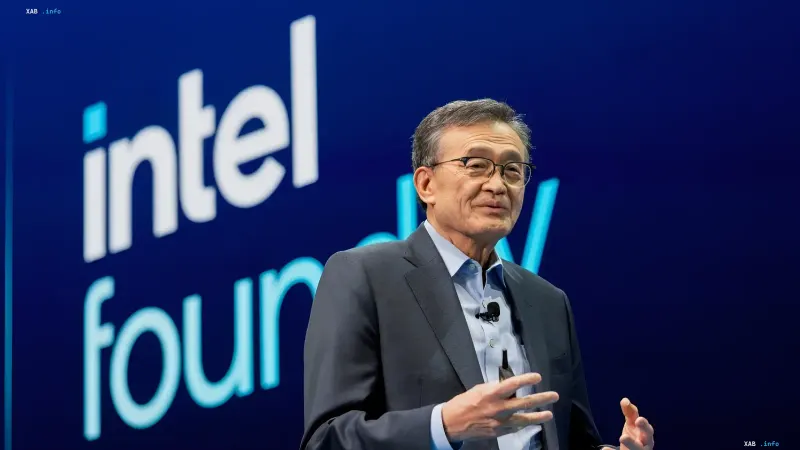
Intel CEO Lip-Bu Tan, in an interview with the Japanese publication Nikkei Asia, expressed the view that China is no longer lagging as far behind the US in semiconductor manufacturing as previously thought. The statement came amid ongoing U.S. sanctions that restrict Chinese companies' access to advanced EUV lithography systems—a key technology for producing chips at the 7nm node and below. Responding to a direct question about whether China can catch up with the US in the next five to ten years, Tan offered a concise formulation: «Today, I think, it's not all that far behind».
Sanctions Context and Assessing the Gap
The Intel chief's statement carries special weight given that Washington has been consistently tightening export restrictions for several years on shipments of lithography equipment to Chinese manufacturers, including extreme ultraviolet (EUV) systems from Dutch company ASML. Nevertheless, Tan emphasized that companies from different countries have their own strengths and weaknesses, and ultimate success is determined by how well their products meet real customer needs. Thus, he avoided making a definitive prediction on the timeline of a catch-up scenario, while also not downplaying the current level of Chinese development.
Progress in Chinese EUV Developments
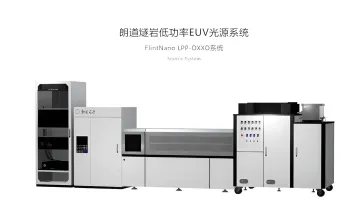
Against the backdrop of Tan's remarks, analysts drew attention to a recent announcement by a Chinese company known as Landau, which unveiled a prototype extreme ultraviolet light source for EUV lithography. According to the developer's stated data, the device is capable of operating continuously for up to 100 hours at an output power of 15 W. For visual comparison: early industrial ASML systems introduced in the early 2020s used sources with a power of about 150 W, and subsequent generations of equipment increased this figure to 250 W. The power gap remains substantial, but the very fact of demonstrating a working prototype with extended operating endurance is viewed as an indicator of accumulated engineering experience.
Engineering Challenges Beyond Just Watts
It is important to understand that in EUV systems, source power is just one parameter. The technology requires repeatedly striking droplets of molten tin with a laser every second while generating stable radiation at the required wavelength. Long-term operation without degradation of optical elements and maintaining the required intensity remains one of the most complex engineering tasks in microelectronics. This is why, even with a prototype boasting 100 hours of operation, commercial implementation of the Chinese solution typically requires a significant period of refinement and scaling.
Intel's Plans and Competition with TSMC
In the same interview, Tan touched on Intel's internal agenda. The CEO confirmed that the company intends to develop its own contract manufacturing business (foundry), capable of competing with Taiwan's TSMC—the global leader in third-party chip manufacturing. At the same time, he emphasized that executing this strategy takes time and consistent work rather than one-off investments. Earlier, in the same Nikkei interview cycle, Tan reported that Intel's restructuring, launched after his appointment in March 2025, was already about 80% complete, including a change of most top executives.
What This Means for the Market
The combination of Tan's statements and data on Chinese developments indicates that the technological gap between the US and China in advanced chips is likely closing faster than Western analysts assumed just a couple of years ago. At the same time, neither source claims that China has already achieved parity: it is a matter of narrowing the lag and the emergence of Chinese companies' own, albeit currently less powerful, solutions in components critical to EUV lithography. For the global semiconductor market, this means U.S. sanctions policy will be forced to account not only for the current gap, but also the rate at which it is closing.