
Space, once seen as an arena for peaceful competition, is today turning into a potential battlefield. Scientists from the Massachusetts Institute of Technology (MIT) have proposed a breakthrough technology capable of detecting nuclear weapons hidden on board satellites. This method could become the key to preventing a new arms race beyond the atmosphere.
A Lesson from History: The Starfish Prime Catastrophe
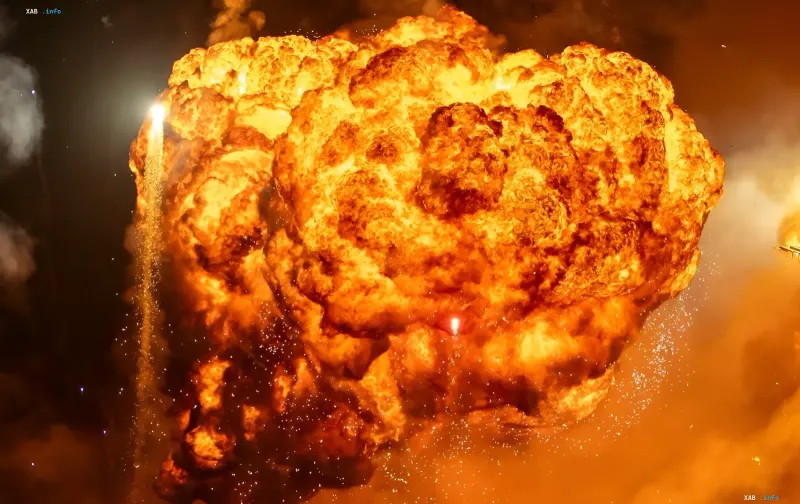
The danger of placing thermonuclear warheads in orbit is not the plot of a sci-fi movie, but a historical fact. In 1962, the United States conducted the Starfish Prime test, detonating a nuclear charge at an altitude of 400 kilometers above the Pacific Ocean. The consequences were immediate and devastating.
The intense radiation from the explosion disabled or completely destroyed one-third of all satellites in low Earth orbit. The blast filled the inner Van Allen radiation belt with electrons, leading to the degradation of spacecraft electronics and solar panels. This precedent clearly showed that even without direct human casualties, a single detonation in space could destabilize civilian life and the defense potential of entire nations.
Turning Radiation into a Search Tool
Today, humanity's dependence on orbital infrastructure is critical. MIT Associate Professor of Nuclear Science and Engineering Areg Danagoulian proposed a method that turns the aggressive radiation environment of space into an ally for inspectors.
The essence of the method lies in using the natural background of the radiation belt. When a satellite carrying hidden thermonuclear weapons passes through the inner Van Allen belt, it is bombarded by high-energy protons. These particles strike the heavy elements of the warhead, such as enriched uranium.
As a result, a spallation reaction occurs, during which millions of neutrons are knocked out of the nuclei. According to Danagoulian's calculations, a hidden bomb would emit up to 40 million neutrons per second, creating a powerful and unique radioactive signature.
A Task on the Edge of Possibility: How to Filter the Noise
To capture this signal, scientists had to develop a concept for a special inspector satellite. The main difficulty lay not in the detection itself, but in the sensors' ability to filter out the colossal background noise of space.
The device had to solve two critical tasks:
- Ignore the flow of "external" protons that constantly attack the detector itself.
- Block so-called albedo neutrons rising from the Earth's atmosphere as a result of cosmic ray impacts.
To overcome these obstacles, the inspector satellite must fly directly beneath the suspicious object at a distance of about 4 kilometers and use a directional detection system. Mathematical modeling confirmed that the sensors are capable of successfully separating terrestrial interference from the target neutron radiation of the violator satellite's uranium core.
From Theory to Practice
At present, the development exists as a theoretically justified model. Areg Danagoulian calls on the international scientific community to join forces to create the first working prototypes and simplify sensor configurations.
The scientist is confident: creating an effective system for verifying space weapons is a top-priority step to prevent the transfer of large-scale military conflicts beyond Earth. The technology could become the very "lie detector" needed to maintain peace in orbit.


