
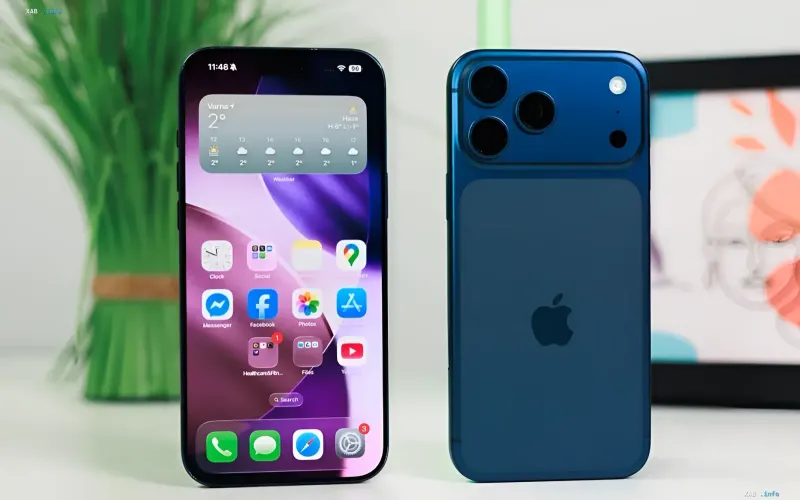
In the first decade of July 2026, the China Quality Certification Center (3C) published documents revealing the technical specifications of Apple's future flagships. The data confirms that the company is betting on processor energy efficiency rather than uncompromising increases in battery capacity, despite the active race for volume among Chinese competitors.
Hidden Parameters and the Impact of eSIM
According to verified data from the insider Digital Chat Station, the maximum battery capacity for the top-tier iPhone 18 Pro Max modification (eSIM version for the North American market) is set at 5567 mAh. This is a significant step forward compared to previous generations, although the figure still lags behind Chinese flagships, which are implementing silicon-carbon batteries with capacities ranging from 6500 to 7000 mAh.
An analysis of the documentation revealed an interesting dependency: the physical layout of the smartphone directly affects battery volume. Removing the physical SIM card tray frees up internal space, allowing engineers to increase the battery cell. The table below presents exact figures for all configurations of the iPhone 18 lineup:
- iPhone 18 Pro (SIM): 4056 mAh (+1.71% over predecessor).
- iPhone 18 Pro (eSIM): 4288 mAh (+0.85% over predecessor).
- iPhone 18 Pro Max (SIM): 5391 mAh (+11.77% over predecessor).
- iPhone 18 Pro Max (eSIM): 5567 mAh (+9.41% over predecessor).
The Cost of Efficiency: Dimensions and Weight
The integration of larger batteries did not come without changes to ergonomics. According to analyst Ice Universe, the iPhone 18 Pro Max will become thicker and heavier. The physical thickness of the body may reach 9.0 mm (compared to 8.75 mm on the iPhone 17), and the total weight will approach 240 grams. The additional weight of the structure is due to the transition to upgraded stainless steel vapor chambers for cooling, necessary for the stable operation of powerful hardware.
Apple's Strategy vs. Market Trends
Why is Apple not rushing to implement ultra-high-capacity silicon-carbon batteries, which Xiaomi and OnePlus are already testing? Experts highlight three key factors determining the conservative approach of the California corporation.
First, priority is given to silicon energy efficiency. The new Apple A20 Pro processor, created on an advanced 2-nanometer TSMC process, reduces the power consumption of compute cores by approximately 30%. This allows Apple to compensate for the difference in physical battery capacity compared to Android competitors.
Second, the company maintains its commitment to the classic lithium-ion scheme. This is dictated by strict internal durability requirements: Apple guarantees that capacity retention will remain at least 80% after several years of operation. Additionally, classic chemistry is more stable under extreme thermal loads arising during the operation of Apple Intelligence AI algorithms in iOS 27.
Logistical Constraints as a Design Factor
The third, and perhaps most important argument, is logistics. International transportation regulations impose strict restrictions on the carriage of lithium batteries. According to regulations by the US Federal Aviation Administration (FAA) and EAC safety standards, mobile devices are classified by equivalent lithium content and watt-hours.
Keeping the capacity of flagship models within the range of 21–22 Wh allows Apple to distribute products through standard global logistics channels. Exceeding these limits would require the use of special regulations for hazardous goods, which would complicate and increase the cost of supplies from assembly plants in Vietnam and India. Thus, the figure of 5567 mAh is not just a technical choice, but the result of a complex balance between performance, safety, and global logistics.


