
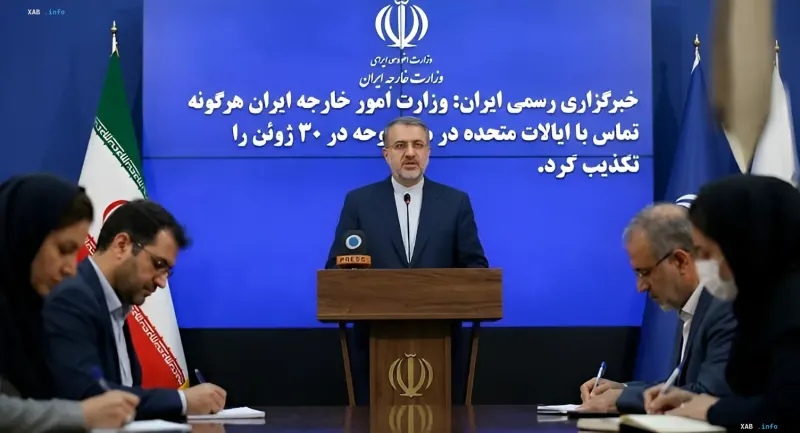
Official denial: diplomacy versus rumors
Amid rising tensions in the Persian Gulf, official Tehran has clarified the course of the diplomatic process. The Iranian Ministry of Foreign Affairs categorically denied reports of an agreed-upon new date and venue for technical consultations with US representatives. The statement was made by Kazem Garibabadi, Deputy Foreign Minister and a member of the national negotiation team. According to him, expert meetings in the Qatari capital are not planned for this week.
This move was a direct response to publications in American media, specifically the outlet Axios, which, citing sources in the US administration, reported that a consensus had been reached. Washington claimed that the parties had scheduled the launch of working groups in Doha on June 30, 2026, to discuss resolving the crisis in the Strait of Hormuz. However, Tehran called this information premature, emphasizing that direct dialogue is possible only after preliminary conditions are met.
Chronology of escalation: from memorandum to tanker detention
Diplomatic activity between the parties arose against the backdrop of a sharp deterioration of the situation in the region. On June 17, 2026, a framework memorandum of understanding was signed, obliging the parties to keep the Strait of Hormuz open for commercial shipping for a minimum of 60 days. This document was intended to create a "window of opportunity" for long-term negotiations, originally planned in Switzerland regarding the nuclear dossier.
However, the peace process was interrupted by an incident on June 25. The Navy of the Islamic Revolutionary Guard Corps (IRGC) blocked the Singapore-flagged tanker Ever Lovely. Iranian authorities accused the crew of following an unauthorized transit corridor. This step provoked an immediate reaction: in the following days (June 26–27), there was a mutual exchange of strikes. The US launched strikes against Iranian coastal observation facilities and anti-ship complexes, which triggered retaliatory missile launches against US bases in the region.
Legal deadlock and maritime security
The essence of the conflict goes beyond simple military confrontation and boils down to legal collisions. The regime of passage through international straits is regulated by the 1982 United Nations Convention on the Law of the Sea (UNCLOS), which provides for the right of transit passage for all vessels. However, official Tehran has not ratified the convention in full. Iran insists on the priority right of a coastal state to exercise security control in its exclusive economic zone, creating a fundamental contradiction with the position of Washington and its allies.
At present, according to maritime monitoring systems, commercial traffic through the strait has resumed, but only in a limited mode. The absence of direct technical contacts between Washington and Tehran, despite announcements by Western media, indicates the persistence of high geopolitical risks. Kazem Garibabadi confirmed that consultations with the Qatari side continue, but they concern monitoring US obligations, not direct negotiations with American specialists.
Outlook: why diplomacy has slowed down
The situation demonstrates a classic scenario of "diplomatic maneuvering," where public statements diverge from the actual status of negotiations. Iran uses the denial of rumors as a tool of pressure, demanding the fulfillment of preliminary conditions before a meeting. At the same time, the US, by announcing a negotiation date, attempts to create an appearance of progress to reassure markets and partners.
The key factor remains the issue of shipping security. Until a unified mechanism for controlling transit corridors is developed, the risk of a repeat of the Ever Lovely incident remains high. The first round of working groups will take place only when both sides deem the conditions safe for dialogue. Until then, the region remains in a state of "frozen" escalation, where any communication breakdown could lead to a new outbreak of violence.


