
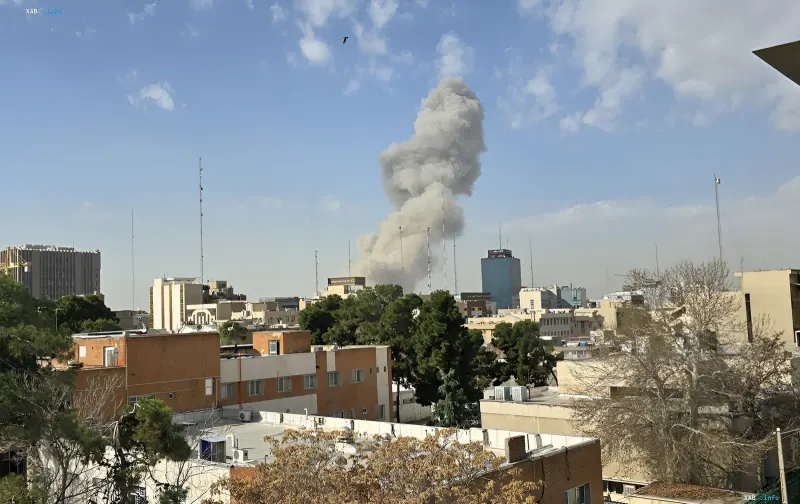
On Sunday morning, the Middle East region witnessed a sharp escalation of the conflict between Iran and the United States. Tehran launched missiles and drones at US military facilities located in Kuwait and Bahrain. The attack occurred against a backdrop of tense rhetoric and threats issued by Washington's leadership.
Provocation and Threat of Destruction
The immediate trigger for the escalation was a statement by US President Donald Trump on social media. The head of state threatened military force to "finish the job" against Tehran, stating that a moment might come when the US can no longer be "sensible".
"If this happens, the Islamic Republic of Iran will no longer exist!" wrote Trump, hinting at the possibility of the complete destruction of the state in the event of continued hostile actions.
Approximately an hour after the publication of this message, the Kuwaiti army reported the activation of air defense systems in response to missile attacks and drone strikes. Air raid sirens were sounded in Bahrain.
Official Position of Iran
The Islamic Revolutionary Guard Corps (IRGC) officially confirmed that its naval and air forces had commenced missile operations against American military facilities in both countries.
In a statement, the Iranian side emphasized that US strikes violated the ceasefire regime, which, according to Tehran, will lead to a complete halt of all diplomatic processes. The command of the Iranian Guard Navy added that American bases in the region "will experience hell in the coming days".
Consequences of the Attack and US Reaction
A US official confirmed to Reuters the fact of Iran's attack on US facilities, however, noted that there were no reports of casualties or serious damage to American infrastructure in the Middle East.
In Kuwait, the army stated that it intercepted two ballistic missiles without casualties or damage. The situation in Bahrain proved more complex: as a result of the Iranian attack, a residential building in the Muharraq province was damaged. In connection with this, Manama appealed to the UN Security Council with a request to convene an emergency session.
A separate incident involved Qatari citizens. The country reported the death of one of its citizens from shrapnel wounds on board a ship that went missing on Saturday. Another person was injured as a result of an incident that occurred during "military operations in the area".
Retaliatory Actions and Context of the Conflict
US Central Command stated that American forces launched new strikes against Iran. This occurred after an Iranian drone attacked a tanker under the Panamanian flag on Saturday. The strikes were targeted at Iranian military observation, communications, air defense, drone storage facilities, and mine depots.
The conflict flared up against the backdrop of attempts at diplomatic settlement. A temporary peace agreement of 14 points, signed earlier, aimed to cease hostilities that the US and Israel started on February 28, and to reopen the Strait of Hormuz. A week ago, a round of negotiations took place in Switzerland mediated by US Vice President JD Vance and Iranian Parliament Speaker Mohammad Bagher Ghalibaf. Washington then lifted sanctions against Tehran, but since then hostilities have resumed.
The parties have already exchanged strikes multiple times during the so-called truce. In particular, on June 3 and 6, the US attacked Iranian facilities in response to the launch of enemy drones towards the Strait of Hormuz. Previously, Iran blocked the Strait of Hormuz and promised "hell" in the Middle East, which now seems to be a reality.


