
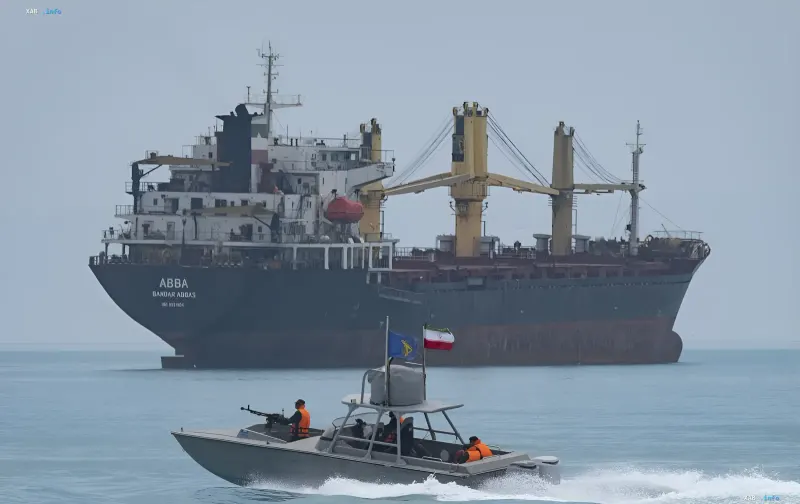
The situation in the Persian Gulf has reached a critical point. Iran has officially warned Washington of its readiness to completely halt any negotiation processes. The reason for such a sharp step is the intense activity of American aviation in the skies over the Strait of Hormuz, which Tehran considers a direct threat.
Breach of Agreements and Threat to Vessels
The Islamic Revolutionary Guard Corps (IRGC) issued a stern statement, accusing the US of violating the framework agreement. According to the Iranian side, the strikes launched by Washington have crossed all permissible boundaries. In response, Iran is preparing a military reaction and warns of a radical tightening of control over waterways.
Official IRGC spokesperson Hossein Mohamadi called the American side a "lying partner." The corps' statement contains a direct threat: henceforth, unprecedentedly strict measures will be applied to any vessels violating established rules. Any violating vessel risks becoming a target for a crushing response.
Clash of Interests and the Role of Aviation
The conflict is based on a dispute over the Islamabad Memorandum of Understanding. Tehran insists that Article 1 of this document, concerning shipping safety, was grossly violated by US actions. An additional factor in the escalation was the activity of American aviation. A Boeing KC-135R Stratotanker tanker aircraft, which took off from Qatar, was spotted in the skies over the region. Iranian experts note that its flight pattern is identical to the one used during strikes on Iranian targets.
US Position: Warning from Mike Waltz
Washington has no intention of backing down. US Ambassador to the UN Mike Waltz warned the Iranian regime of the inevitability of new attacks. According to him, the American side will continue to destroy Iran's military infrastructure to guarantee freedom of navigation.
"If the Iranian regime thinks for a second that President Trump will sit with his hands folded, watching as Iran continues to attack international shipping without response or our unresponsive bases, they are very mistaken," Waltz stated.
Total Control Over Hormuz
Iranian Foreign Minister Abbas Araqchi, speaking in Baghdad, announced a radical plan of action. He declared a transition to full monitoring of the Strait of Hormuz. Over the next 30 days, Tehran intends to unilaterally manage the waterway, effectively cutting off the influence of other players in the region.
Cycle of Violence: From Attacks on Civilian Vessels to Strikes on Bases
The escalation of the conflict began with Tehran's attack on a civilian vessel in the Strait of Hormuz. Washington did not keep itself waiting and launched retaliatory strikes on military targets in the area of the strait, calling it an act of retribution. Last night, the IRGC confirmed the launch of another attack on US bases in the region. Ballistic missiles and drones were directed towards Kuwait and Bahrain, confirming the transition of the confrontation into a phase of active hostilities.


