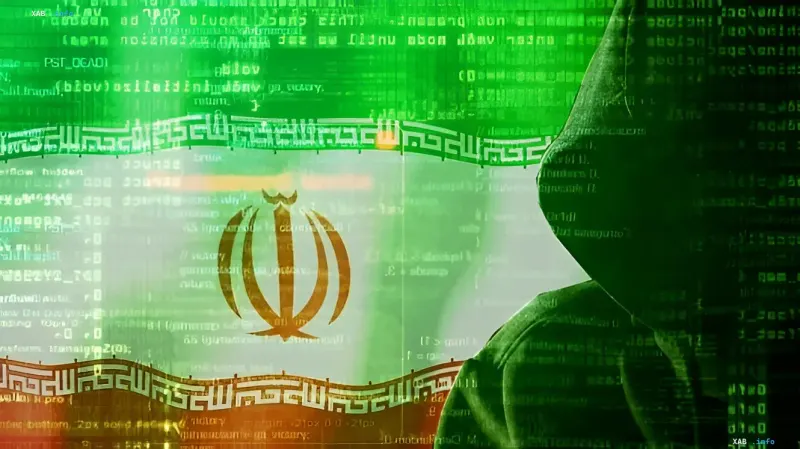
British newspaper The Telegraph, citing sources in national security agencies, reported the first confirmed case in history of a physical disruption of a UK energy infrastructure facility by a hacker group linked to the Islamic Revolutionary Guard Corps (IRGC). The target was a small maneuverable gas power station, whose operation was completely halted for 96 hours. According to British intelligence assessments, the incident did not lead to a nationwide electricity shortage, but its strategic significance goes far beyond a technical failure: it marks a shift by Iranian cyber units from information-level operations to kinetic impact on industrial controllers (SCADA/ICS) on NATO territory.
Anatomy of the Incident and the Regulatory Context
According to data presented in The Telegraph's report and corroborated by a number of international outlets, the attacked station belongs to the category of small-capacity distributed gas-fired thermal power plants. Such facilities in the British energy system serve as a reserve balancing generation resource: they are connected to the grid for a limited number of hours during periods of peak load, in particular when wind farm generation drops. The hackers bypassed the digital perimeter of the industrial network and compromised control over technological processes, which led to an emergency shutdown of the equipment. Restoring normal operation took four days.
The UK's Department for Energy Security and Net Zero (DESNZ) stated in an official comment that the facility was a small-capacity station, and therefore operators were not required to report immediately to the National Cyber Security Centre (NCSC/GCHQ). The exact name and location of the facility are not disclosed for security reasons. DESNZ also issued emergency directives to grid operators to strengthen the protection of perimeters and operational loops. An official report by the UK Cabinet Office, submitted to the government, assesses the probability of a successful large-scale cyberstrike on the kingdom's critical infrastructure at 5–25%, emphasizing that the adoption of artificial intelligence technologies has significantly lowered the barrier to entry for attacks on industrial controllers.
Contradictory Data
Official statements and analytical assessments contain a number of inconsistencies that require clarification. First, DESNZ emphasizes that the facility was low-capacity and posed no threat to the national energy system, which in effect minimizes the scale of the incident. However, intelligence sources cited by The Telegraph characterize the event as the "first confirmed successful hack of such a facility by Iranian cybercriminals," indicating a qualitatively new level of threat. Second, the regulatory position that small station operators are not required to immediately notify the NCSC creates an institutional gap: on the one hand, no formal breach of the reporting protocol has been recorded; on the other, a four-day outage of an industrial facility without prompt notification to the cyber regulator points to a flaw in the response system. Third, analysts disagree on the interpretation of the attack's objective: some experts view the incident as a demonstration of the IRGC's technical capabilities, while others see it as a deliberate "probing" of NATO's response thresholds without triggering Article 5 of the North Atlantic Treaty.
The Evolution of Iran's Cyber Doctrine: From Espionage to Kinetic Operations
The incident in the UK fits into a clearly traceable three-stage evolution of Iranian cyber operations. In the first stage (up to 2024), the activities of pro-government hacker groups were limited to information espionage, defacement of government websites, and leaks of correspondence. The second stage (2024–2025) was marked by a shift to attacks on vulnerable industrial systems: hacks of programmable logic controllers (PLCs) at water treatment plants in 12 US states were recorded, where default passwords and unprotected internet access were in use. The third stage, recorded in August 2026, involves direct penetration into the internal operational (OT) loops of industrial infrastructure on the territory of Washington's allies and the physical disabling of equipment.
The temporal coincidence of the attack on the British power station with a series of hacks of water supply systems in the US points to a coordinated campaign. According to Western analysts, the strategic message lies in demonstrating Iran's presence in the utility and energy sectors of key US allies and its ability to cause damage without crossing the "red line" beyond which a direct military response follows. The choice of a secondary target allowed Tehran to demonstrate the technical capability to breach the SCADA defenses of NATO countries while deliberately remaining in the "gray zone" of sub-threshold impact.
Macro Consequences and Long-Term Risks
The four-day outage of the power station has become a watershed in the cybersecurity architecture of the UK's critical infrastructure and, by extension, of the entire NATO bloc. If previously Iranian proxy groups were limited to financial espionage, DDoS attacks, and web interface breaches, a direct transition to kinetic-level operations has now been recorded. This places on regulators the task of revising mandatory reporting thresholds: the current model, under which small generation facilities are not required to immediately notify the NCSC, may be deemed inadequate to the new threat reality. Moreover, the Cabinet Office's 5–25% probability assessment of a large-scale cyberstrike, made in conditions where AI is lowering the cost of attacks on industrial controllers, requires updating in light of the actual incident. For the UK energy sector this likely means accelerated deployment of OT network segmentation, mandatory multi-factor access to PLCs, and the creation of a unified incident management protocol independent of facility capacity.