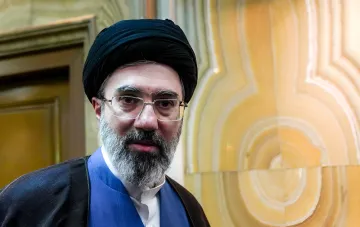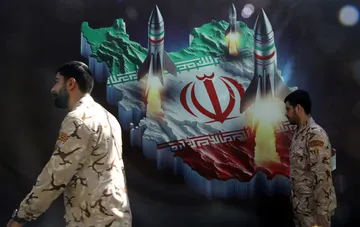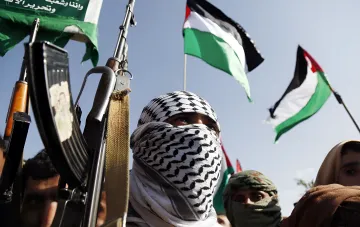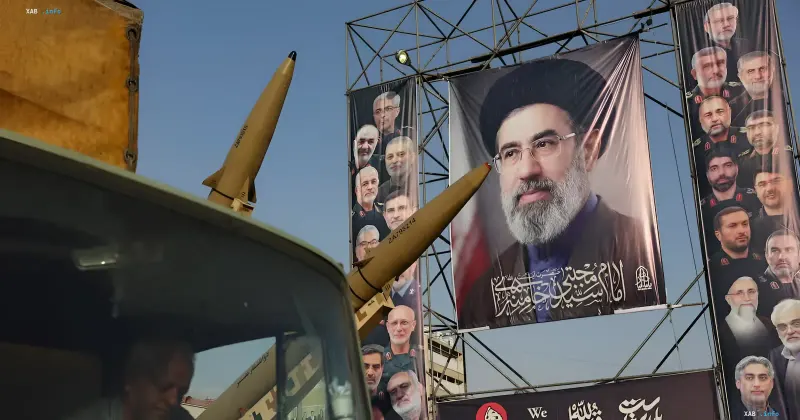
On October 31, the official X account of Iran's Supreme Leader Mojtaba Khamenei confirmed that he held a meeting with high-ranking armed forces commanders and issued a series of strategic directives. According to the IRNA news agency, Khamenei instructed senior commanders to provide an 'immediate, effective, and geographically unlimited response' to any threat from the enemy. The statement came amid reports by Iranian media regarding an incident near Qeshm Island and reports by observers that the US and Israel are considering resuming large-scale strikes against Iran.
Strategic Directives to Command
During the meeting, as reported by IRNA, the Supreme Leader emphasized that 'readiness to fight and decisively counter the enemy' is one of the key conditions for achieving 'maximum deterrence.' Separately, it was stated: 'If the enemy resumes military actions, it will be the Iranian armed forces and government that decide when and under what conditions to end these attacks.' This phrasing essentially transfers control over the diplomatic conditions for a ceasefire to the Iranian side. Khamenei also pointed out the need to strengthen the country's military information structure and enhance independent defense capabilities in terms of 'doctrine' and 'tactics,' while discussing the expansion of defense and security capabilities through the application of new technologies.
Updating the 'Target Bank' and Population Mobilization
Among the orders reported by Iranian sources is the update of the so-called 'target asset bank' to ensure that all material and immaterial assets of the US and Israel are within the reach of the armed forces. Khamenei also mentioned the mobilization of the entire population to cooperate with the military and emphasized the role of the Basij forces, a paramilitary organization primarily responsible for maintaining internal order. Together, these points indicate preparations for a full-scale conflict scenario, involving both countering external adversaries and internal mobilization.
Military Context: The Strike Near Qeshm Island
Information about the directives emerged against the backdrop of reports that the US and Israel are considering the possibility of resuming large-scale attacks on Iran, potentially following the US midterm elections. The planned campaign is expected to last about a week and target Iranian leaders, nuclear facilities, energy centers, and other critical infrastructure. On October 31, Iranian media citing the deputy governor of Hormozgan Province reported that around 11:30 AM, about 18 miles from the village of Mousan (Qeshm area), two fishing boats carrying two people each were attacked. According to the official, two locals were injured and two went missing; after the incident, two people were taken to Qeshm Island, and one was hospitalized. According to IRIB, the attack was carried out by the US military using drones. Qeshm Island is the largest Iranian island in the Persian Gulf, considered part of the 'main defense line' near the Strait of Hormuz.
Personnel Reshuffle and the Nuclear Factor
Khamenei's directives fit into a broader context of military leadership reshuffles. According to Iranian agencies, the Supreme Leader issued separate decrees appointing six high-ranking commanders, including Major General Ali Abdollahi as Chief of the General Staff and Brigadier General Mohammad Pakpour (or Ahmad Vahidi) as Commander of the Islamic Revolutionary Guard Corps, and ordered the completion of the merger of the General Staff with the Khatam al-Anbiya Central Headquarters. Concurrently, US intelligence, according to reports, notes Iran's increased drive to acquire nuclear weapons, while US President Donald Trump earlier publicly acknowledged that Mojtaba Khamenei survived a US airstrike on the country. These circumstances amplify the significance of the October 31 directives as a signal of Tehran's readiness for a prolonged and multi-vector confrontation.
Thus, the statements by Iran's Supreme Leader on October 31 mark a transition to tougher rhetoric and practical preparation: from a 'geographically unlimited' response and updating the target list to population mobilization and command reshuffles. Against the backdrop of reports regarding the strike near Qeshm Island and discussions of a potential new wave of strikes by the US and Israel, these steps are viewed as an indicator that Iran is laying the groundwork for a full-scale conflict scenario while striving to retain control over the conditions for its possible termination.