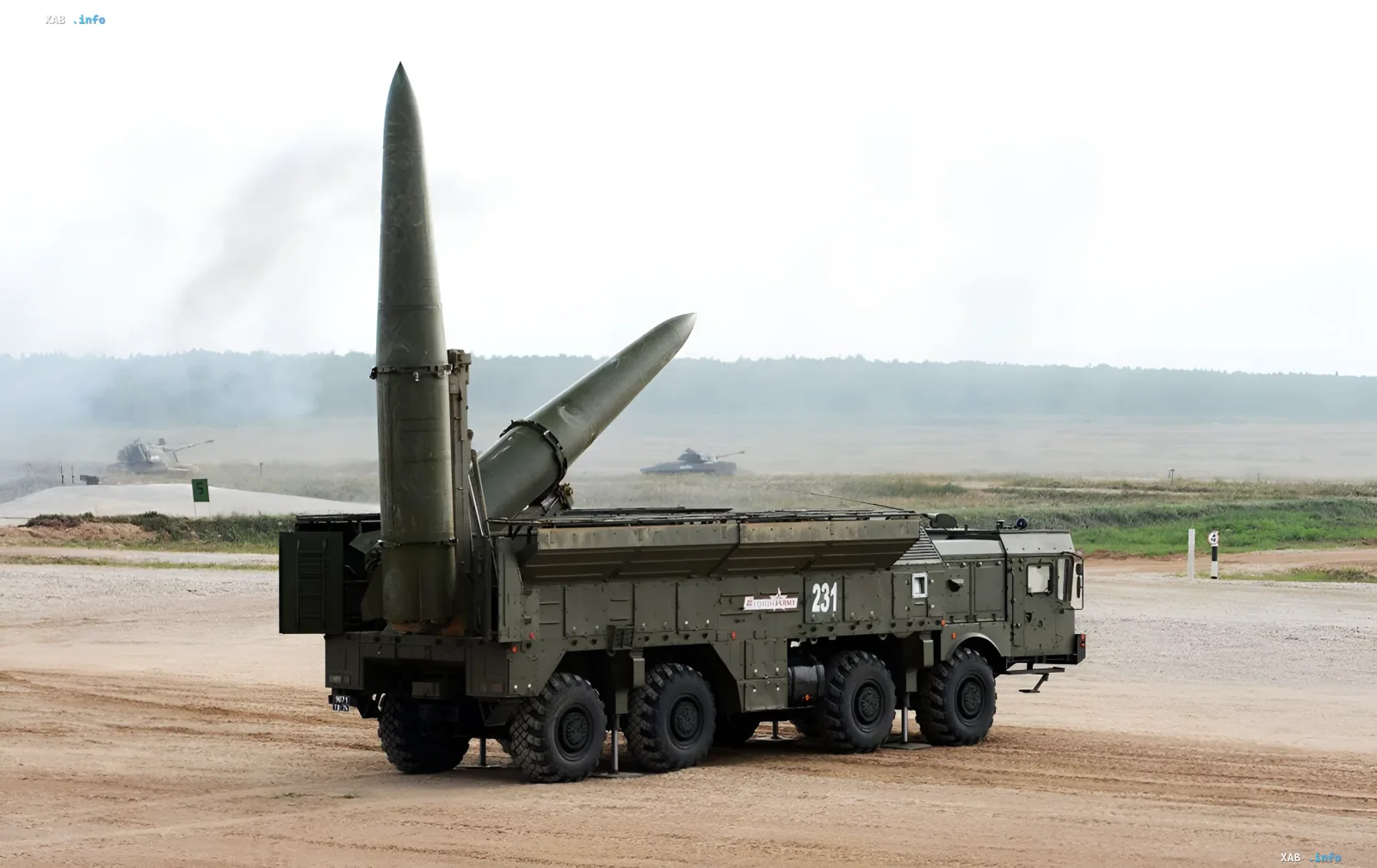
In early 2026, the production rates of the Iskander-M operational-tactical missile complex reached new levels. According to military experts, Russian factories are now producing between 60 and 70 ballistic missiles monthly. This was reported by Colonel Alexander Zaruba, the Chief Scientific Officer of the State Research Institute for Testing and Certification of Weapons and Military Equipment.
The specialist emphasized that the complex is not only increasing its output volumes but also undergoing significant technical modernization. The "Iskander-M" has evolved into a complex quasi-ballistic system that is actively adapting to the conditions of real combat operations and counteracting air defense systems.
Deception technologies and new algorithms
According to Zaruba, modernization is proceeding along three main directions aimed at increasing the missile's survivability and strike accuracy. A key innovation is the updated 9B899 module. This unit activates during the final stage of flight, deploying decoys, dipole reflectors, and thermal traps.
The purpose of these countermeasures is to mimic the missile's signature and overload the radar stations of surface-to-air missile systems, making interception difficult. Furthermore, onboard systems have been adapted for active scanning mode, allowing them to detect blind spots in enemy radar coverage. The missile software is regularly updated.
Digitalization and North Korean influence
In missile versions produced after 2023–2024, a more powerful processor for image processing has been installed. This increases the probability of target recognition and the accuracy of the strike. The role of optical correction using digital terrain imagery has also been strengthened.
Particular attention should be paid to the simplification of the design. Zaruba noted that elements and technical solutions previously used in North Korean Hwasong-18 (KN-23) missiles have been integrated into the Iskander production cycle. This has allowed for production optimization without a loss of effectiveness.
Range and warhead types
The expert stated that during the latest modernization, the missile's range could be increased to 1,000 km. "That is, the missile can strike targets across the entire territory of Ukraine," Zaruba emphasized.
An important aspect is also the diversity of combat application. There are seven variants of warheads in service, including penetrating and concrete-piercing versions. Such missiles are used to attack airfields with the aim of destroying tactical aviation. In particular, specialists note that Russian crews are actively searching for and attacking F-16 aircraft.
Import substitution and general context
Despite the push for sovereignty, the share of Russian electronic components in the missile has risen only to 90%. Zaruba confirmed that Western electronics are still present in the design. Parallel to the increase in Iskander production, Russia is ramping up the production of Kh-101 cruise missiles and modernizing Soviet aviation bombs into guided KABs with the UMPK module. The use of cluster munitions and the development of intermediate types of weaponry between bombs and drones are also being recorded.


