
On the night of May 24, the sky over Ukraine turned into a battlefield where hundreds of drones and dozens of missiles clashed. But behind the dry figures of losses and destruction lies a deeper, more frightening logic. The Institute for the Study of War (ISW) has put forward a version that changes the perception of what happened: the massive attack on Kyiv is not a demonstration of military might, but an attempt by Vladimir Putin to compensate for personal and political humiliation.
The Syndrome of the Humiliated Dictator
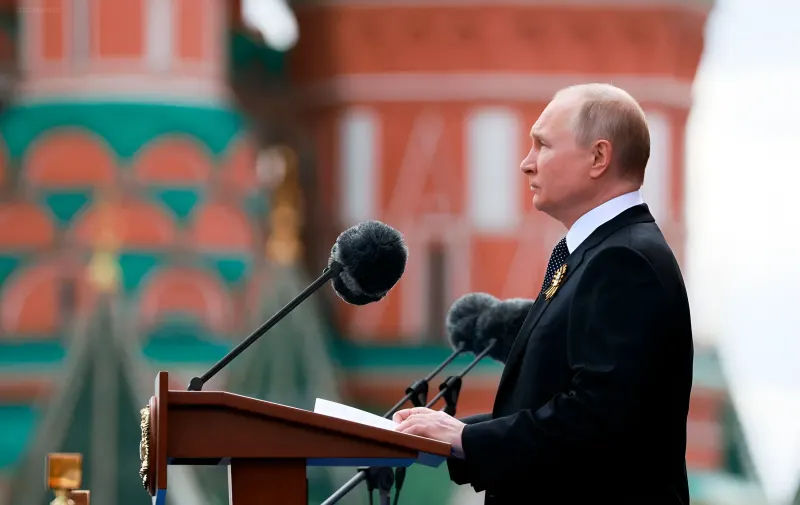
Analysts make a bold conclusion: the order to launch the strike was given as a reaction to the May 9 parade. Despite extensive preparations, the march in Moscow sparked a wave of criticism. For the Kremlin, accustomed to absolute control over the narrative, any criticism is a threat. And to "erase" this feeling of humiliation, the most brutal tool was chosen — a strike on the "decision-making centers" in Kyiv.
Putin is trying to project strength, but, according to experts, he does so precisely because he feels vulnerable. The attack became a way to shift the attention of the global and domestic audience from problems on the front and failures in organizing the parade to the "active phase" of the war.
Masking Failures on the Front
The situation on the front line in the spring-summer of 2026 is far from favorable for the Russian army. There are no significant breakthroughs, while Ukrainian forces continue counterattacks and strike deep into the enemy's rear. Under such conditions, the strike on the Ukrainian capital serves as a smokescreen. It is an attempt to create an illusion that the initiative remains with Moscow, although reality says the opposite.
Even Russian military bloggers, usually prone to exaggerating successes, admit that the strikes on Kyiv are more symbolic in nature. They do not change the course of the war, but allow the Kremlin to maintain the rhetoric of an "offensive spirit".
The Cost of Lies and Destruction
Ignoring the declared "spirit" of the ceasefire is another indicator that Moscow is ready to do anything to save face. As a result of the night attack, 90 missiles were fired, including the "Oreshnik" ballistic missile, and 600 unmanned aerial vehicles. Ukraine's air defense performed the impossible, shooting down 55 missiles and 549 drones, but the price of the tragedy turned out to be terrible.
People died, children were injured. Not only residential areas were hit, but also cultural values: the Ministry of Foreign Affairs building, the art museum, and the "Chernobyl" museum. The occupiers deliberately struck schools and markets. In Bila Tserkva, the strike by the "Oreshnik" was also confirmed, where two men died.
This scenario confirms one simple truth: when a dictator has nothing to say on substance, he begins to speak the language of destruction. But, as the ISW analysis shows, behind this aggression lies not strength, but fear of one's own weakness.


