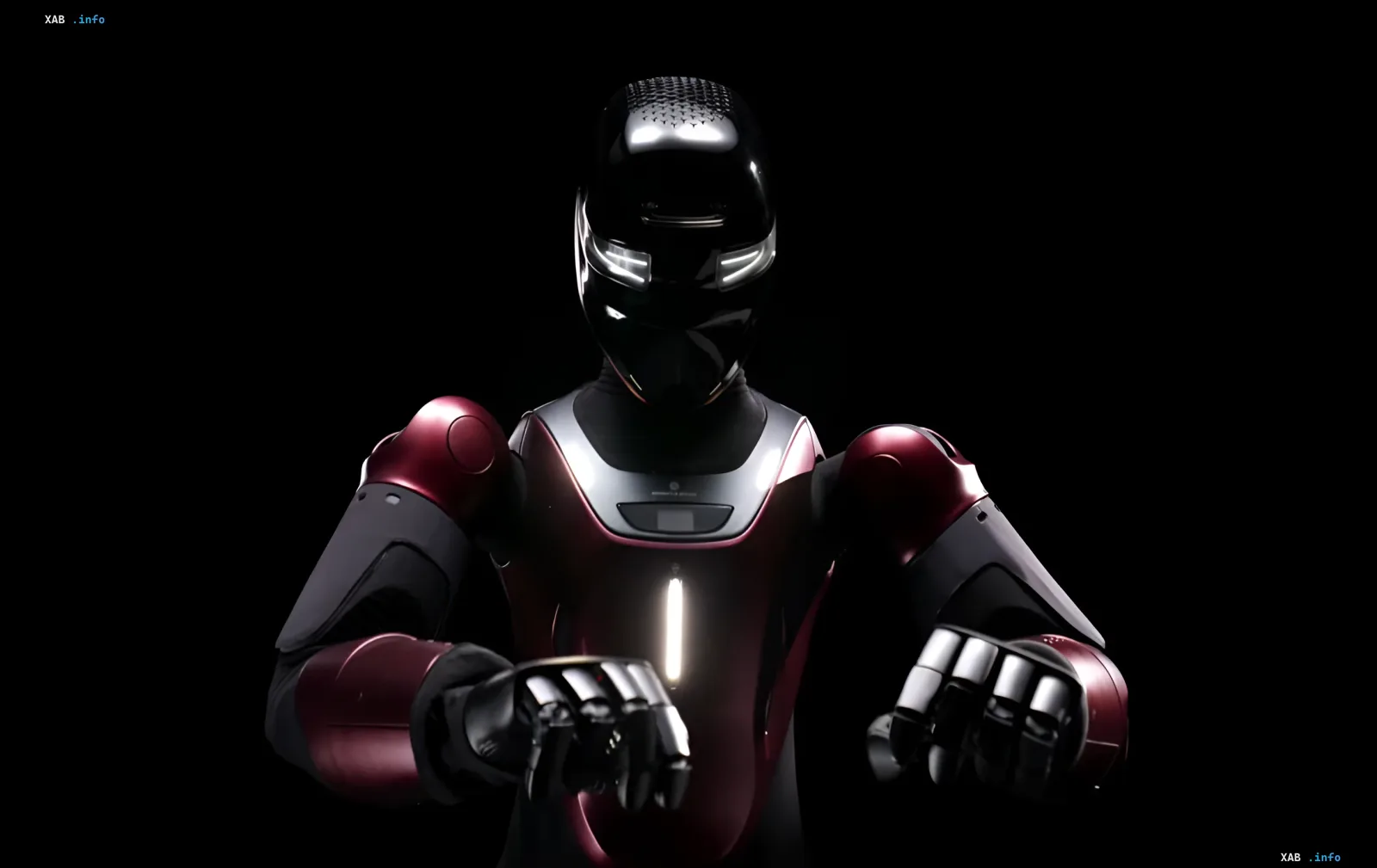
Italian engineers have unveiled an updated version of the Gene.01 humanoid, which could mark a turning point in the development of industrial robotics. The main innovation of the new model is a multimodal sensory system covering almost the entire body of the device. This technology allows the robot to interact safely with humans and the environment, moving away from the traditional reliance solely on computer vision.
The first concept of the machine was demonstrated to the general public at CES 2026 in January. However, the full-fledged, working version of the robot was presented later at the AMD Advancing AI 2026 event. The presentation confirmed the transition from theoretical models to the actual implementation of advanced technologies.
Artificial skin instead of cameras
The key difference between Gene.01 and most modern industrial robots lies in its method of perceiving the world. A complex sensor network is located across the entire surface of the device's body, functioning as artificial skin. It reacts to external stimuli, allowing the robot to 'feel' the presence of a human before physical contact occurs.
Such an architecture significantly increases safety levels in shared work zones at factories and plants. The robot is capable of recognizing the threat of collision or contact at early stages, which is critical for the collaborative work of humans and machines.
A new approach to training and architecture
Developers have implemented a fundamentally new method for training the humanoid. An operator can physically take the robot's manipulators by the hands, demonstrating the necessary movements and adjusting the force when gripping objects. This allows skills to be transferred intuitively, without complex programming.
The system is based on a personalized, physics-oriented artificial intelligence. Its main advantage is the integration of mechanics, body parts, sensors, and motion intelligence into a single network, rather than treating them as separate modules. The architecture is based on research from the journal Nature Machine Intelligence, which was previously tested in the ergoCub scientific project. Gene.01 became the first commercial robot where this methodology was applied in practice.
From shipbuilding to open source
The manufacturer has consciously abandoned the concept of a 'universal robot for everything'. The Gene.01 platform is designed to be scalable and adaptable to the specific needs of industries — from changing AI software algorithms to installing specialized hands or feet.
The first practical step will be a partnership with the Italian shipbuilding company Fincantieri. There, the robot will serve as an automated welder. To ensure mass production, Generative Bionics is forming a European supply chain in collaboration with the German drive manufacturer Synapticon. The German partner will take on the assembly, calibration, and safety testing of the robots directly in Europe.
Furthermore, the developers have taken a step towards the community: the digital twin of Gene.01 has been made publicly available. It can be downloaded via standard package managers — PyPI, conda-forge, and ROS, opening up opportunities for independent research and development.


