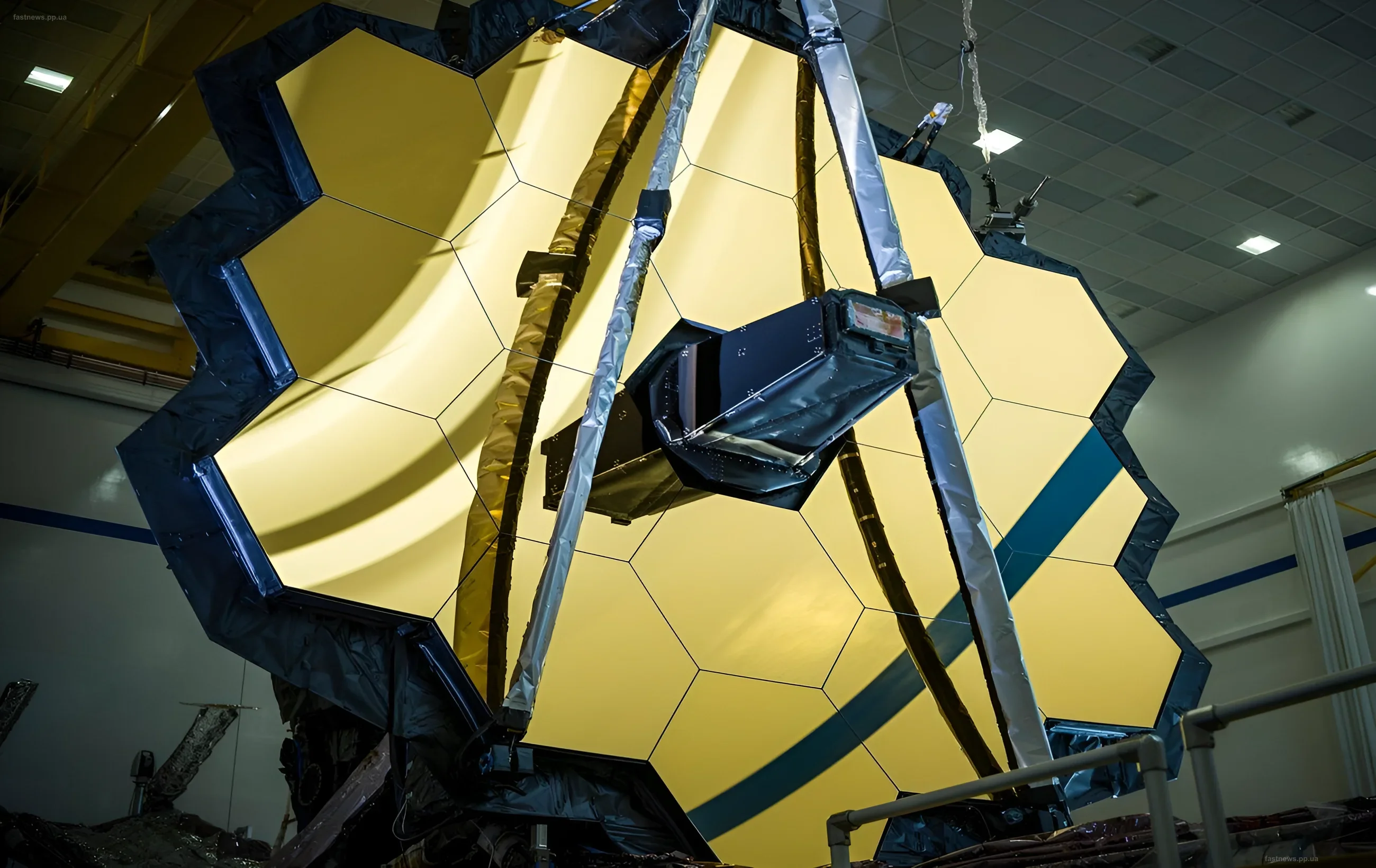
The James Webb Space Telescope has made a discovery that forces a rewriting of astrophysics textbooks. For the first time, astronomers have obtained direct evidence of a supermassive black hole that was a giant from the moment of its birth. This object, named QSO1, formed without going through the classical stage of stellar collapse and did not spend billions of years accreting matter. Such data completely overturns established scenarios of the evolution of the Universe.
The End of the Era of Guesswork
Professor Roberto Maiolino from the University of Cambridge called this discovery a "complete revision of ideas about how black holes are born and grow." For decades, the scientific community adhered to the opinion that massive stars eventually collapse, gradually increasing their mass by accreting surrounding matter. However, observations of the object QSO1 showed a different picture: the black hole existed just 700 million years after the Big Bang, whereas it was previously believed that forming such a monster would take at least a billion years.
The mass of this cosmic giant is 40 million times greater than the mass of the Sun, and it is located 13 billion light-years from Earth. This is the first case in history where scientists were able to accurately measure the mass of a black hole that existed in the first billion years of the Universe's life. Until now, all such calculations were approximate and based on extrapolating data obtained in the vicinity of our Galaxy.
The Mechanics of a Cosmic Carousel
The accuracy of the measurements became possible thanks to the unique behavior of the heated gas around the object. Astronomers discovered that matter rotates around the black hole on the principle of an ordinary carousel. This movement is subject to fundamental laws of gravity, similar to how planets rotate around the Sun.
Researcher Ignas Snellen noted that it is precisely the ordered circular rotation that serves as irrefutable evidence of the presence of a single super-powerful object in the center. If the mass were distributed among millions of small stars, the gas would move chaotically, rather than forming a perfect cosmic circle.
Dark Matter as the Key to the Mystery
The discovery does not refute the Big Bang theory, but requires new mathematical justifications to explain such an anomalous growth rate. Physicists from the University of California, Los Angeles (UCLA) suggest that the answer lies in dark matter. According to their hypothesis, the decay of dark matter could release photons that strongly heated hydrogen gas.
Heated hydrogen, under the influence of gravity, could rapidly condense into giant clouds that collapsed directly into a supermassive black hole, bypassing the long stage of forming individual stars. Although this theory remains hypothetical due to the lack of direct data on the composition of dark matter, it allows new observations to be reconciled with existing laws of physics.


