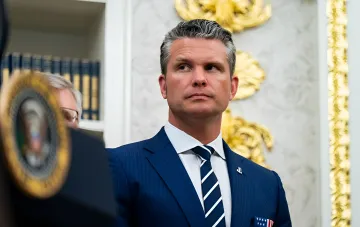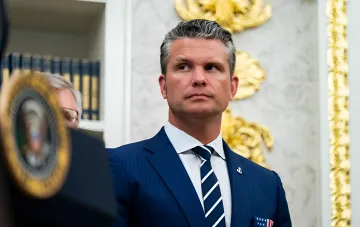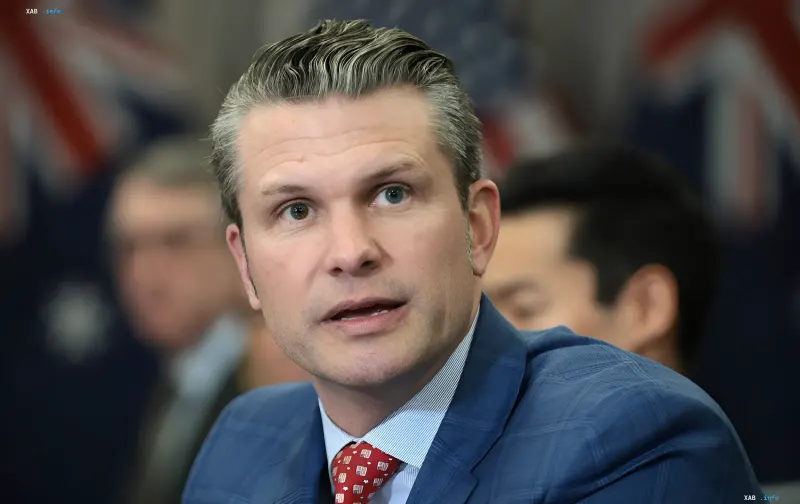
House Democratic Leader Hakeem Jeffries has publicly backed initiating impeachment proceedings against Defense Secretary Pete Hegseth. According to Jeffries, the Pentagon chief «abused his power, undermined national security, and provoked a reckless and costly war in Iran that led to a sharp rise in prices for the American people and made the country less safe». Democrats plan to discuss the corresponding resolution on Tuesday, November 10, at the first House session following the November 3 midterm victories.
Accusations: From «Reckless War» to Rising Prices
In his statement, Jeffries formulated three key grievances against Hegseth: abuse of power, undermining national security, and provoking a conflict with Iran without proper congressional approval. The Democratic leader emphasized the economic consequences of the war, pointing to «a sharp rise in prices for the American people». The final part of the statement carried an imperative tone: «Pete Hegseth must go». Such rhetoric, combining legal accusations with socio-economic arguments, is characteristic of Democratic attempts to tie the administration's military policy to voters' everyday concerns.
Midterms as a Catalyst
Efforts to remove the Pentagon chief gained momentum directly after the November 3, 2026 midterm elections, which dealt a significant defeat to Republicans. The Democratic victory in the House opened up real procedural avenues for the party to advance impeachment resolutions previously blocked by the Republican majority. This is precisely why the resolution's discussion is scheduled for the first session of the new House composition on November 10. For Democrats, this is both a political signal to the voters who supported them and an attempt to cement control over the administration's military policy.
Trump's Stance and Hegseth's Response
President Donald Trump, in turn, stated that he has no plans to replace Hegseth, calling his work «well done». This statement creates an internal contradiction within the Republican camp: the chief executive is publicly defending an official whom Democrats are trying to oust through Congress. Hegseth himself previously rejected the threat of resignation, stating that the impeachment initiative «didn't work against Trump and won't work with him either». Thus, the defense secretary positions himself as a loyal executor of the president's will rather than an independent political actor whose decisions can be contested separately from the administration.
An Unexpected Ally: Republican Massie
The figure of Republican Thomas Massie deserves special attention; he previously attempted to initiate Hegseth's impeachment for waging war without congressional approval and announced his intention to reintroduce articles of impeachment. Support for impeachment from a Republican, even just one, significantly changes the nature of the process: it deprives Democrats of the ability to accuse opponents of a «partisan purge» and gives the procedural steps a broader political mandate. Massie argues his actions violate the War Powers Resolution, a law requiring congressional approval for military actions extending beyond 60 days. If his initiative is combined with the Democratic resolution, it could create a coalition sufficient to clear the two-thirds Senate threshold, though at this stage, the focus is solely on the House.
Prospects and Procedural Framework
Currently, the resolution is at the discussion stage in the House. To proceed to a vote on the articles of impeachment, Democrats must gather enough signatures and clear the relevant committee procedure. Even if the articles are approved in the House (where a simple majority suffices), the Senate would have to hold a trial, which requires a two-thirds vote for conviction. Given that Trump is publicly defending Hegseth and some Senate Republicans will likely vote to keep him, the path to actual impeachment remains extremely difficult. Nevertheless, the mere fact of putting forward the resolution at the first post-election session signals that the administration's military policy, including the conflict with Iran, is becoming the central battleground of political struggle in Congress for the coming months.