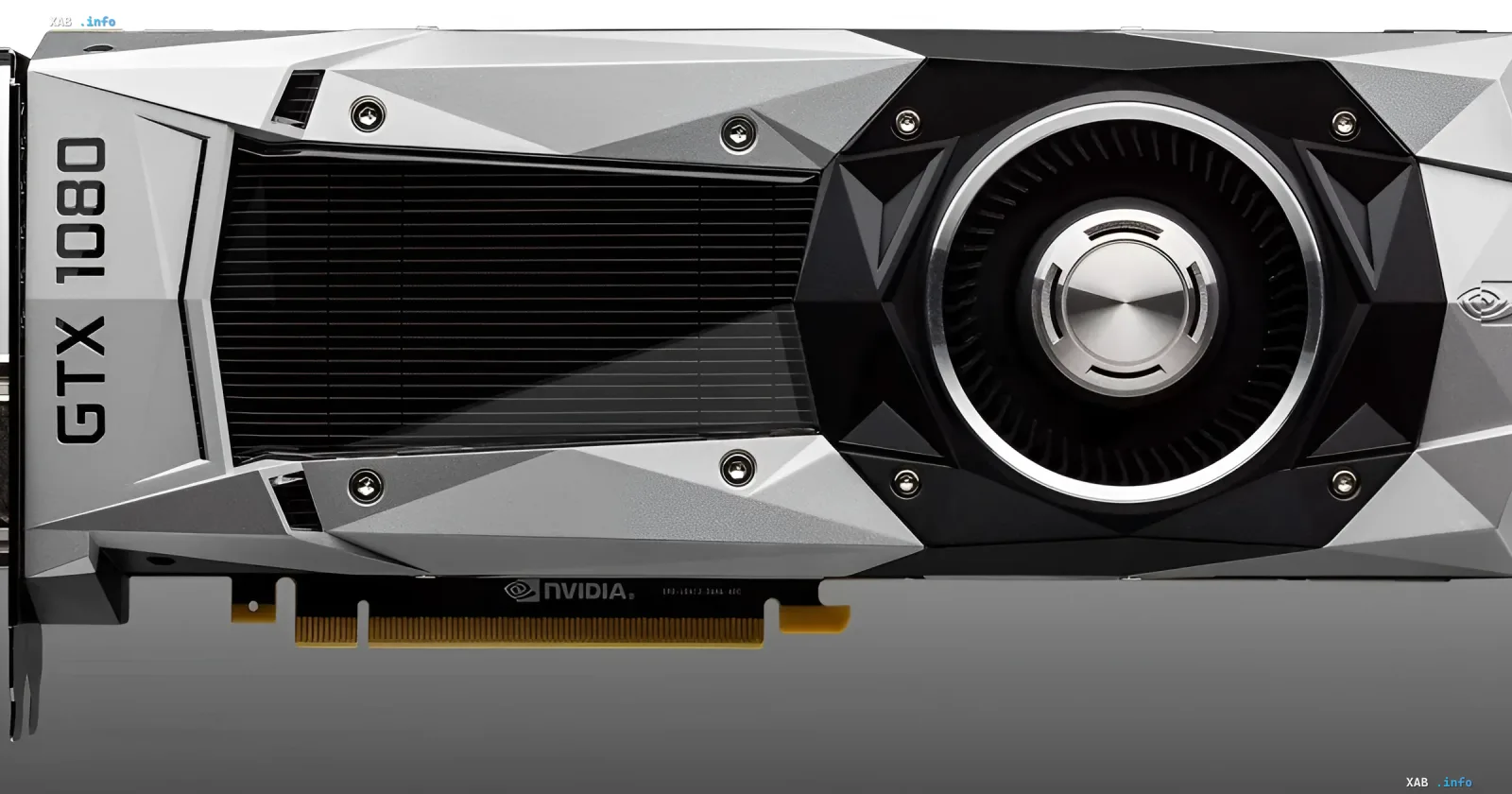
At the international Computex 2026 exhibition in Taiwan, an event took place that became a true mark of quality for computer hardware enthusiasts. Nvidia CEO Jensen Huang, usually immersed in discussions about the latest architectures and artificial intelligence, stopped to personally interact with fans. However, the most memorable moment of the meeting was not the presentation of new products, but the top executive's reaction to an old artifact brought by one of the visitors.
An Emotional Encounter with the Past
One of the fans brought a GTX 1080 Founders Edition graphics card for an autograph — a model released more than a decade ago. Instead of a standard handshake, Huang showed unexpectedly warm feelings towards the device. He called this card "one of his favorites" and "one of the best," adding that it literally "changed everything".
This short dialogue carries much more weight than it might appear at first glance. The company head's admission that a product from ten years ago remains significant to him underscores the historical role of the GTX 1080 in Nvidia's development.
Technical Breakthrough of the Pascal Architecture
Released in May 2016, the GTX 1080 became the first gaming graphics card based on the Pascal architecture. This was a real leap in performance: the card received 8 GB of GDDR5X memory and 2560 CUDA cores. It was precisely this chip that allowed gaming in 1440p and 4K resolutions to move from the category of exotic to a relatively accessible reality for the mass user.
The Pascal generation became the final chord before the revolutionary transition to the Turing architecture and the RTX 20-series lineup. If RTX brought hardware ray tracing and DLSS technology to the world, Pascal remained the symbol of an era when a powerful graphics processor cost reasonable money and did not require complex software overlays to unlock its potential.
Economics and Legacy
It is worth noting that it was with the 10th generation of graphics cards that the rapid rise in market prices began due to huge demand for cryptocurrency mining. Nevertheless, the starting price of the Founders Edition version was $699, and partner cards started from $599 — figures that today seem almost fairy-tale-like.
In March 2017, the company released an enhanced version, the GTX 1080 Ti. Many enthusiasts still consider it one of the best examples of price-to-performance ratio in the history of the industry. The card offered results close to the flagship Titan X Pascal, at a much more affordable cost. Moreover, its 11 GB of video memory still exceeds the memory volume of many modern entry-level and mid-range solutions.


