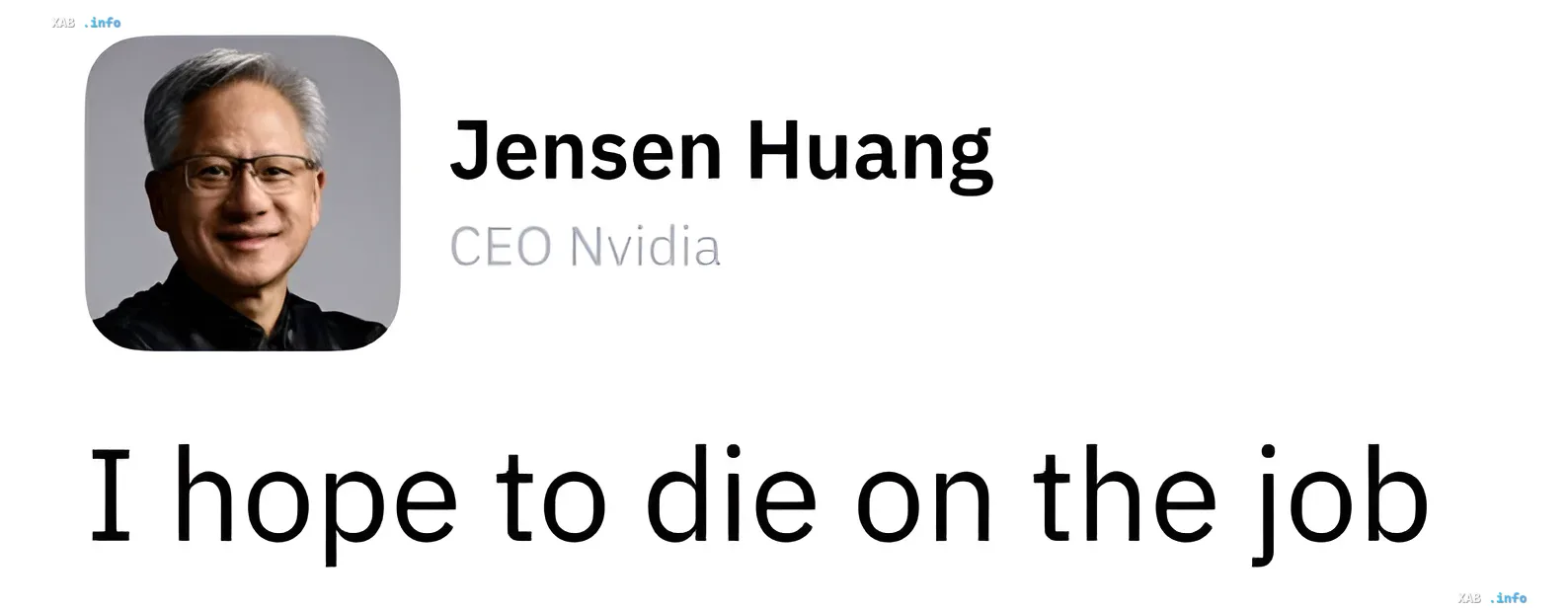
Jensen Huang, the head of Nvidia and one of the most influential figures in the technology world, recently made a series of candid statements about his life and management philosophy. In an interview with the CNA channel, he admitted that he dreams of dying at his workplace, calling it the 'fulfillment of a dream'. According to him, he cannot imagine a more meaningful life than working until his last breath.
Family Contract: Children in the Team
Both of Huang's children work at Nvidia. The CEO openly stated that he is proud of the opportunity to see them at work every day. This is not just a coincidence — it is part of his approach to building a team, where personal connections and professionalism go hand in hand.
Taiwanese Upbringing as an Engine of Progress
At another event, Huang joked about parental pressure: 'I am 63 years old, and my parents still think I am not good enough'. This phrase is not just a joke, but a key to understanding his leadership style. It is from such a culture that his tough, yet effective approach to management grew.
Huang admitted that he constantly and openly criticizes the work of his employees. But he does not do this to humiliate them, but for their development. His goal is to help everyone become better, faster, and more efficient. He calls this method 'Radical Demand' (Extremely Demanding Leadership).
Pros and Cons of Huang's Style
Huang's approach largely resembles the methods of Steve Jobs or Elon Musk. He builds a culture where there is no room for half-measures, and feedback is direct and unfiltered.
- Culture of Perfection: Constant criticism and high standards allow Nvidia to remain a leader in the field of AI chips, outpacing competitors.
- Transparency and Lack of Bureaucracy: Huang directly manages about 40 top executives, which eliminates unnecessary corporate filters. Criticism sounds harsh, but it is open.
- Personal Example: When a leader is ready to 'burn out at work', it motivates the team. This is not just a requirement for subordinates — it is his personal standard of life.
But such an approach also has risks.
- High Risk of Burnout: Not all employees are capable of enduring perfectionism and constant criticism under harsh pressure for years.
- Risk of 'Cronyism' (Nepotism): The work of the CEO's children in his own company in the US is often perceived ambiguously, even if they are excellent specialists. This can create hidden tension within the team.
- Succession Problem: The dream of dying in office means that the company may not have a smooth and prepared plan for the transfer of power, which is dangerous for the shareholders of such a giant corporation.
Conclusion: Leadership as an Art
Jensen Huang is not just a CEO. He is an architect of a culture that made Nvidia a symbol of technological progress. His style is a mix of Taiwanese upbringing, family values, and radical demand. He is not afraid to criticize, not afraid to work until his last breath, and not afraid to show his vulnerability. It is precisely this that makes him a unique leader in the age of artificial intelligence.


