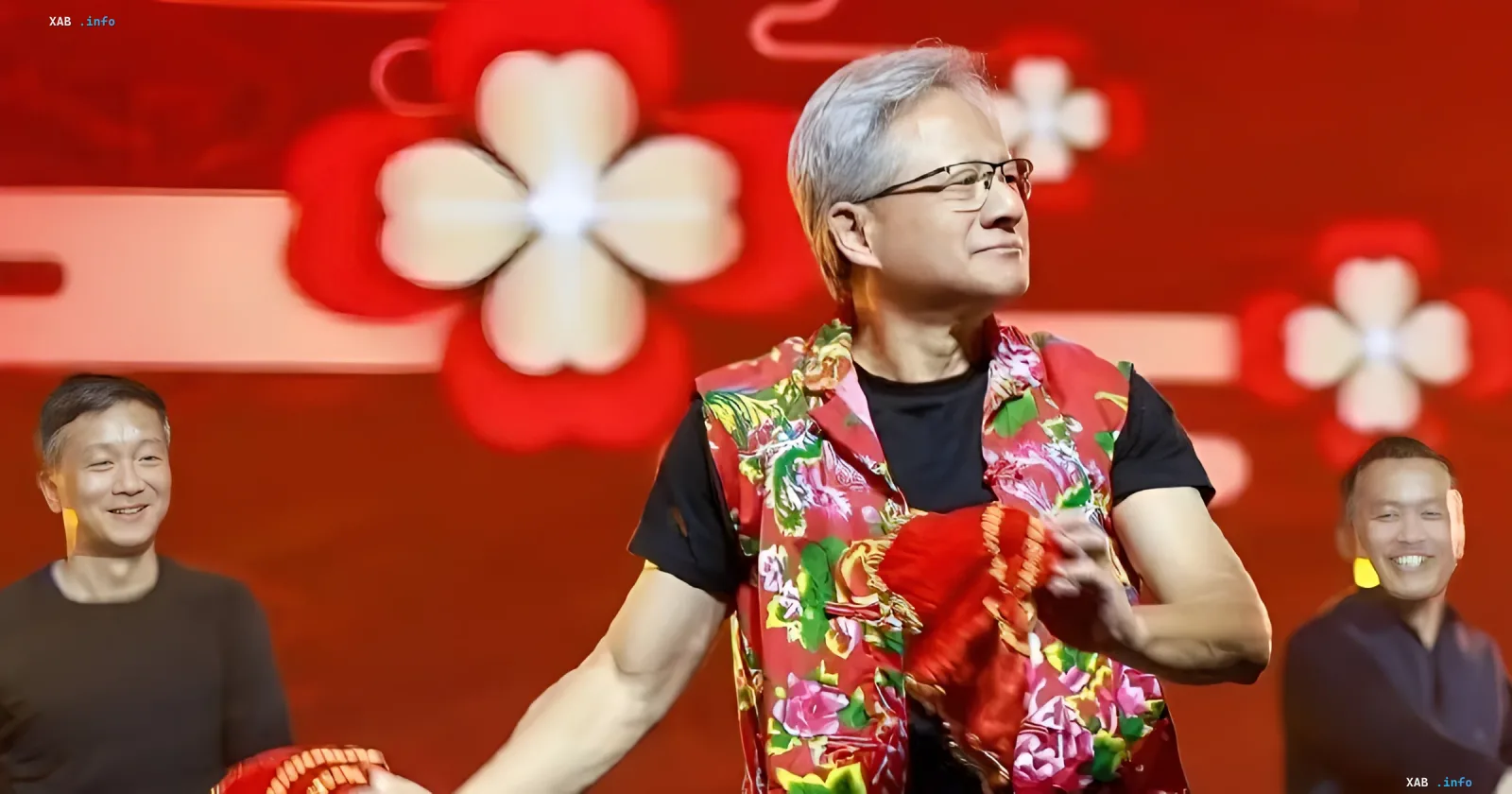
When the head of the world's most valuable company takes the stage and breaks into a dance in front of his own employees, it says more about the state of the industry than any dry quarterly report. Especially when gaming graphics cards remain in severe shortage, and their prices continue to shock the average consumer.
The video that divided the audience
Footage of Jensen Huang's performance at a corporate NVIDIA event spread rapidly across the internet, provoking a predictably biting reaction. Against the backdrop of gaming GPUs like the RTX 5090 and RTX 5070 Ti becoming scarce commodities with significant markups, and the lion's share of production capacity going to AI accelerators for data centers, the CEO's performance appeared to many as a mockery of the audience that once made NVIDIA a cult brand.
However, context is key: Jensen Huang lives and works within a corporate culture where such festive dances and mass events are a tradition and happen constantly. For employees, this is part of the corporate spirit, but for an outside observer in the current reality, it looks ambiguous.
The math of profit: why gamers are left out
The logic of what is happening boils down to simple, albeit harsh, mathematics. One H100 or B200 chip sold to giants like Microsoft, Meta, or OpenAI brings the company many times more profit than a consumer graphics card. Why strain to saturate the retail market if the artificial intelligence segment is ready to buy everything at prices that gamers are afraid to even look at?
The gaming division, with which NVIDIA started its journey, now accounts for only a modest share of total revenue. The company's strategy is obvious: priority is given to corporate clients willing to pay for AI infrastructure.
"Stock Samba" and the shadows of the dot-com bubble
Some users sharply note that dancing on stage in front of employees whose stock options have turned them into millionaires looks like a ritual of self-support at the peak of a bubble. Discussions featured a cynical joke about this being a "stock samba," where the CEO dances not for the audience, but for the capitalization chart, trying to maintain investor euphoria.
Fears regarding a potential AI bubble are growing louder. The analogy with the dot-com crisis of the early 2000s is being recalled more frequently. Back then, infrastructure sellers like Cisco seemed invincible until demand collapsed along with revenue. NVIDIA is currently in a similar position, only the scale of the market's dependence on a single company today is incomparably larger.


