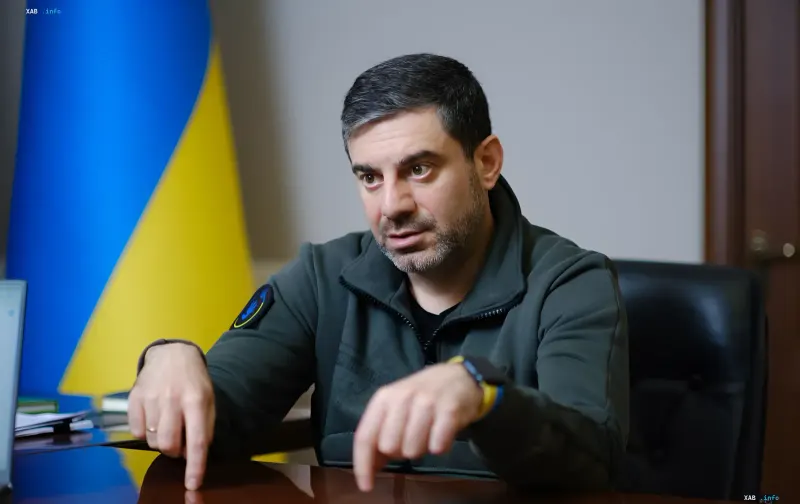
During a press conference, Verkhovna Rada Commissioner for Human Rights Dmytro Lubinets stated that Ukraine plans to create a special center that will operate in coordination with the Russian side to handle the return of civilians from temporarily occupied territories. This was reported by RBC-Ukraine correspondent. According to the ombudsman, the structure will be responsible not only for the logistics of returning people, but also for their protection and support, as well as for recording and summarizing violations of the rights of civilian Ukrainians by the aggressor state.
How the Center Will Be Structured
Lubinets clarified that the new mechanism will be based on the experience of the existing Child Rights Protection Center. The center will operate under the Office of the Human Rights Ombudsman, which, according to the initiators, will allow the use of already established procedures and communication channels. Relatives of those remaining in the occupied territories, as well as families of individuals detained by the Russian side, will be able to apply to the structure. Thus, the center is intended to become a single point of contact for families whose loved ones have found themselves on opposite sides of the demarcation line.
Humanitarian Track: Agreements on Oleshky
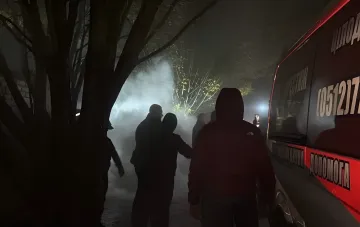
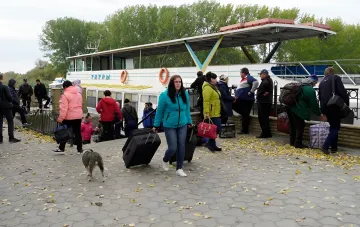
Simultaneously with the center's announcement, the ombudsman spoke about negotiations with the Russian side regarding the organization of regular humanitarian aid deliveries to temporarily occupied Oleshky at least once a month. As the Office recalled, the ceasefire in Oleshky had been in effect since October 27, and the local agreement was reached with the direct coordination of Melania Trump. According to the source, as part of the humanitarian operation, critical aid was delivered to the region, and about 800 civilians were evacuated from the danger zone. Lubinets also reported that during the truce, the bodies of fallen military personnel and civilians were removed from the city morgue.
General Staff Assessment: Silence Used to Strengthen Positions
At the same time, the General Staff of the Armed Forces of Ukraine stated that Russian occupiers used the ceasefire regime to set up and strengthen their positions. According to the military, during the truce period, Russian units conducted rotations, strengthened defenses, expanded the network of anti-drone protection on roads, and increased logistical support, including the delivery of ammunition. These statements emphasize that, according to Kyiv's assessment, the humanitarian window did not lead to disarmament or demilitarization of the area, but was used by the enemy for preparation.
Moscow's Position
The Kremlin reacted with restraint to the humanitarian operation in Oleshky. Russian leadership representative Dmitry Peskov stated that Moscow appreciated the conducted operation, but similar operations are not planned in the future for now. Thus, the initiative for regular monthly supplies of aid, mentioned by the Ukrainian side, is currently not confirmed by the Russian side in a similar manner.
The outcome of Lubinets's statement is an attempt to institutionalize what is currently being implemented through one-off humanitarian windows: the creation of a permanent mechanism capable of simultaneously working on the return of people, the protection of their rights, and the documentation of violations. However, the implementation of the plan depends on the readiness of the Russian side to conduct systemic rather than episodic work, which, judging by Peskov's statements, remains in question.