
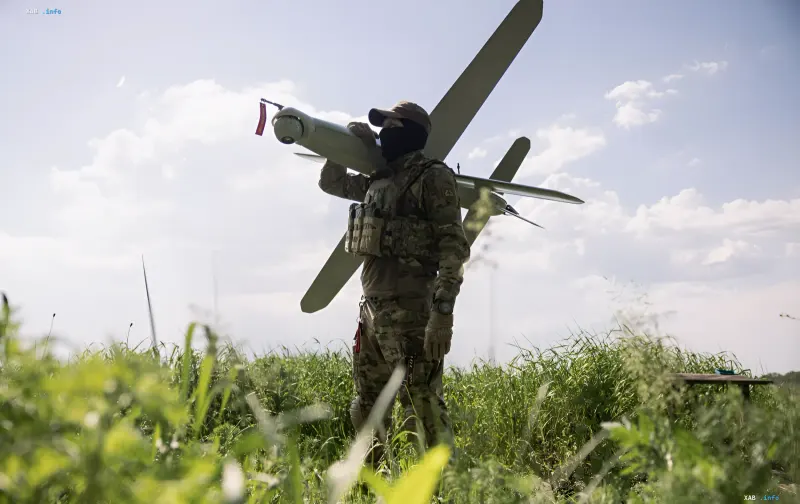
June 2026 has gone down in the history of the military confrontation as a month of unprecedented activity. The Armed Forces of Ukraine (AFU) launched a large-scale campaign of air attacks aimed at the systematic destruction of the enemy's production capacities and logistical hubs. According to media reports, in the first month of summer, more than 13 objects of the Russian military-industrial complex (MIC) were hit, marking the highest figure for the current year.
Strike on "Titan-Barricades" and New Missiles
The culmination of the June wave was the attack on the famous "Titan-Barricades" plant in Volgograd. According to the publication "Agency," citing sources in law enforcement agencies, the facility was attacked on Saturday. Although local authorities did not officially name the specific enterprise, Governor Andrey Bocharov confirmed damage to production capacities.
Ukrainian President Volodymyr Zelenskyy personally confirmed the fact of the strike, stating that the AFU used new FP-5 "Flamingo" missiles. OSINT research data also corroborates information about the destruction of the facility.
The significance of this target for the Kremlin is hard to overestimate. "Titan-Barricades" produces critically important components for the Russian army:
- Launchers for strategic complexes "Yars", "Topol-M", and "Sarmat";
- Launch systems for operational-tactical complexes "Iskander-M";
- Components for the newest Russian "Oreshnik" missiles.
Strategic Shift: From Logistics to Destruction of Capacities
Analysts note a fundamental shift in the tactics of Ukrainian strikes. If the main goal previously was to block logistics to Crimea and create a fuel shortage, the focus has now shifted to the systematic reduction of Russia's overall military capabilities. Strikes on factories producing missiles, electronics, and ammunition are intended to deprive the enemy of the ability to replenish equipment losses.
This strategy is already yielding tangible results. In particular, successful June strikes on the Kerch Strait crossing led to the destruction of air defense assets, fuel storage facilities, and three car ferries. This exacerbated supply problems to the peninsula and caused a critical fuel shortage in Crimea.
Strikes in the Deep Rear and Space
Ukrainian defense forces are demonstrating the ability to effectively destroy strategic targets deep in the enemy's rear. On the night of June 22, the General Staff of Ukraine confirmed the destruction of the main antenna of the "Vladimir" Space Center near Moscow.
As a result of the attack, a 25-meter parabolic antenna was critically damaged, and the Orenburg Gas Processing Plant also suffered damage. These losses left the occupiers without important nodes for communication with space, significantly hindering the control of satellite constellations and reconnaissance operations.
Large-Scale Sabotage in 20 Regions
The peak of activity occurred on the night of June 23 to 24, when Ukraine covered almost 20 regions of Russia with drones. Under the strike of unmanned aerial vehicles were territories ranging from border regions to the Moscow region and occupied Crimea.
The Russian Ministry of Defense reported intercepting more than 300 fixed-wing drones, but traditionally hides the real scale of destruction at its facilities. British intelligence, in turn, notes that Ukraine is successfully weakening the air defense of Crimea even in places that are priorities for protection by the Russian Federation.


