The National Anti-Corruption Bureau of Ukraine (NABU) has released new details of investigative actions regarding SBU Major General Serhiy Duka, a suspect in the Karthage-2 case. The bureau stated that defendants in criminal proceedings investigated by NABU and the Specialized Anti-Corruption Prosecutor's Office (SAPO) often distort the circumstances of cases to protect themselves, which is why they decided to make the details of the search and interrogation public. According to the agency, on November 4, detectives arrived at Duka's home with a court-approved search warrant, repeatedly introduced themselves before entering the premises, and showed documents authorizing the investigative action. The general and SBU officers were inside the house, who, according to the bureau, heard the detectives and answered them but refused to open the doors and let the investigative team inside. NABU regarded this as obstruction of the detectives' work and published a video of the beginning of the search featuring a recording of the conversation.
Armed Threats and Refusal of Entry
According to the anti-corruption agency, after a lengthy conversation, one of NABU's officers attempted to climb over the fence to open the gate and provide access for the detectives, at which point weapons were pointed at him. Subsequently, detectives noticed an SBU officer with a handgun at a second-floor window. The head of the detective unit, Oleksandr Avakumov, elaborated on the picture in an interview: according to him, armed individuals, including the homeowner himself, pointed weapons with laser target designators at the detectives and threatened to open fire to kill, while SBU fighters with assault rifles stood at the windows. Avakumov also stated that while detectives were unable to get inside, the general smashed two of his phones and a hard drive with a hammer. According to NABU, the lawyer arrived at the scene in about 40 minutes, yet Duka did not open the door for at least another hour.
Interrogation Dispute: Conflicting Statements
A separate episode concerns the major general's interrogation itself. At a meeting of the temporary investigative commission, Duka stated that he had never been interrogated. NABU and SAPO deny this claim: according to the anti-corruption bureau, the interrogation took place after the suspect's detention in the presence of his lawyer, and Duka himself refused to testify, which he and his counsel confirmed with signatures in the protocol. The bureau also emphasized that the status of a protected person does not exempt one from investigative actions or provide for a special search procedure, and no regulatory document obliges detectives to wait for the arrival of internal security officers for a check prior to starting an investigative action.
SBU Letter and the Closed-Door Session Issue
The anti-corruption bureau published an SBU letter signed by the acting head of the agency, which mentions a threat to Duka's life from Russian special services. According to NABU, this document was submitted to the court by the suspect's lawyer to substantiate a petition to hold the pre-trial restriction hearing behind closed doors—without broadcasting. It was precisely because of this document that journalists were initially barred from the courtroom. At the same time, the bureau pointed out that approximately 10 days later, Duka participated in an open meeting of the temporary investigative commission, which was broadcast live.
November 26 Appeal and Selected Pre-Trial Restriction
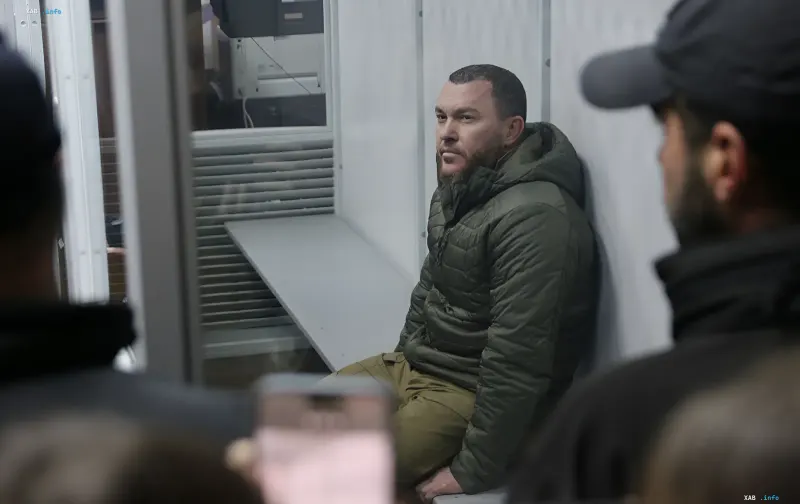
The consideration of the appeal regarding the SBU major general's pre-trial restriction is scheduled for Thursday, November 26, 2026, with the session of the Appeals Chamber of the High Anti-Corruption Court (HACC) starting at 11:00 AM. The case will be heard by a panel of judges consisting of Nikiforov, Chorna, and Pavlishyn. SAPO stated that they will insist on an open court session with a broadcast on the HACC YouTube channel. As a reminder, on November 6, the HACC chose a pre-trial restriction for former SBU Major General Serhiy Duka in the Karthage case: prosecutors asked to place him in custody with bail set at 100 million hryvnias. Another suspect in the case, police officer Oleksandr Demyanchuk, was sent to custody by the court without the right to bail.